Los Angeles, 2025. Celebrity stylist Maeve Carson was backstage at the Met Gala after-parties, doing a final emergency check on a $2.7 million diamond necklace borrowed from a historic European house. Under the harsh LED ring light, she noticed something unsettling—three of the pavé-set accent stones had fallen out during rehearsals. The house’s insurance team quoted a **$14,000 repair fee** and a six-week turnaround.
With the red carpet in 4 hours, Maeve made a call that would change her professional ethos. She rang her go-to bench jeweler in the Diamond District and asked for the fastest possible match. The jeweler handed her a small parcel of D-color, VVS1 moissanite melee stones. Under magnification, they were optically indistinguishable from the original diamonds. Under the flashbulbs that night, no one—not the house’s own gemologist, not the celebrity’s entourage—could spot the swap.
“That was my wake-up call,” Maeve now tells her private clients. “We are paying six-figure premiums for a myth, while a material born from the stars delivers the exact same visual impact for a fraction of the environmental and financial cost.”
She is not alone. From Marie Claire’s sustainability editors to TikTok’s most-watched jewelry critics, a quiet but powerful shift is happening. Moissanite is no longer the “fake diamond.” It is becoming the intelligent choice for a generation that values science over sentiment, and performance over provenance myths.
Part I: Not Synthetic, But Celestial
Let’s kill the biggest misconception first: Moissanite is not “fake.”
It was discovered in 1893 by French chemist Henri Moissan inside a meteorite crater in Canyon Diablo, Arizona. The crystals he found were naturally occurring silicon carbide (SiC) —a material so rare on Earth that it literally had to fall from space to be found.
Today, lab-grown moissanite is created through precise thermal and chemical processes that mimic the conditions of deep space. But here is the kicker—lab-grown does not mean inferior. In fact, it means superior purity. Unlike mined diamonds, which carry inclusions from volcanic trauma, moissanite is synthesized in a controlled environment, yielding Type IIa equivalent clarity (the same grade as the world’s rarest natural diamonds).
Part II: The Numbers Don’t Lie—Why It Outperforms Diamond
Forget the romantic marketing. Let’s talk physics. This is what European and American buyers actually search for before swiping their cards.
Property
Moissanite (SiC)
Natural Diamond (C)
Hardness (Mohs)
9.25
10
Refractive Index
2.65 – 2.69
2.42
Dispersion (Fire)
0.104 (2.4x diamond)
0.044
Heat Resistance
Stable to 1700°C
Burns at 800°C
Price (1ct equivalent)
$300 – $800 (with 14K gold)
$5,000 – $15,000+
What this means in plain English:
Brilliance: Higher refractive index means moissanite bends light more sharply, giving it a mirror-like sparkle even in low-light restaurant settings.
Fire: That rainbow disco-ball effect? That’s dispersion. Moissanite throws 2.4 times more colorful flashes than diamond. Some purists call it “too flashy.” Most modern buyers call it “gorgeous.”
Durability: At 9.25 hardness, it is harder than ruby and sapphire (9.0). It will not scratch, cloud, or fade over decades of daily wear. It is perfectly suitable for engagement rings—the only material that can scratch moissanite is diamond itself.
Part III: The Voices That Matter—Who Is Actually Wearing It?
1. The Environmental Economist
Dr. Helena Norberg, a Stockholm-based climate analyst and a regular contributor to Vogue Scandinavia, publicly chose a 3-carat emerald-cut moissanite for her renewal vows. Her reasoning was strictly data-driven:
“A single 1-carat mined diamond generates an average of 160 kilograms of CO₂ per carat in open-pit mining, not to mention the displacement of 2,000 tons of earth. My moissanite? Produced in a certified clean-energy lab with less than 15 kilograms of CO₂—and zero conflict. I’m not sacrificing beauty; I’m aligning my jewelry with my research.”
2. The Bespoke Designer
In London’s Hatton Garden, independent jeweler Rafi Ben-David has made a name for himself by setting moissanite alongside rare colored gemstones. His philosophy is counter-intuitive but compelling:
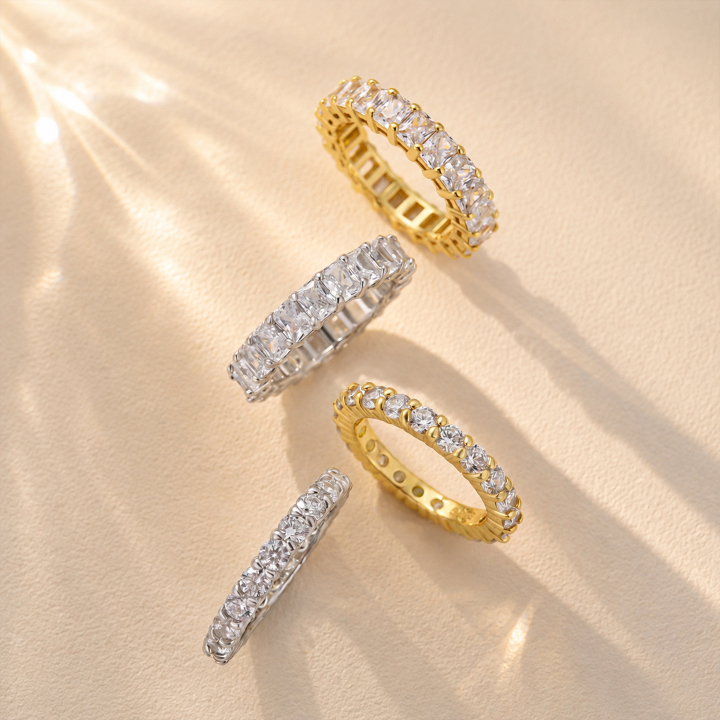
“I used to refuse moissanite because I believed it was ‘cheapening’ my designs. Then a client asked me: ‘Are you selling gold and diamonds, or are you selling light and form?’ That clicked. Today, I use D-color moissanite for pavé settings because it gives me more budget to spend on custom gold-casting and finer finishing. My clients get a heavier, more durable ring with better sparkle, all for 30% less. It’s not a compromise. It’s an upgrade in craftsmanship.”
3. The Silicon Valley Engineer
On Reddit’s r/EngagementRings (1.8M members), a post titled “I proposed with Moissanite and she said Yes—here’s why” garnered 4,200 upvotes. The author, a semiconductor engineer, broke it down with cold logic:
“I’m a materials scientist. I know that the crystal structure of moissanite is hexagonal (6H-SiC), which gives it anisotropic optical properties. That means it polarizes light differently at different angles—creating that crisp, sharp ‘crushed ice’ or ‘splintery’ look that actually rivals diamond in scintillation. My fiancée is a geologist. She tested it with a diamond tester—it passed the thermal conductivity test (it’s a thermal conductor like diamond, unlike CZ which is an insulator). She wears it proudly because she values the science behind it, not the marketing.”
Part IV: The Elephant in the Room—The “Disco Ball” Debate
Yes, there is one legitimate criticism: moissanite has more fire (rainbow flashes) than diamond. Diamonds exhibit a more subtle, white/blue brilliance, while moissanite throws distinct yellow, green, and pink flares in direct sunlight.
Who should care?
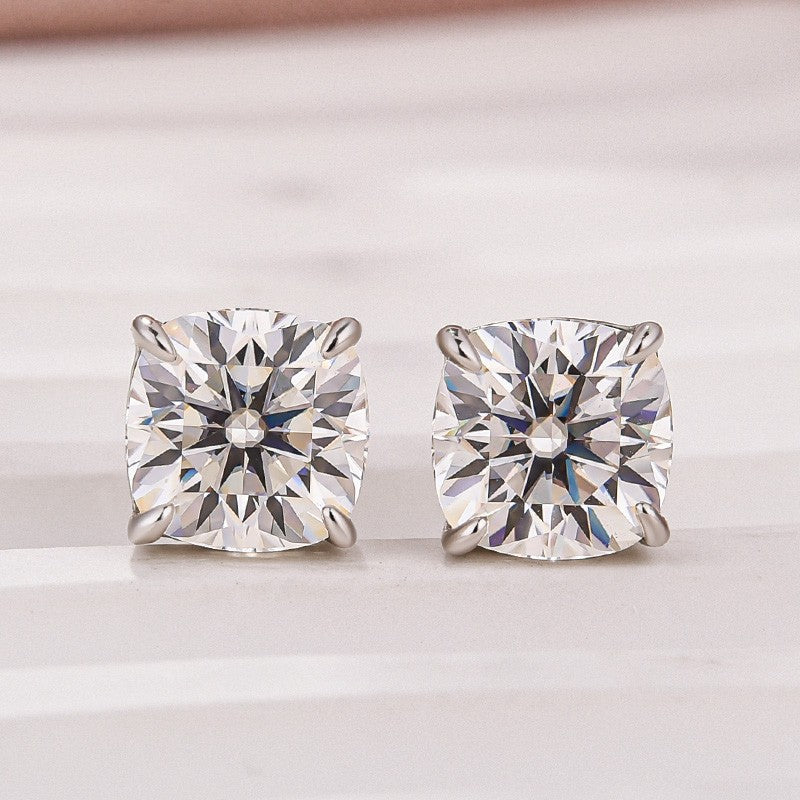
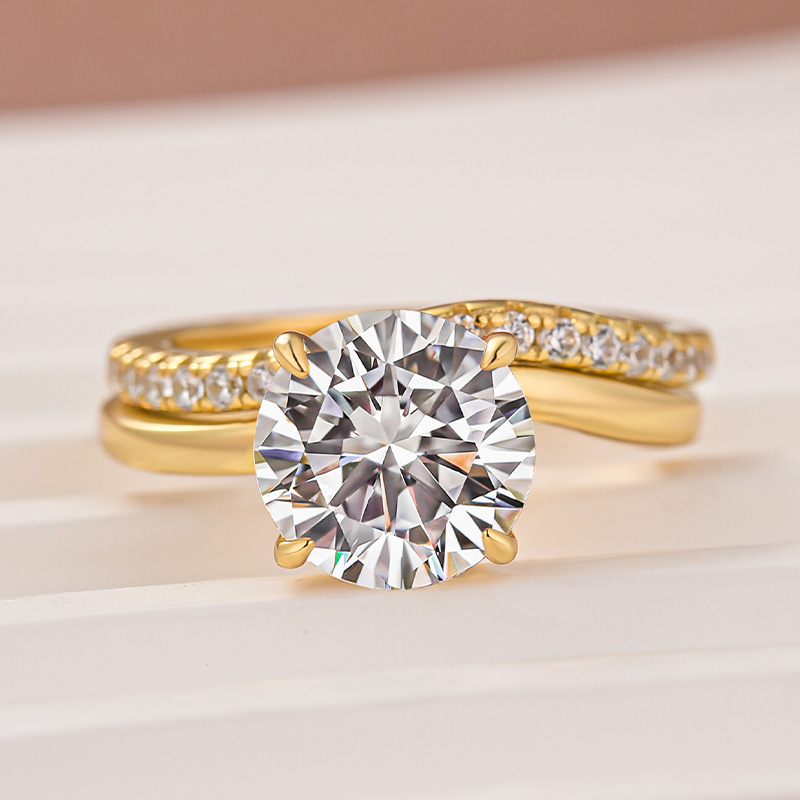
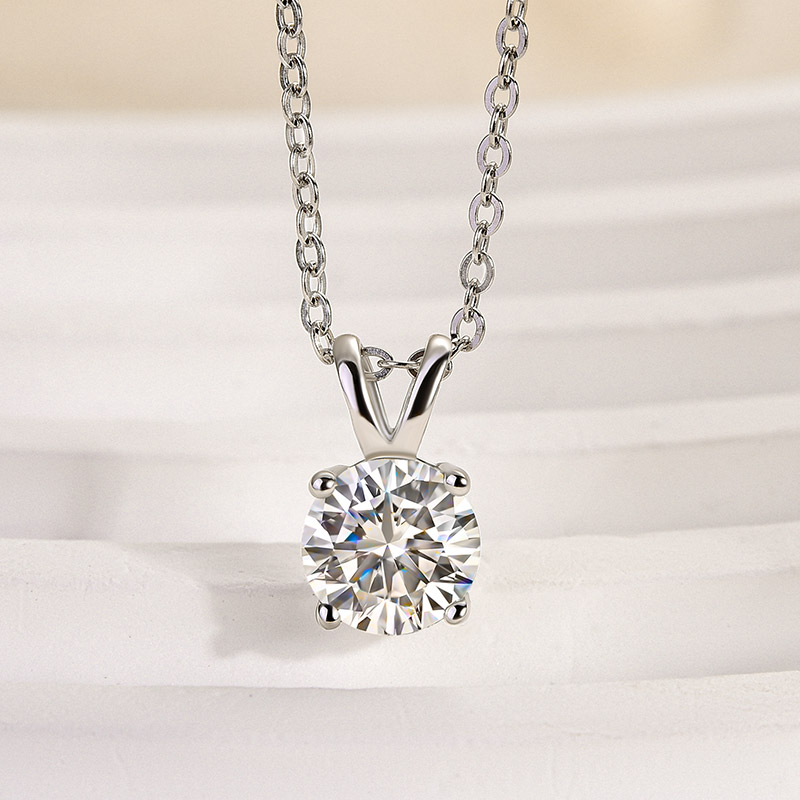
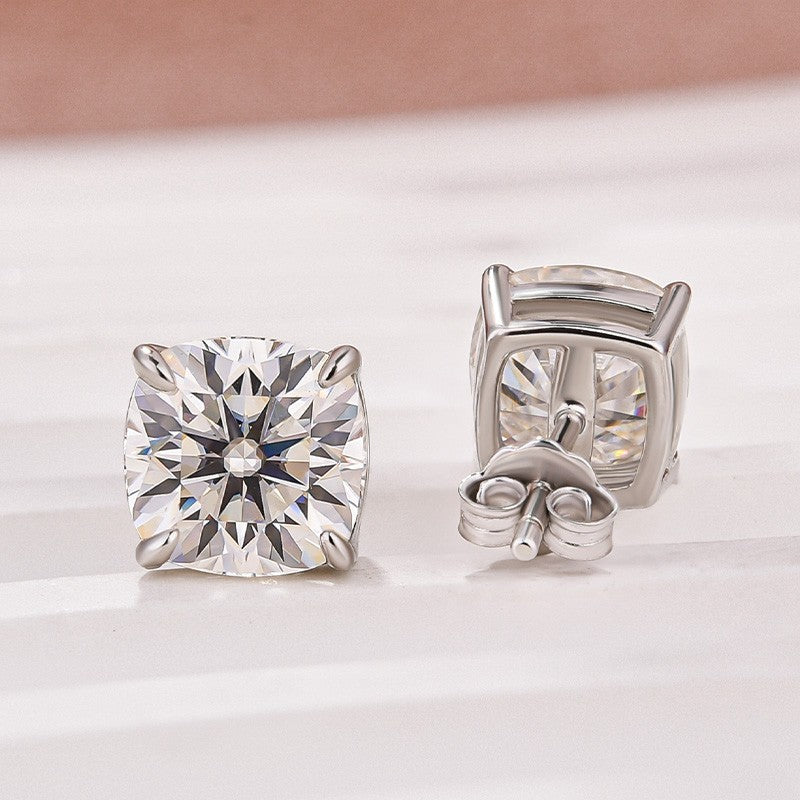
If you want a stealth, understated look that mimics a diamond perfectly—choose round brilliant or cushion cut in G-H color, which minimizes the fiery effect.
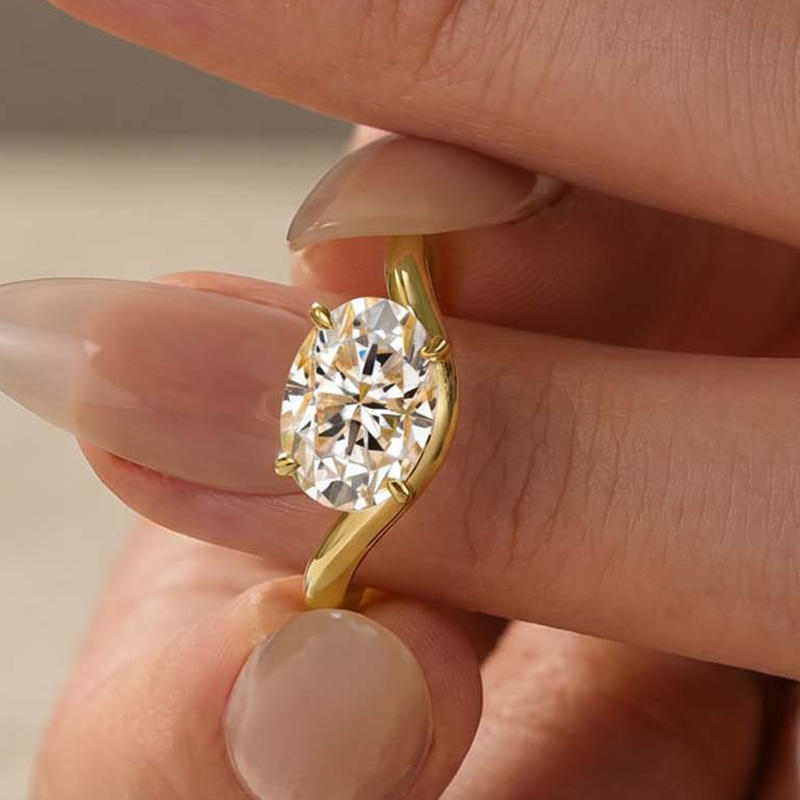
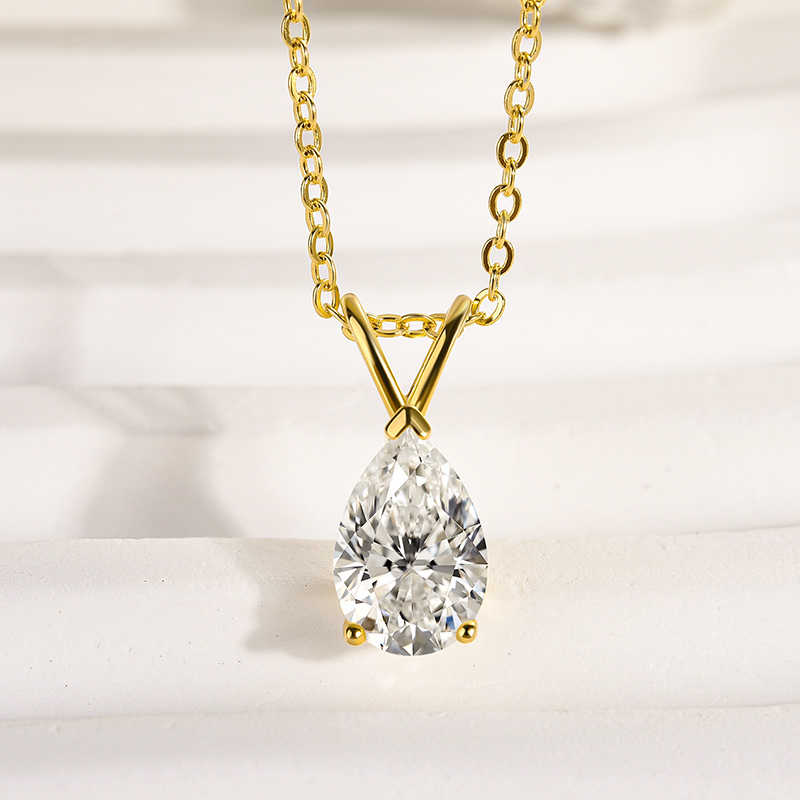
If you want to stand out and love the rainbow play—choose crushed-ice oval or pear cut in D-F color, which maximizes the spectacle.
The professionals’ consensus? 90% of observers cannot tell the difference in normal indoor lighting. Only under direct sunlight or a jeweler’s loupe can the trained eye spot the double refraction. And if you’re buying for yourself—why does it matter what others think?
Part V: The Buyer’s Guide—How to Not Get Ripped Off
The U.S. and European moissanite market is unregulated. Here are the hard rules from GIA-trained gemologists:
✅ Rule 1: Color is King (Ignore the “D” Lie)
Many budget sellers label everything as “D-color” but deliver J-K tint (yellow/grey). Insist on videos under natural daylight showing the stone against a white paper. True D/E/F are completely colorless. For the untrained eye, G-H is the sweet spot—face-up white, with a warmer hue only visible from the side.
✅ Rule 2: Cut Over Carat
Moissanite’s optical density is lower than diamond. A 1-carat moissanite is actually slightly larger in diameter (6.5mm vs 6.4mm) than a 1-carat diamond. But more importantly—pay for Ideal/Hearts & Arrows cut. Poor cutting makes moissanite look cloudy or “milky.” Premium cutting maximizes light return. Ask for ASET (Angular Spectrum Evaluation Tool) images—this is the industry standard for evaluating light performance, and only top vendors provide it.
✅ Rule 3: Metal Matters
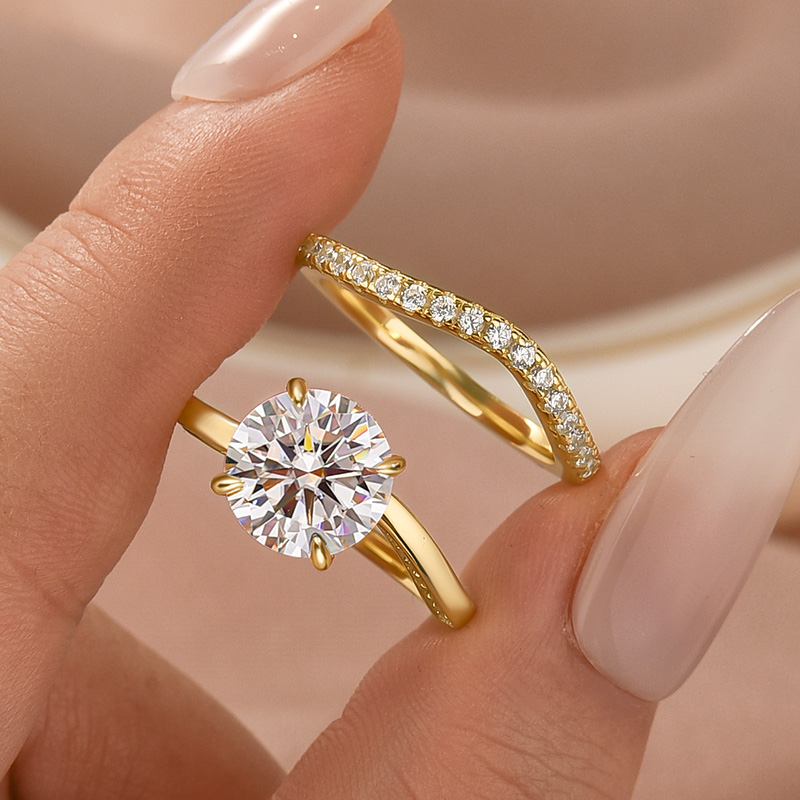
A $200 moissanite in cheap silver will tarnish and bend. **Invest in 14K or 18K gold, or platinum.** The setting costs more than the stone—and that is exactly as it should be. A high-quality setting makes a $300 moissanite look like a $10,000 diamond. A cheap setting makes a D-color moissanite look like costume jewelry.
✅ Rule 4: Return Policy is Your Friend
Reputable U.S./European vendors offer 30-day free returns and lifetime warranties against chipping (even though it rarely happens). If the seller refuses returns—walk away.
Part VI: The Final Verdict—Is It Worth It?
For the environmentally conscious: Absolutely. Moissanite eliminates mining, child labor, and ecosystem destruction. It is the closest to a carbon-neutral gem you can buy without going antique.
For the budget-savvy: Undoubtedly. You can get a 2-carat equivalent with 14K gold for under $1,000—instead of a 0.3-carat diamond with visible inclusions.
For the connoisseur: Maybe. If you are a collector who appreciates the geological rarity of diamonds—keep buying them. But if you are buying for everyday joy, for a ring that survives dishwashing, gym workouts, and clumsy knocks—moissanite’s 9.25 hardness and chemical inertness make it the more durable, low-maintenance option.
The Last Word
When Maeve Carson finally told the historic jewelry house about her Met Gala “substitution,” their head gemologist reportedly laughed and said: “If you hadn’t told me, I would have signed it off as natural. The light performance was flawless.”
That is the truth of moissanite in 2026: It does not pretend to be a diamond. It simply does what diamonds do—only brighter, cleaner, and with a story that starts not in a conflict zone, but in a meteorite that traveled billions of miles to reach us.
And sometimes, the most valuable thing a piece of jewelry can give you isn’t a certificate of origin. It’s the freedom to wear something breathtaking—without the breathless price tag.
Are you ready to see the sparkle for yourself? Most reputable U.S. vendors (like Charles & Colvard, MoissaniteCo, and Brilliant Earth) now offer at-home try-on kits. Order one. Put it next to your friend’s diamond. And trust your eyes—not the marketing.