The Stone Sparkled at Madonna’s Niece’s Wedding. Nobody Asked If It Was a Diamond.

0

September 2026. Upstate New York.

A wedding had just ended. Guests were filtering out. The bridesmaid set her bouquet down on a round table covered in a white tablecloth and turned to grab her coat. Next to the bouquet, she’d left her engagement ring — she’d taken it off to wash her hands and forgot to put it back on.

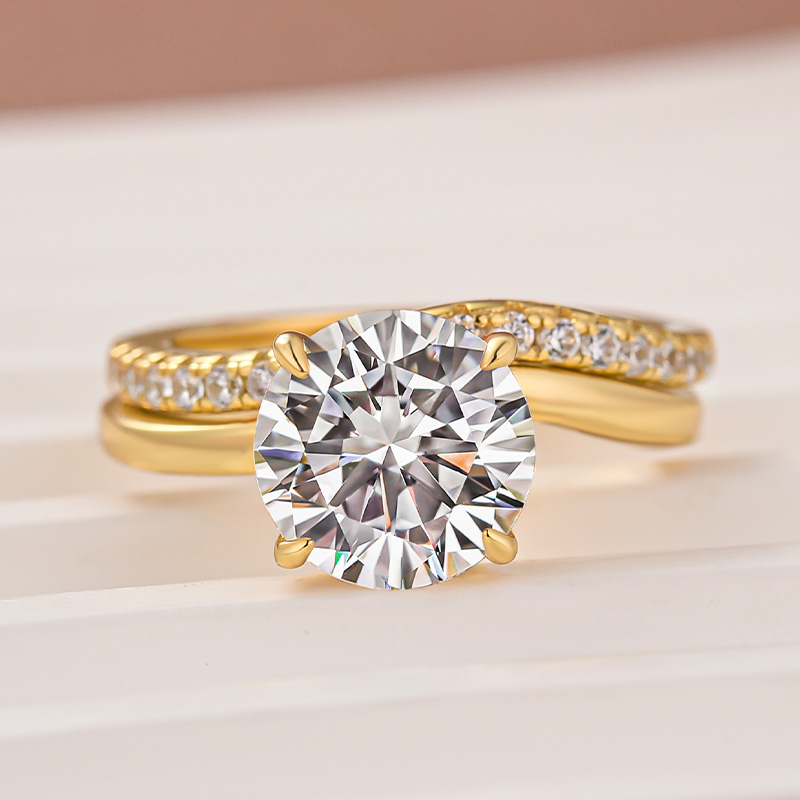
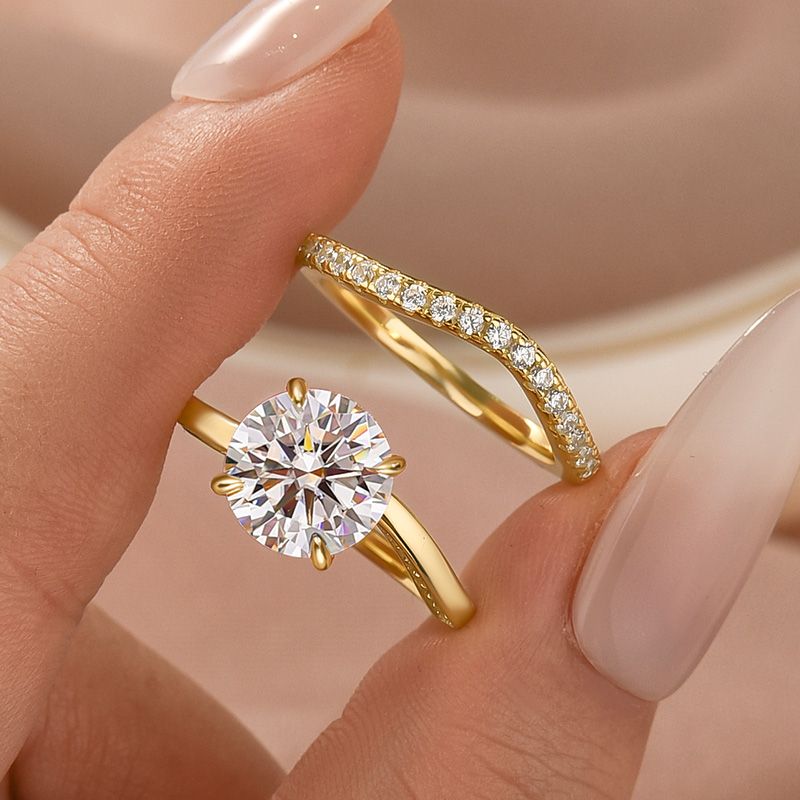
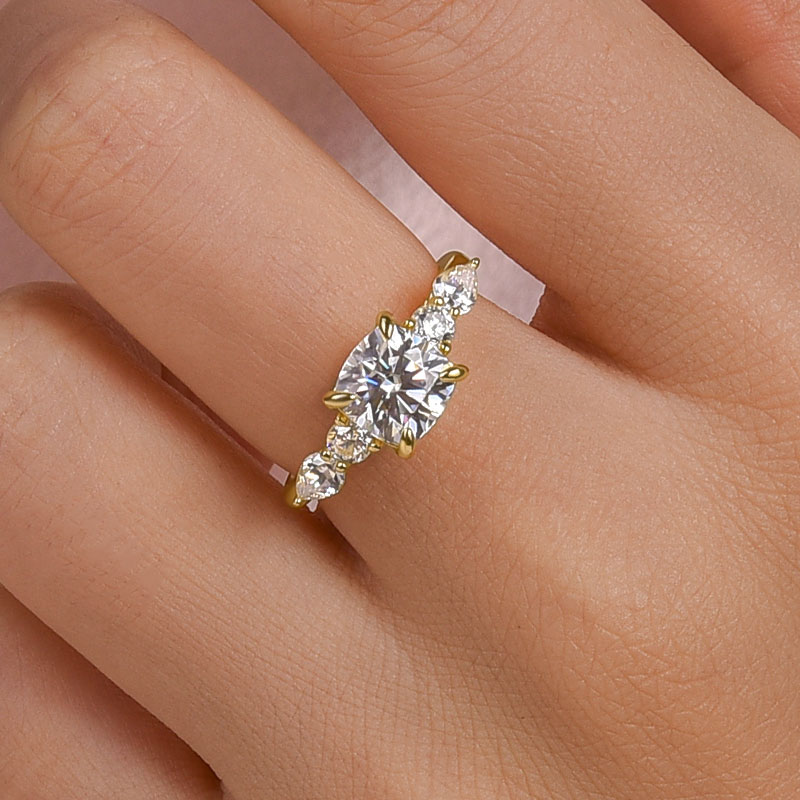
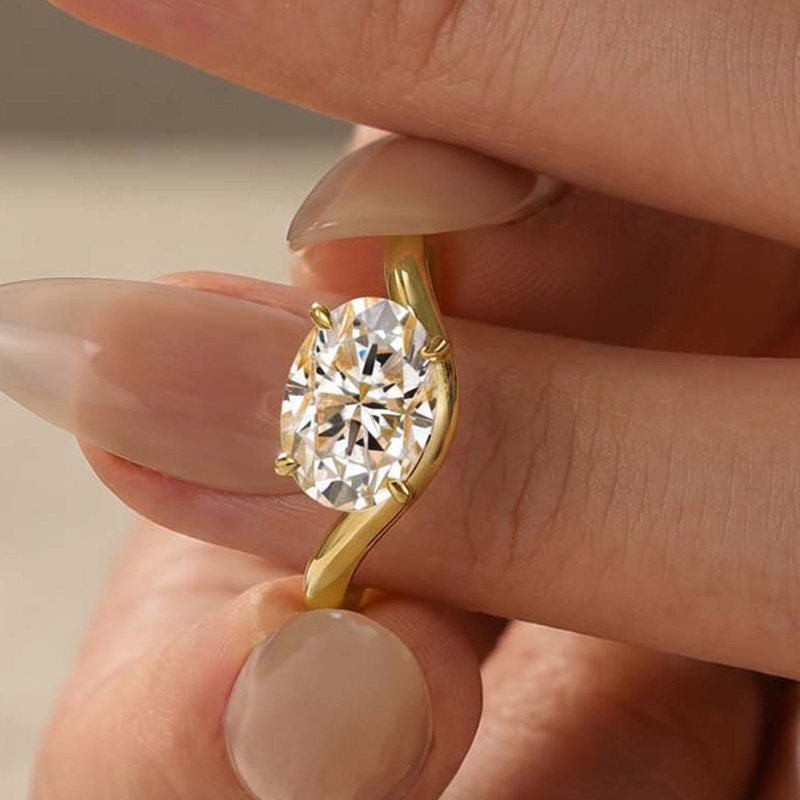
The center stone was a 2-carat moissanite, marquise cut. Under the 4 PM natural light, it threw off a burst of tiny rainbow sparks that scattered across the folds of the tablecloth.

A middle-aged woman walked past. She glanced down. Picked up the ring. Turned it under the light.

Then she asked the bridesmaid: “Is this a diamond?”

The bridesmaid said: “No. It’s moissanite.”

The woman put the ring back on the table and said nothing else. But that “oh” — the bridesmaid knew it too well. Not “oh, I see.” More like “oh. Never mind.”

The bridesmaid didn’t explain. She just slid the ring back onto her ring finger and walked away.

Moissanite Came From a Meteor. Diamond Came From an Ad.

The most ironic part of this story: that moissanite ring the woman put down is, physically, sparklier than a diamond.

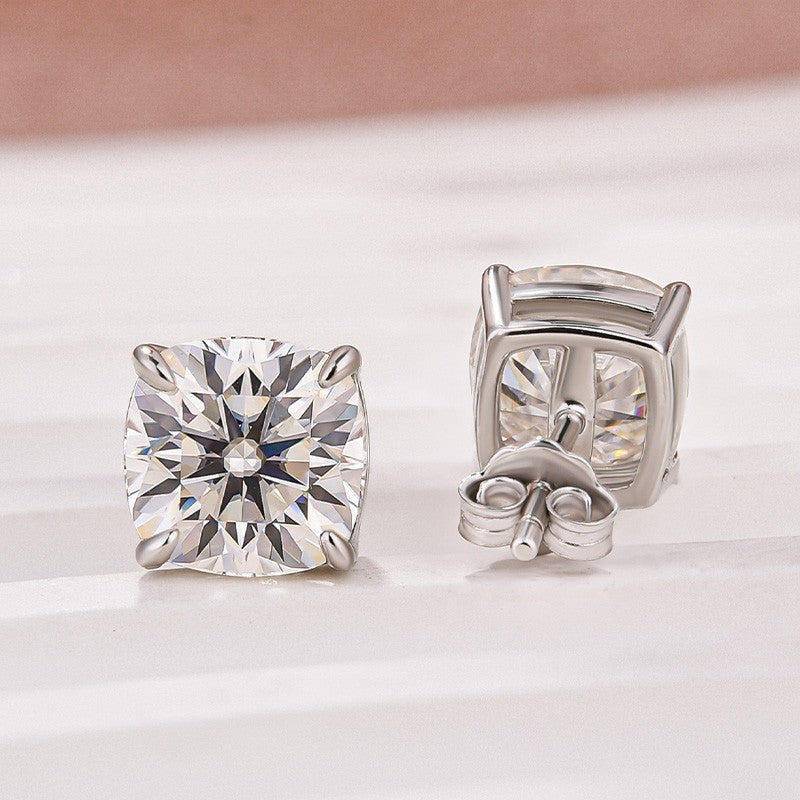
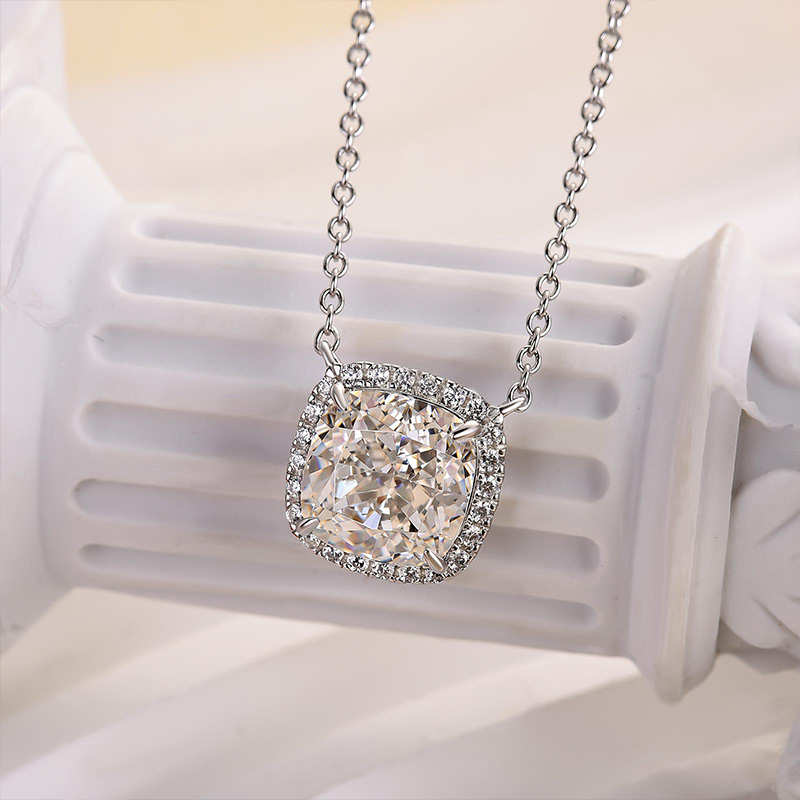
Moissanite’s refractive index is 2.65 to 2.69. Diamond’s is 2.42. Its dispersion is 0.104. Diamond’s is 0.044 — more than double the difference. In plain English: its ability to split light into rainbows is more than twice as strong as diamond’s. Under the same light, it throws off more colored fire, more jump, more unapologetic flash.

And diamond’s famous slogan — “a diamond is forever” — was written by an advertising agency in the 1940s. Not by a scientist. Not by a geologist. By people who were selling something.

The Man Who Connected Moissanite to a Nobel Prize

In 1893, French chemist Henri Moissan discovered a shimmering substance in a meteor crater in Arizona. He brought it back to his lab and, under 3,500 degrees of heat and pressure, saw a crystal. It looked almost identical to diamond.

There’s a detail in Henri Moissan’s early life: in sixth grade, he fell for a classmate named Morgana. Then his father’s debts forced the family to move away. He never forgot her. In 1882, he ran into an old classmate who told him Morgana had married and moved to Lyon. He married hastily.

In 1906, Henri Moissan won the Nobel Prize in Chemistry. The day he died, a woman in Lyon received a ring. Engraved on the inside of the band was a name: Morgana.

The stone was later named Moissanite.

This story has been told too many times, and every telling feels like a pill coated in sugar. But the core is real: a poor boy, using a stone that fell from the sky, making a confession decades too late.

What That Stone Is Worth Depends on Who You Ask

The price of moissanite and diamond differ by an order of magnitude.

A high-quality 1-carat moissanite runs about $500 to $1,500. A comparable diamond runs $2,500 to $18,000. A 2-carat moissanite might cost one-tenth to one-fifth of a 2-carat diamond.

But the question of “is it worth it” gets completely different answers from moissanite and diamond.

Diamond has a secondary market — though resale typically brings only 30% to 50% of retail. Moissanite’s resale value is close to zero. If you’re buying a ring to sell one day, moissanite isn’t for you. If you’re buying a ring to wear every day, resale value has nothing to do with you.

Moissanite’s hardness is 9.25. Diamond is 10. The second hardest substance on Earth. Daily wear — washing hands, chopping vegetables, riding the subway — it holds up. It won’t fade. It won’t scratch. A high-quality moissanite worn for ten years looks the same as day one.

Why People Choose It

In Canada, there’s a couple named Justin and Victoria. Victoria had a crush on Justin in high school. Ten years later, they reconnected through a mutual friend. After their first date, they never separated. The engagement ring was Victoria’s choice — she’s a self-described “control freak” who sent Justin links with the size, specs, and style. She chose moissanite.

In another story, Kyle and Lisa are both volunteer firefighters. The day Kyle proposed, he had a friend call him away with a fake “emergency,” then drove back in a fire truck, in his firefighter gear, and got down on one knee in their front yard. Lisa said yes. She’s wearing moissanite.

In the story of Indian-American couple Ashish and Ketaki, they spent a year looking for a ring together. Ashish rented a rooftop venue in San Francisco and told Ketaki her brother-in-law was performing there. She walked down a path of rose petals to an arch, Etta James’s “At Last” playing. He got down on one knee. Then she did too — holding a ring for him. They chose moissanite.

The common thread in all these stories: nobody asked “why not a diamond?” Because they made the choice themselves.

What Happened to That Ring

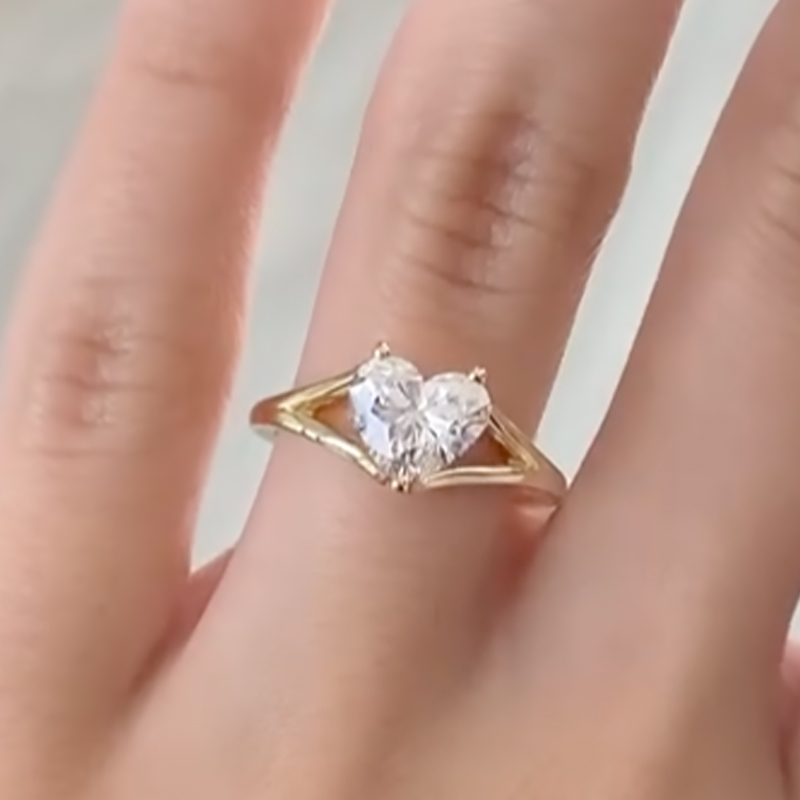
The day after the wedding, the bridesmaid posted a photo on Instagram. Her hand resting on a balcony railing, the marquise-cut moissanite throwing a thin rainbow across the back of her hand in the morning light.

The caption was one line: “It’s not a diamond. It’s mine.”

In the comments, someone asked: “What stone is that?”

She replied: “Moissanite. Sparklier than diamond. Cheaper than diamond. More like me than diamond.”

Under that comment, someone added: “If moissanite has one fan, it’s me.”

Leave a Reply

Your email address will not be published. Required fields are marked *