That Night in Los Angeles, I Realized I’d Been Fooled for 20 Years
Backstage at the 2024 Met Gala. The lights were blindingly white.
I was crouched in a corner with my coffee, staring at the row of glittering things lined up on the vanity tables—earrings, necklaces, rings, all neatly arranged on velvet trays with sticky notes attached, each bearing a celebrity’s name. A friend of mine—a stylist who’s been in the industry for two decades—leaned over and followed my gaze, then said something so casually it nearly made me spit out my coffee:
“Don’t bother looking too hard. Two-thirds of that tray is moissanite.”
“Wait—you’re telling me Scarlett Johansson is wearing fake diamonds?”
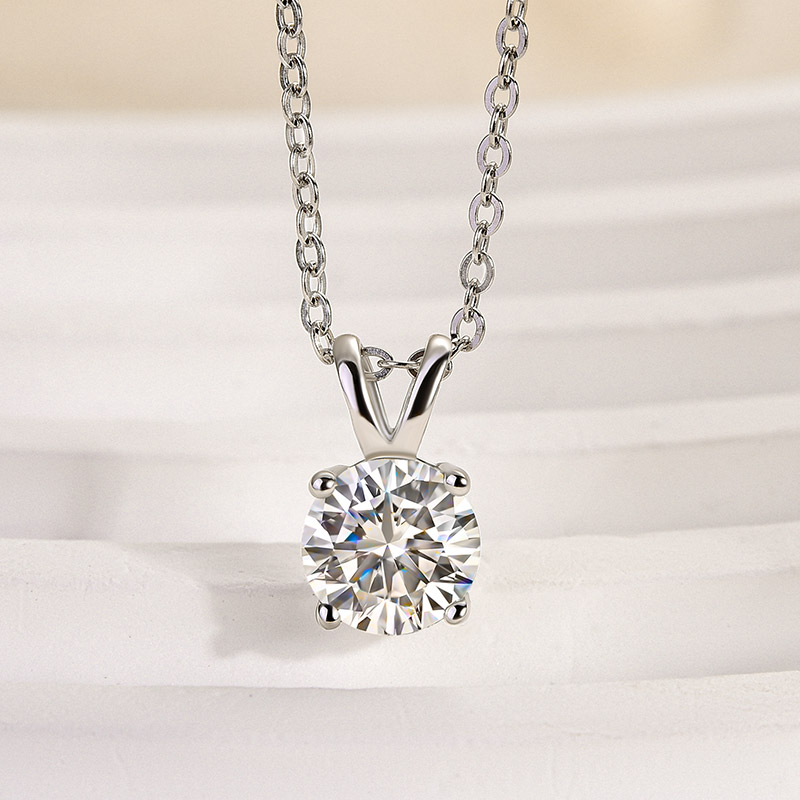
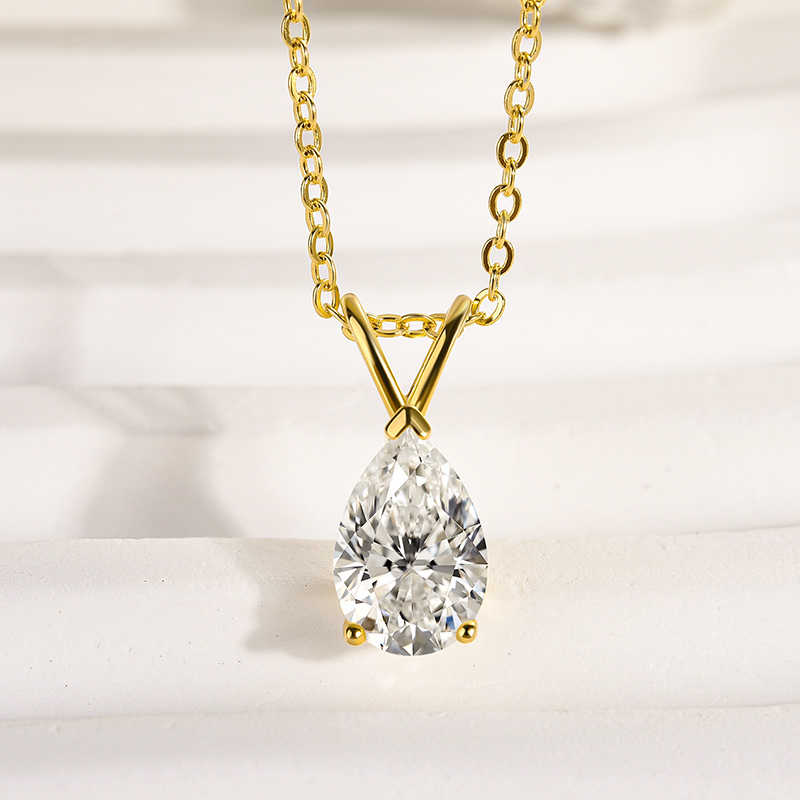
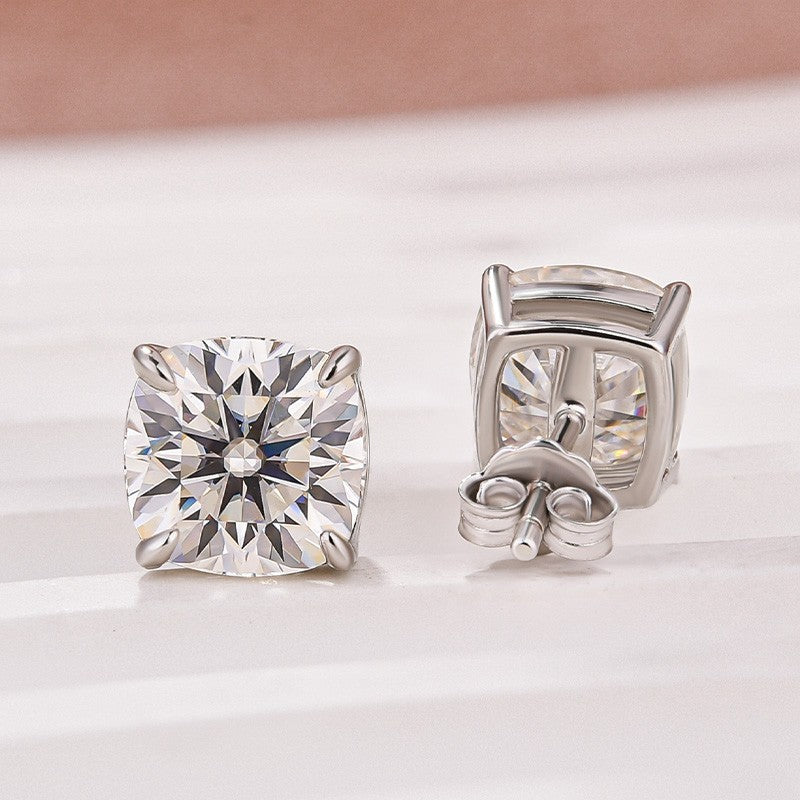
She rolled her eyes. “Who said anything about fake? Moissanite is silicon carbide. It’s a naturally occurring mineral—just happens to grow faster in a lab. It’s not a fake diamond. It’s a different stone that looks like a diamond, sparkles more than a diamond, and costs one ten-thousandth of the price. “
That night, I stood at the side of the red carpet, watching the follow-spotlights hit those “ice” pieces—fire exploding in every direction, blindingly brilliant. The crowd was screaming. Photographers were machine-gunning shutters. No one suspected a thing. Because why would they? This is Hollywood. This is the Met Gala. This is where the richest people on the planet come to flex on each other.
And here’s the truth: They were flexing with a few hundred dollars’ worth of lab-grown silicon carbide, and they fooled the entire world.
In that moment, my brain short-circuited. Had my entire understanding of “jewelry” over the past twenty years been complete bullshit?
The Space Rock That Fell to Earth—and Got Disrupted by Silicon Valley Thinking
In 1893, French scientist Henri Moissan was poking around a meteor crater in Arizona when he found something glittering. He thought it was diamond. Turned out to be silicon carbide—a mineral from outer space. Natural moissanite is actually rarer than diamond because you can barely find it on Earth—it pretty much only exists inside meteorites.
Then in 1995, an American company called Charles & Colvard figured out how to grow near-colorless moissanite in a lab. Basically, they “cultivate” carbon and silicon under high heat and pressure—a few weeks to grow a stone, compared to the hundred-million-year timeline for natural diamond.
Here’s the kicker: GIA (the Gemological Institute of America) certified it. Cartier even used it in high-end jewelry. Moissanite was never supposed to be “fake diamond”—it started out as a legitimate gemstone. But the market looked at it, saw it looked like diamond and cost nothing, and immediately shoved it into the “cheap imitation” box.
That one shove created twenty years of identity crisis.
But the Hollywood stylists were the ones who figured out how to weaponize that crisis.
My Friend Amy’s Engagement Ring and Her Declaration of Rebellion
I need to tell you about a specific person.
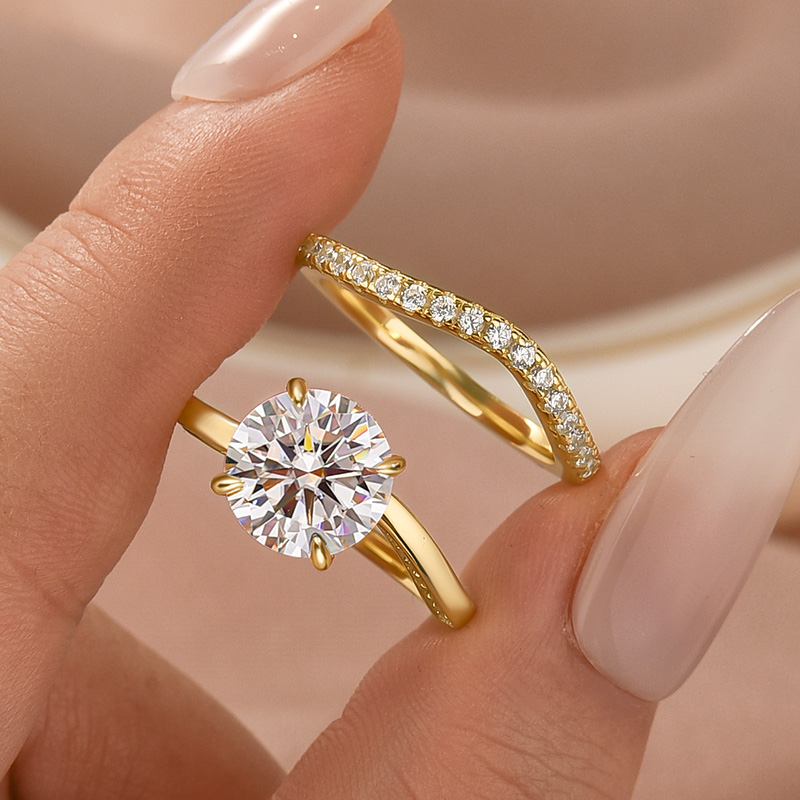
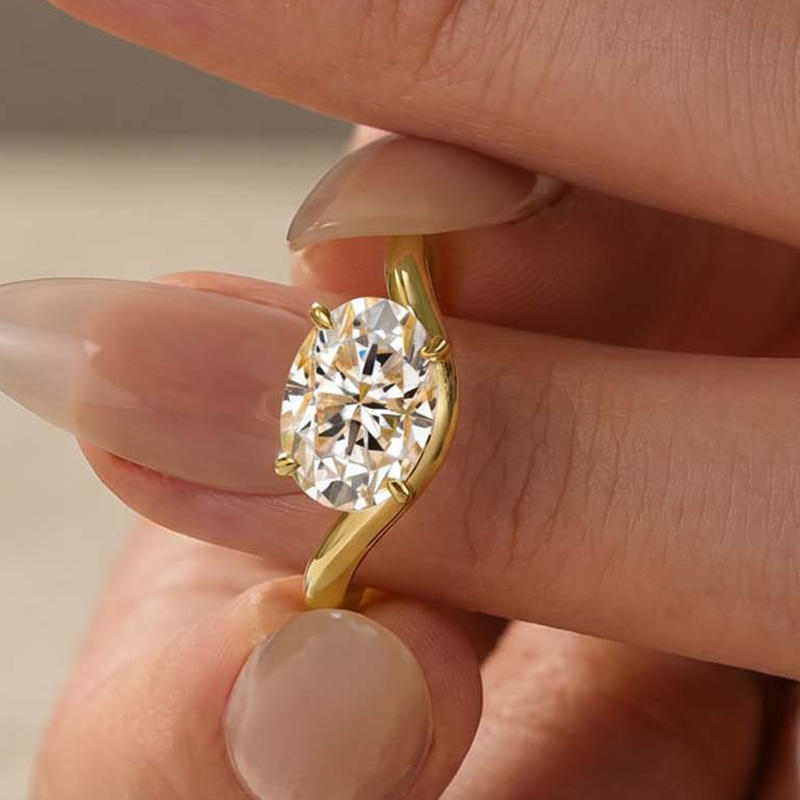
Amy Schumer—the comedian who once compared marriage to “life imprisonment” in her Netflix special—got engaged when her husband Chris Fischer handed her an oval moissanite ring.
You think she couldn’t afford a real diamond?
Her husband is a Michelin-star chef. She’s an Emmy winner. Their combined net worth could buy a hundred natural diamonds. But she chose not to.
I met Amy in New York once and we talked about this. She was puffing on a vape, squinting through the smoke, and said something I’ll never forget:
“You know, if I’d gotten a natural diamond, everyone would’ve said ‘oh, of course she went with diamond’—nobody would’ve been surprised. But I chose moissanite, and everyone is talking about it, questioning it, mocking it—but I win, because I’m using my choice to tell them: love doesn’t need a receipt to prove itself. “
I was speechless.
She’s absolutely right. If you wear a natural diamond, no one looks twice—because that’s “normal.” But you wear moissanite, and suddenly you’re a “person with a point of view.” You’re telling the world: I don’t buy De Beers’ marketing bullshit. I don’t need a rock dug out of the earth to prove I’ve made it in life. I have my own value system.
Amy used a few-hundred-dollar ring to deconstruct a hundred years of diamond marketing.
That’s real rebellion.
Emma Watson’s Moral High Ground and Meghan’s “Relatable” Card
If Amy Schumer is the rebel, Emma Watson plays the moralist card.
When Emma was photographed wearing moissanite, the press releases wrote themselves: “She chooses lab-grown gems to reduce environmental destruction and human rights abuses associated with mining.”
You can’t attack that. You attack her for wearing “fake,” and you’re attacking environmentalism, human rights, sustainable fashion. She’s standing on moral high ground, and you can’t even reach the ladder.
Meghan Markle played it even smarter. When she wore moissanite, the narrative became “she’s so down-to-earth, so relatable”—especially because everyone knows how much she’s suffered since joining the royal family. Every move she makes gets magnified as “commoner challenging the establishment.”
Same moissanite—
Amy Schumer used it for “rebellion.” Emma Watson used it for “environmentalism.” Meghan Markle used it for “relatability.”
Same product, different story, different audience.
This reminds me of a woman I met in Shenzhen’s Shuibei jewelry district—a jewelry exporter named Lin, in her forties, with a heavy Cantonese accent. She told me something that hit hard:
“Americans used to buy diamonds to show off. Now they buy moissanite to show off too—to show off how smart they are, how they’re not brainwashed by consumerism, how they think for themselves. It’s the same thing underneath. They’re just showing off different things now. “
I had nothing to say after that. She was absolutely right.
The Dark Side of the Sparkle: From “Space Gem” to “9.9 Free Shipping”
But there’s a B-side to the moissanite story, and it’s nowhere near as glamorous.
I spent a week in Wuzhou, Guangxi—the world’s largest hub for man-made gemstone processing. Seven out of every ten lab-grown gems on the planet come from this place. The street-side stalls are packed with glass cases full of glittering little stones, priced by the carat. The cheapest ones—cubic zirconia—wholesale at 50 cents a carat.
Yes. Fifty cents.
I watched a stall owner pull out a handful of “moissanite” from under the counter, priced at 10 yuan (about $1.40) per carat. I asked what the difference was between these and the ones he had marked at 200 yuan per carat. He grinned and said, “You can’t tell with the naked eye. A loupe won’t catch it either. But a tester will—these are zirconia with a coating. Not moissanite at all. “
Coated. Not even the real thing.
And the certificate industry is even more insane. A wholesale source in Shenzhen’s Shuibei market told me about a livestream influencer who came to him asking for a moissanite ring priced at 30 yuan (about $4). Thirty yuan won’t even cover the cost of a sterling silver setting. The influencer said, “Just use copper with silver plating, and the cheapest stones. The followers can’t tell anyway. “
My friend refused. He said, “I’d feel guilty. But if I don’t do it, someone else will. “
Here’s what kills me: The people buying those $4 “moissanite rings” actually believe the fake certificates they get with them. They actually think they’re getting a deal. They actually post photos on WeChat Moments with the caption “Hubby gave me this, I’m so loved.”
Every time I picture that scene, I feel like the entire industry is one giant black comedy.
The Chinese Sellers on AliExpress and the Crumbling of the “Diamond Wall”
But there’s another group doing the complete opposite.
In 2025, data from Alibaba’s cross-border platform AliExpress showed moissanite jewelry sales had exploded by 20x in the previous two years. A Chinese brand called KNOBSPIN is selling moissanite jewelry on AliExpress and pushing annual revenue close to 100 million yuan ($14 million).
Here’s how they do it: They tell consumers clearly—this is NOT a natural diamond. This is lab-grown moissanite. They include proper material certifications, original designs, and use overseas influencers to build trust through unboxing videos and styling content.
These guys are treating jewelry like a tech product—”give away” small moissanite stones at cost to get people to try them, then hit them with 30% repurchase rates. Once consumers get hooked, they start buying bigger carats and wilder designs.
In Wuzhou’s jewelry industrial park, I met a guy in his twenties—surname Chen—whose family has been in the gemstone business for three generations. His grandfather polished glass beads. His father cut cubic zirconia. He’s now doing moissanite cutting and wholesale to overseas markets.
He told me about how his dad used to sell zirconia by the sackful to the Middle East, and you could hear the contempt in his voice. But when he talked about his own moissanite business, his eyes lit up: “Westerners are into this now. They know it’s not diamond, but they think it’s cool—sparklier than diamond, and you don’t have to tear up the earth for it. I can move 300 orders from one TikTok video. “
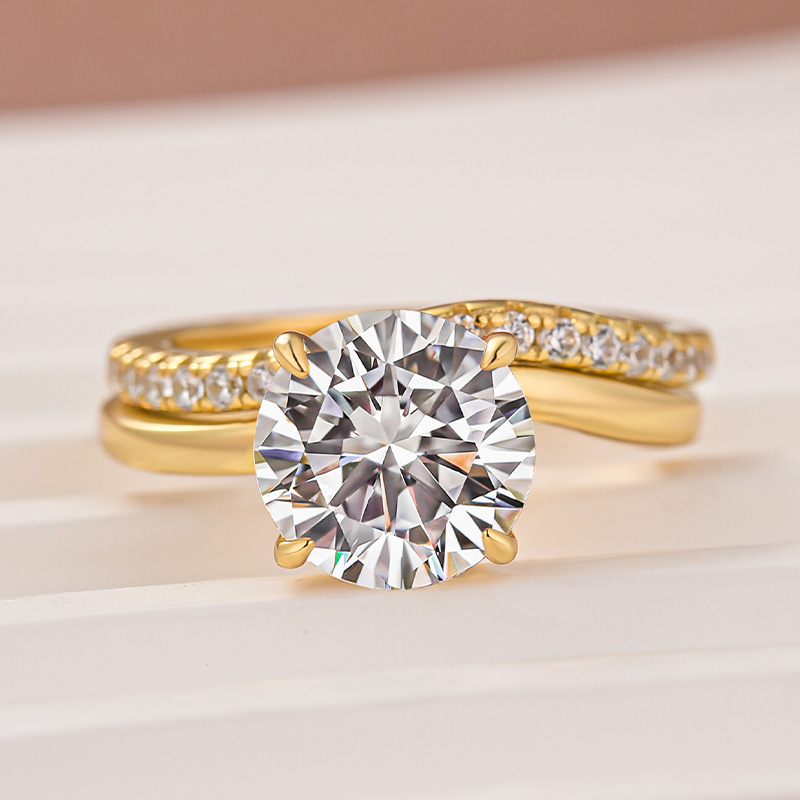
He handed me a 1-carat moissanite and told me to look at it under a loupe. Under 10x magnification, the stone was nearly flawless—cleaner than the vast majority of natural diamonds. Under the light, the fire was insane—blue and purple flashes dancing across the table.
And I thought to myself: if this stone had been dug out of the ground after a billion years, it’d be worth a million dollars. But because it took a few weeks in a lab, it’s worth fifty bucks.
Same chemical composition. Same physical properties. Looks identical. The only difference is “provenance.”
We spent a hundred years packaging “provenance” as “value.”
When My Girlfriend Asked Me “What Are You Proposing With”
I need to confess something that makes me feel deeply ashamed.
I spent two months researching moissanite—interviewed twelve industry insiders, visited three gem processing hubs, looked at thousands of stones under magnification. I thought I’d seen through every trick in this industry’s playbook.
Then my girlfriend asked me, “What are you thinking of using for the proposal?”
And I hesitated.
Not because I don’t know moissanite is better value. It’s because I know that in her circle of friends—the ones who obsess over Xiaohongshu and jewelry livestreams—moissanite would still get whispered about behind my back.
My hesitation made me sick to my stomach.
Because I realized I wasn’t nearly as clear-eyed as I thought I was. I still cared about “what people think.” I still cared about whether she’d feel disappointed because of social pressure. I still cared whether that stone was “good enough” in other people’s eyes.
This is where diamond marketing’s century-long brainwashing is most effective. They welded “expensive” to “precious” and “cheap” to “worthless” so tightly that even when you know the cheap stone is objectively better—better sparkle, better ethics, better environmental footprint—you still get hijacked by the “expensive means real love” script at the moment that actually matters. The proposal. The moment everyone’s watching.
A jeweler in Shenzhen told me something that cut deep:
“Moissanite will never break through two things—the ‘I do’ at a wedding and the ‘forever’ at a funeral. Because at those two moments, people don’t need rationality. They need ritual. And ritual has no respect for cost-effectiveness. “
Epilogue: Standing on the Side of That Red Carpet
Back to that night at the 2024 Met Gala.
Under the follow-spotlights, those moissanite rings and necklaces were blazing. The crowd was screaming. Photographers were firing shutters. No one suspected a thing about those stones’ “provenance.”
And I stood there watching it all, Amy Schumer’s words echoing in my head: “I win, because I’m using my choice to tell them—love doesn’t need a receipt to prove itself.”
Then I looked down at my own hand. Bare. Empty.
I thought: by this time next year, I might have a ring on this hand. I don’t know if it’ll be diamond or moissanite.
But I do know that when I finally make that choice, I won’t be held hostage by “what people think.” Not because I’ve stopped caring—but because I’ve finally seen clearly: the stone itself was never what mattered. What matters is why you’re wearing it, and who you’re telling the world you are.
The moissanite takeover of Hollywood isn’t really a story about “affordable alternatives.”
It’s about who gets to define “value”—and how that definition is slowly moving from the mine owners and marketing gurus into ordinary people’s hands.
The story isn’t over yet.
But the direction is clear.