1. The “Shift” at the Counter: A Scene I Witnessed with My Own Eyes
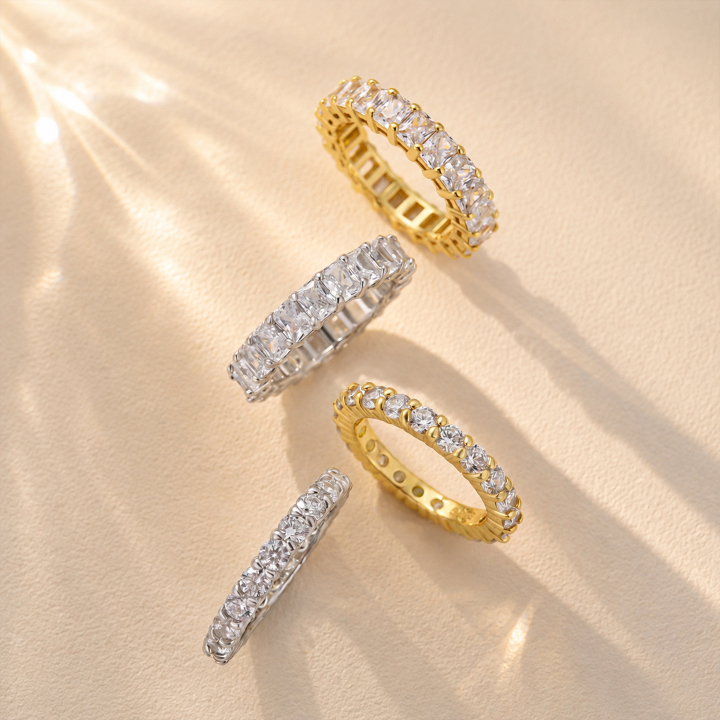
This past March, I went to the jewelry wholesale market in Guangzhou’s Liwan Plaza to visit an old acquaintance—Brother Chen, who’d been in the diamond OEM business for twenty years. In the past, his booth was packed with tiny melee diamonds set in 18K gold mounts, a blinding white sea under the lights. But this time, I noticed he’d cleared his prime display case, laid down a piece of black velvet, and neatly arranged more than a dozen stones on it—all moissanite.
Various sizes, from 0.5 carat up to 3 carats. He saw me staring, casually picked up a 2-carat stone, placed it in my palm, and said, “Step outside into natural light and take a look.”
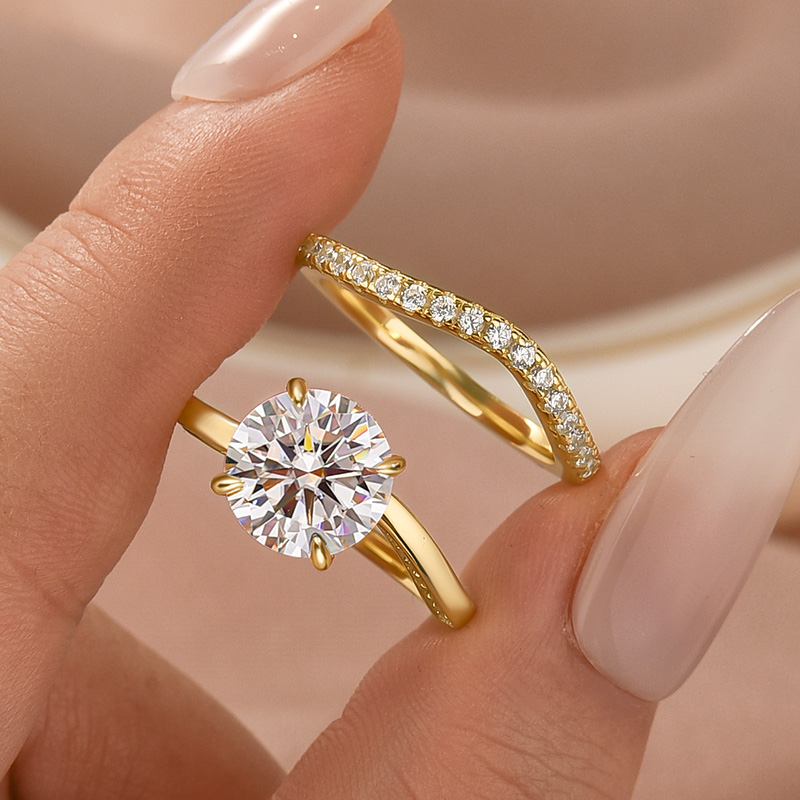
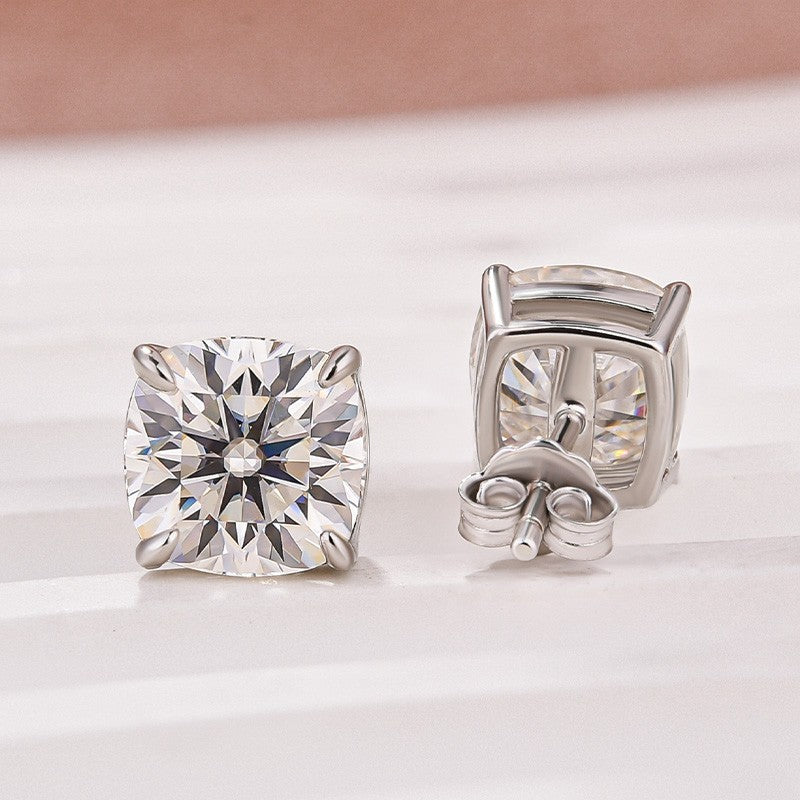
I did. Walking to the atrium of the mall under the skylight, that stone suddenly seemed to ignite—firebursts exploded across my hand, splashes of red, blue, and violet dancing on my skin. To be honest, my first thought was: if this were a diamond, you wouldn’t touch it for under two hundred thousand yuan.
Brother Chen took a drag on his cigarette and said casually, “This one? Wholesale price, seven hundred twenty.”
Right then and there, I suddenly understood why moissanite had blown up like this over the past two years. It’s not because it looks like a diamond—it’s because it gives ordinary people the confidence to own something stunning without the financial heart attack, at a tenth of the price.
Brother Chen added, “You know how many internet influencers come to me for stock? Not the mega-celebrities with millions of followers—just small creators with a hundred thousand or so. They wear these for videos, red carpets, brand events—all of them. Nobody’s going to shove a loupe in your face on camera, and on video, you can’t tell the difference anyway.”
I pressed him: “Do they tell their followers it’s moissanite?”
He laughed. “The smart ones don’t say anything. The smarter ones actually tell them. They say ‘this is moissanite, a few hundred bucks, link below.’ Fans think they’re being real, and conversion rates go through the roof.”
That detail stuck with me for a long time. Moissanite’s real rise isn’t about deception—it’s about honesty. It openly says: I was born in a lab, I’m cheap, but I’m blindingly brilliant. And that kind of frankness, ironically, resonates more with today’s young consumers than the aloof, untouchable aura of natural diamonds.
2. The Necklace That Made My Mom Ask, “What Stone Is That?”
After the wholesale market anecdote, I want to share something more personal.
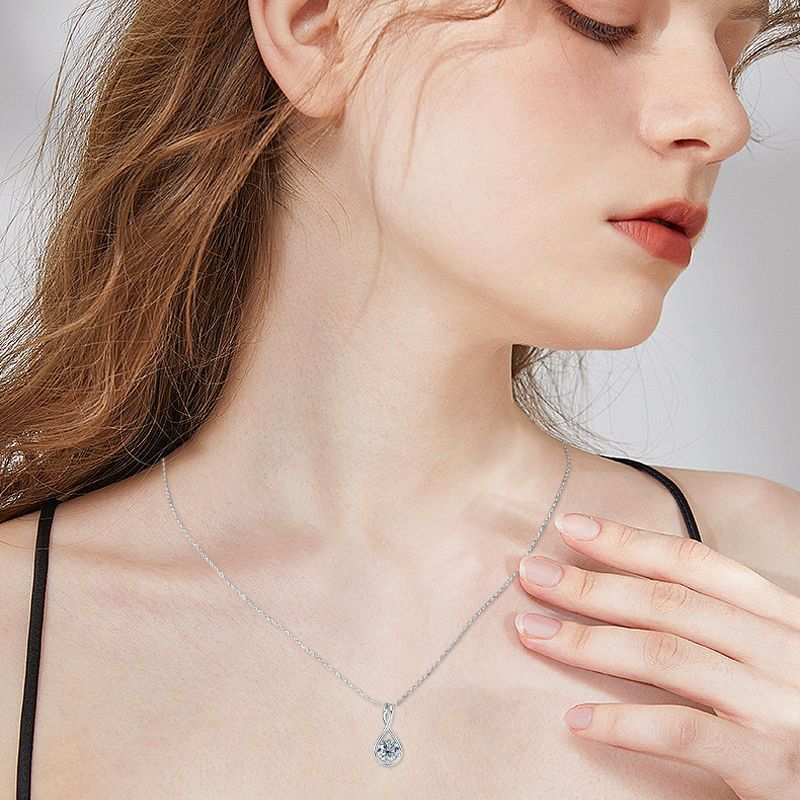
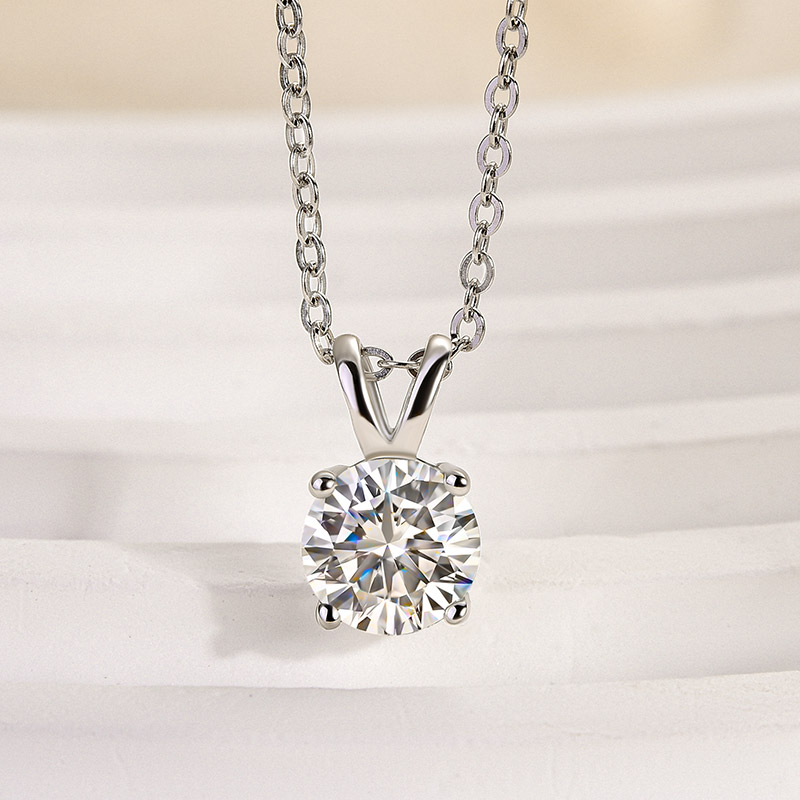
This past May, I went home for my mom’s birthday. She’s never been big on jewelry—she’s worn the same jade bangle for twenty years without swapping it out. That night, we were watching a drama together, and there was a close-up of Zhao Lusi wearing a simple single-stone锁骨链 (collarbone necklace) in “The Heart of Perfection.” Under the interior lighting, that stone caught the light and flashed.
My mom suddenly pointed at the screen and asked, “That necklace is beautiful—what brand is it? Is it expensive?”
I was stunned. My mom had never, in her entire life, voluntarily asked about any celebrity’s outfit. She didn’t even know who Zhao Lusi was until I told her. But that “sparkle” got her—that beam of light danced across the screen like a skipping stone on water.
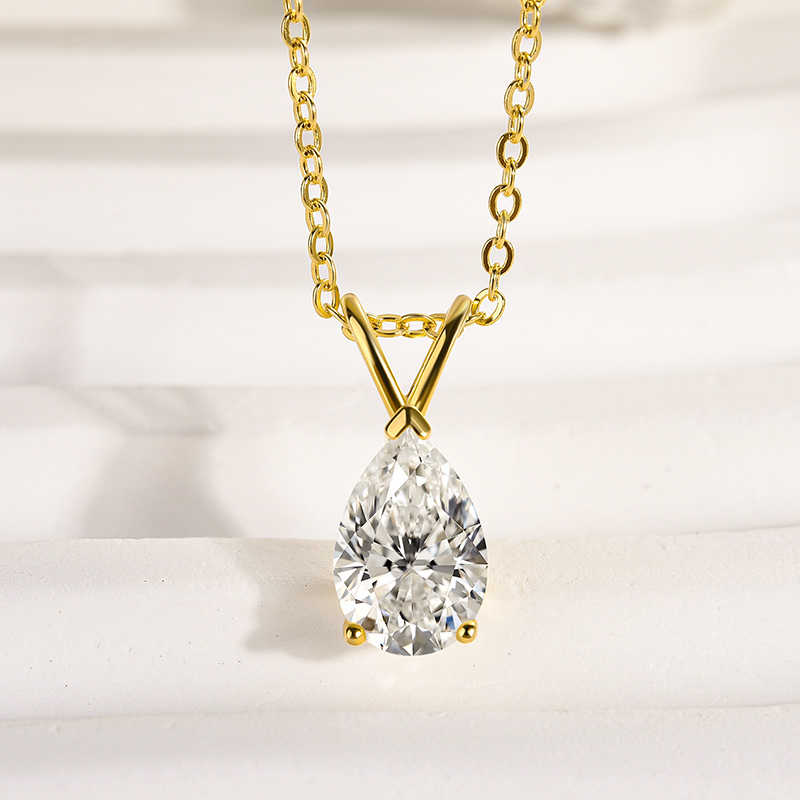
I pulled out my phone and searched—social media was already flooded with links to “Xu Yan’s same-style moissanite necklace,” priced anywhere from ninety-nine to over three hundred yuan. The comment sections were packed with photos. One girl wrote a long post that stuck with me: “I make six thousand a month. I can’t afford a real diamond, but I also want a necklace that can keep up with my nice dresses. I’ve worn this one for three months—never took it off in the shower—and it’s still sparkling.”
I bought one for my mom. Just over two hundred yuan. When it arrived, the packaging box looked decent enough. Under the living room chandelier, the stone threw off tiny, glittering fragments of light. She put it on, stared at herself in the mirror for a long time, then turned around and said something I’ll never forget:
“If this were real, I’d never dare wear it every day. But this one—I can wear it to square-dancing, to the wet market, and if I lose it, I won’t lose sleep over it.”
That sentence hit me like a lightning bolt. Moissanite isn’t fulfilling a “showing off” need—it’s fulfilling a “companionship” need. It changes the relationship between people and jewelry. With a diamond, you have to baby it—scared of bumps, scratches, loss. You go out to dinner and spend the whole meal anxious. With moissanite, you just live your life. Hardness is high enough that it won’t scratch, brilliance is bright enough to hold its own, price is low enough that you don’t flinch.
This is a completely different consumer psychology. Before, jewelry was an “asset.” Now, moissanite is an “accessory.” Assets need to hold value. Accessories just need to bring joy. When the gap between joy and investment value is tenfold, most people choose joy without hesitation.
3. In New York’s SOHO, I Saw How Westerners Actually Play with Moissanite
In June, I went to New York for work and stayed near SOHO. One day, I passed a boutique—and in the window sat a pair of gigantic earrings. Each center stone must have been at least 5 carats, surrounded by a halo of smaller diamonds, bigger than my thumbnail overall. I assumed it was some kind of installation art and wasn’t going to go in.
But the shop owner—an Italian-American woman with silver-streaked hair—was standing outside sipping coffee. She saw me staring at the window and called out, “That’s moissanite, not diamond.”
I was surprised. “Aren’t you worried customers will think it’s fake?”
She put down her coffee cup and said, with absolute seriousness, “In my store, there’s no such thing as ‘fake.’ There are only ‘different materials.’ Moissanite has its own physical properties—higher refractive index, richer fire, hardness sufficient for daily wear. It’s an independent category. It doesn’t need to borrow the diamond name to exist.”
There was an unshakable conviction in her eyes. She pulled me inside, opened a drawer, and showed me a collection of loose moissanite stones in all colors—light pink, pale blue, even light green. She told me she sources them from labs around the world through custom orders. Color is controllable. Clarity is controllable. Cut is controllable.
“Young people come in here, pick their loose stone, pick their setting, pick their cut. I send the specs to the factory, and three weeks later, they get their finished piece. They’re not looking for ‘diamond imitations.’ They’re looking for ‘a shiny thing that belongs to them.'”
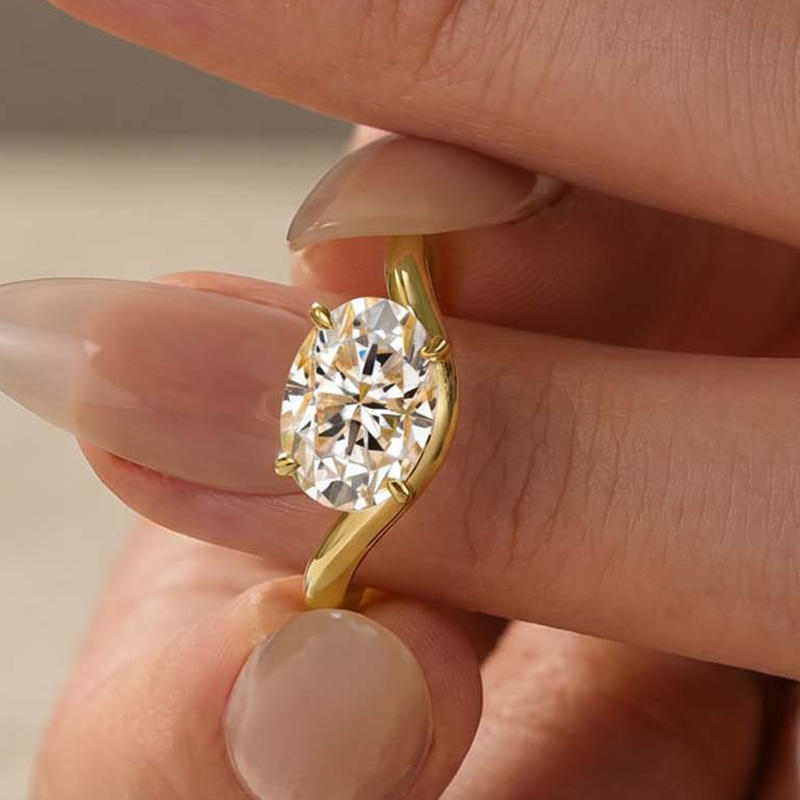
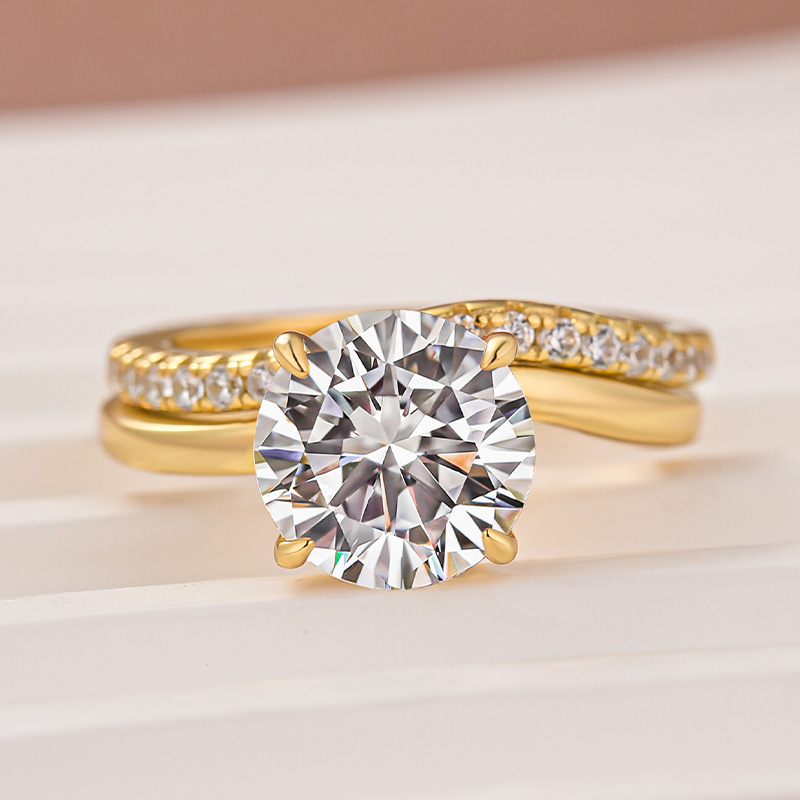
I ended up spending just over four hundred dollars on the spot—a 2-carat light pink moissanite, set in a rose gold ring. I’ve worn it for months now. Every time I glance down and see that pink flash, it makes me genuinely happy. I’ve never once thought of it as a “fake diamond.” To me, it’s just a gorgeous pink stone that I happened to be able to afford.
The Western attitude toward moissanite is actually much more “de-diamondized” than ours. In China, our conversations still circle around “can you tell it’s real or not?” Over there, they’re already talking about “does the color look good,” “is the cut brilliant enough,” “can I get it in a shape I want?” Those are two different stages—we’re still hung up on identity; they’re already playing with personality.
4. I Interviewed a Factory Owner, and Three Sentences Completely Changed My Mind
To write this piece, I asked a contact to connect me with a moissanite cultivation factory owner in Wuzhou, Guangxi—Mr. Zhou. Wuzhou is the world’s largest base for synthetic gemstones. Mr. Zhou’s factory isn’t huge, but the carat volume they push out annually is frankly staggering.
I asked him over the phone: “Do you see moissanite as a replacement for diamond?”
He paused for two seconds, then said three things—I wrote them down verbatim:
First: “The word ‘replacement’ already puts you at a disadvantage. We’re making a product in a completely different lane. Cars didn’t replace horses. Mobile phones didn’t replace letter paper. And moissanite won’t replace diamonds. They’ll coexist—but they serve different people.”
Second: “My clients fall into three buckets. Chinese women buy 1-carat or smaller—delicate pieces, collarbone necklaces, small earrings—everyday wear. Americans message me asking if I have 3-carat or bigger in stock—they want bold, eye-catching, photogenic. Europeans are the pickiest—they obsess over cut proportions, hearts-and-arrows symmetry, certification papers. Same material, but people from different places are buying it as completely different things.”
Third: “The customer I fear most isn’t the one who complains it’s not a diamond. It’s the one who wears it as a diamond for ten years and one day panics because the fire seems to have faded—when in reality, it’s just oil buildup. Moissanite is oleophilic. Cook with it, get some kitchen grease on it, it’ll look dull. Run it under dish soap and it’s back to new. That’s about the only caveat. Much easier to maintain than diamond.”
After hearing those three sentences, I told myself: that’s the anchor of this piece. Moissanite’s problem has never been that it’s “not good enough.” It’s that we keep comparing it to something else. If you insist on comparing table tennis to tennis and asking which is faster, you’re missing the point. They’re different sports.
5. My Final Take: Moissanite’s Popularity Is the Victory of Consumer Disenchantment
After writing all this, I want to seriously articulate one final opinion.
Our generation grew up on the marketing mythology of diamonds. “A diamond is forever”—that one advertising slogan saddled a lump of crystallized carbon with all these crushing meanings: love, eternity, status, class. When you buy a diamond ring, you’re not buying a stone. You’re buying the entire symbolic system society has built around it.
But moissanite’s rise is precisely about dismantling that system.
It used lab technology to crush the material cost, used social media to skyrocket information transparency, and then let consumers make their own choice: Are you going to pay a 20x premium for the “natural” label? Or are you going to pay a reasonable price for “visually stunning brilliance”?
More and more people are choosing the latter. Including those celebrity-style pieces I saw, including the necklace I bought my mom, including that pink ring I custom-ordered in New York. Behind all these purchases lies a growing consensus: the value of jewelry shouldn’t be determined by the depth of a mine—it should be determined by the light in the wearer’s eyes.
Moissanite is far from perfect. Its fire is almost too intense—some find it gaudy. It has no scarcity—collectors won’t touch it. Its price is still dropping—resale value is practically zero. But these very weaknesses are also its strengths—it transforms jewelry from an “investment” back into a “plaything,” from a “heirloom” into a “fast-fashion accessory.”
And that’s perfectly fine. Diamonds can stay enthroned on their pedestal. Moissanite can run wild down on the ground. Each has its own way of living.
One last small story. Last week, I wore that pink moissanite ring to a dinner party. The woman sitting next to me stared at it for a long time, then leaned in and whispered, “That color grade—must have cost you a pretty penny, right?”
I took a sip of tea and smiled. “Four hundred bucks. New York. Isn’t it pretty?”
She froze for a second, then picked up my hand and turned it over and over, studying it from every angle. Finally, she said, “Well then—I’m going to search for one tonight.”
And that’s the era of moissanite—it’s made “beautiful” something that no longer needs a heavy receipt to prove itself.