Blog
I Spent Seven Months Testing Moissanite—Here’s What Nobody Tells You About the Stone That’s Taking Over America

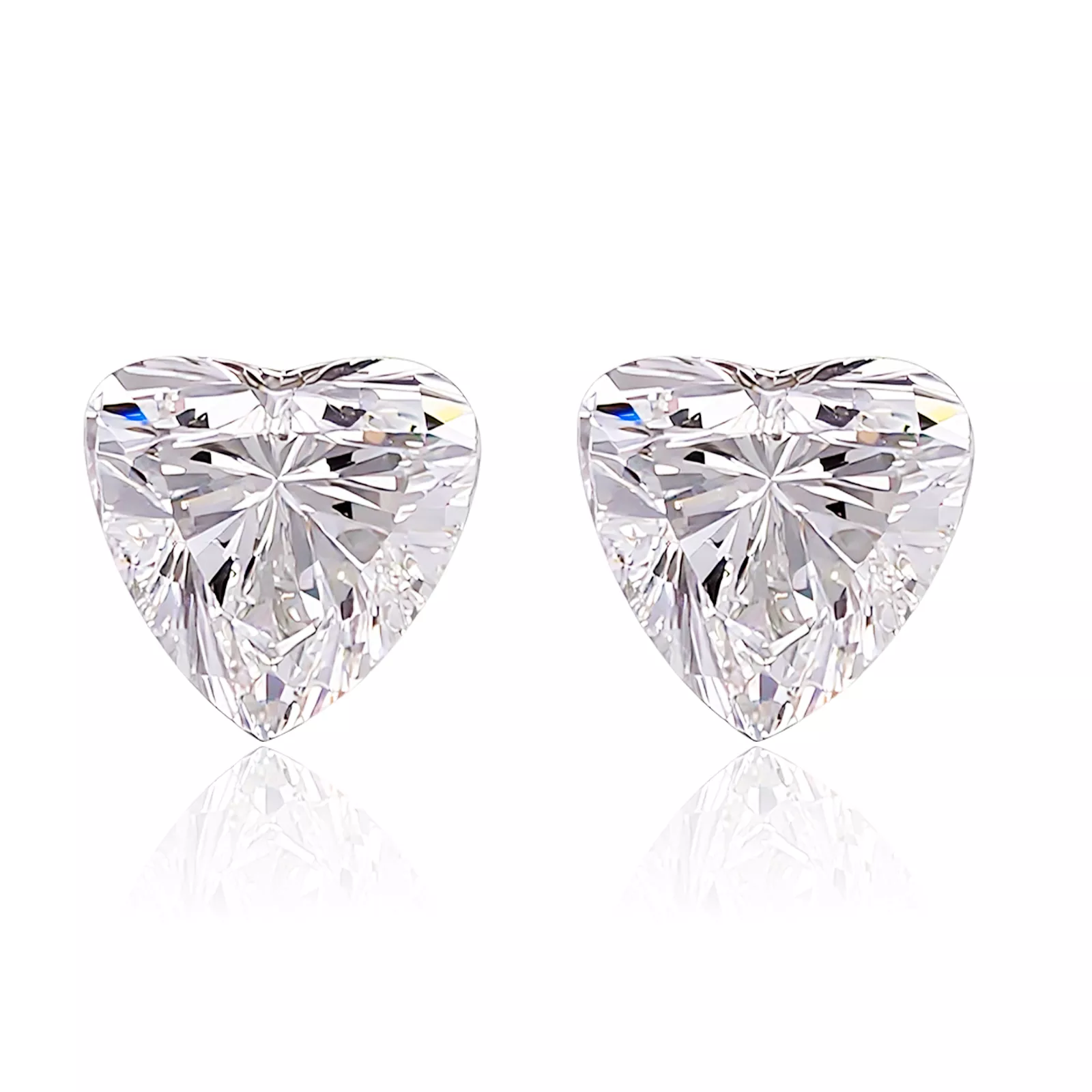
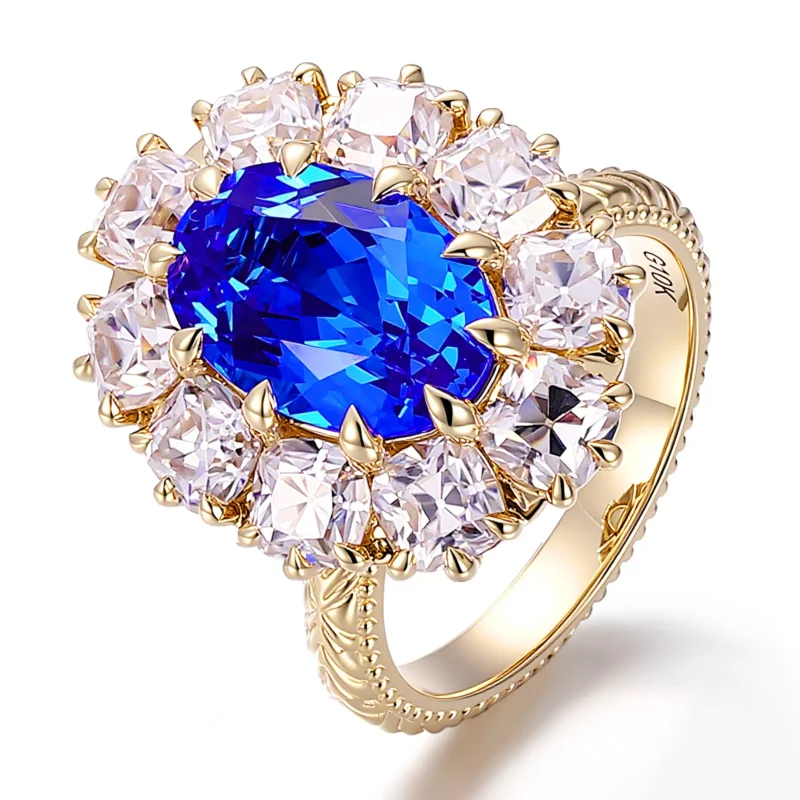
The Ring That Made My Sister-in-Law Cry—For the Wrong Reason
Last Christmas, my sister-in-law Sarah pulled me aside at the dinner table. She’d been engaged for three months and was still obsessed with her ring—a stunning 2-carat oval solitaire that she’d picked out with her fiancé. But there was something in her voice when she said, “Can you tell? Like, really tell?”
She held out her hand. Under the warm glow of the dining room chandelier, the stone shot off a spray of rainbow fire—red, blue, violet, all dancing across the back of her hand. It was gorgeous.
I leaned in. “Tell what? That it’s stunning?”
“That it’s moissanite,” she whispered. “We paid seven hundred dollars. The diamond version of this would have been twelve thousand. But I keep worrying—does it look fake?”
That was the moment I realized how deep the anxiety runs around this stone. And also the moment I realized I knew absolutely nothing about it.
So I did what I always do when I don’t know something: I went down a rabbit hole. Seven months, fifteen different rings, three continents of shopping, and a whole lot of mistakes later—here’s what I actually learned.
My First Purchase: A $39 Amazon Special That Lasted Four Weeks
Let me start with my biggest screw-up, so you don’t make the same one.
After Sarah’s confession, I went home and immediately started scrolling Amazon. I typed in “moissanite ring” and sorted by price—lowest first. There it was: a 1-carat “D Color VVS1 Moissanite” ring, sterling silver band, for $39.99. The reviews were glowing. Five stars. People posting photos of their rings looking like Hollywood diamonds.
I hit “Buy Now.”
That ring was a disaster.
The stone looked incredible for about three and a half weeks. Then, one morning in the bathroom light, I noticed it had gone… cloudy. Like someone had breathed on a mirror and the fog never lifted. The rainbow fire was gone, replaced by a dull, grayish shimmer. It wasn’t moissanite. It was cubic zirconia with a coating.
I learned this from a Canadian reviewer on Amazon who’d done the research that I should have done: “On the Mohs scale of mineral hardness, Moissanite rates a 9.25 out of 10, making it perfect for daily use. Cubic Zirconia rates 8-8.5 out of 10,” she wrote. “These synthetic diamonds are made for wear and tear, will not scratch easily, will not chip or break.” The difference? CZ gets scratched and cloudy over time. Real moissanite doesn’t .
The $39 ring wasn’t moissanite. It was a cheap simulant riding the hype. And the coating was wearing off.
Lesson one: If the price seems too good to be true, it’s not moissanite.
What I Learned About “Made in USA” Claims
After the Amazon disaster, I figured I’d go upmarket. I found a seller on Etsy advertising “Premium American-mined Moissanite” with “GRA Certified” stones. Paid $289 for a 1.2-carat solitaire.
Then a buddy of mine who runs a jewelry import business in L.A. asked to see the certificate. He looked at it for about three seconds and burst out laughing.
“GRA isn’t a thing,” he said, handing it back. “It’s a made-up name designed to sound like GIA—the actual Gemological Institute of America. These certificates cost about three bucks to print. Sellers can write whatever they want on them .”
I looked closer at the packaging. “But it says ‘American’ on the listing.”
He sighed. “Ninety percent of the world’s moissanite comes from China—specifically Shandong, Guangxi, and Guangdong provinces. That’s the reality. It’s where the lab-grown silicon carbide production is most advanced and most affordable. Any seller claiming ‘American moissanite’ for under $500 is almost certainly lying. The legit US-made stuff? You’re looking at $1,500 per carat minimum .”
He gave me the rule he uses: “Don’t trust a certificate. Don’t trust ‘imported’ labels. Trust what your eyes see and what the metal is made of. “
The WeddingWire Thread That Changed My Mind
I spent a lot of time in online forums, just reading what real people were saying. And the most eye-opening thing I found was a long thread on WeddingWire where women were talking about wearing moissanite engagement rings day in and day out .
One woman, user “Devoted October 2021,” wrote about her ring: “This is my moissanite just now that I’ve been wearing every day since August 2018 (taken off to shower, wash dishes, messy tasks). The glimmer is sharp and still has lots of ‘fire’ if I move my hand in the light. No scratches obviously, and no discoloration like yellowing or anything. I’m quite happy with my moissanite .”
Another woman shared: “I have a family member that chose moissanite for ethical/environmental reasons. Had she not told me it was moissanite, I would never have known it wasn’t a diamond. She wears it daily, but removes it for the usual things (showering, washing dishes, working out, sleeping, etc.). She’s been married over four years now, and has had no issues with the ring .”
But one comment stood out more than the others. A user named CM wrote something that made me reconsider everything: “Moissanite is an entirely different stone than diamond with different properties and light performance. IMO you should only get moissanite if you love it for itself, not if you’re hoping to make anyone think it’s a diamond. “
That hit hard. Because if you’re just trying to “trick” people, you’re setting yourself up for disappointment. But if you genuinely love the stone for its own qualities—its extra fire, its 9.25 hardness, its ethical sourcing—then you’re in the right headspace.
The Ethical Question That Actually Made Me Switch
Here’s where things get personal.
I had a long phone call with my college friend Marcus, who works in sustainable supply chain consulting. He’d been following the diamond industry for years. And he told me something I couldn’t un-hear.
“Diamonds aren’t all blood diamonds anymore,” he said. “But the mining process still displaces communities, disrupts ecosystems, and consumes massive amounts of water and energy. Even the so-called ‘clean’ mines have a footprint. Moissanite, by contrast, is grown in a lab. You’re looking at one-fiftieth the environmental impact for the same carat weight.”
He paused. “Also, millennials and Gen Z care about this stuff more than any generation before them. A 2024 market report shows the US moissanite market at about $11.8 million, and it’s growing at nearly 5% a year. The key drivers? ‘Ethical sourcing concerns and the growing demand for sustainable luxury’ . Younger consumers are actively choosing lab-grown over mined gemstones. “
That sealed it for me. I wasn’t just buying a shiny stone anymore. I was buying something that aligned with how I wanted to spend my money.
What I Found in New York: Pink Moissanite and an Italian-Owned Boutique
Six months into this whole experiment, I flew to New York for work and ended up in SOHO. I wandered into a boutique run by an Italian-American woman in her late 60s. Her name was Rosa. Her store carried moissanite, but not as “diamond alternative.” She was selling it as its own thing.
“Over here,” she said, pulling open a drawer, “we’ve got colors. This is where moissanite really shines—literally. You can get it in pink, blue, green, near-colorless. The lab process allows for consistent color that you’d pay a fortune for in diamonds.”
She held out a 2-carat, light pink moissanite set in rose gold. “This is $420. The diamond equivalent—if you could even find a natural pink this clean—would be north of $20,000.”
I stared at it. It was beautiful. Not because it looked like a diamond. Because it looked like a gorgeous pink gemstone that I could actually afford.
Rosa saw my face. “You like it? Here’s my advice: Don’t buy moissanite to fool anyone. Buy it because you like how it looks, you like how it feels, and you like how much money you still have in your bank account when you walk out the door. “
I bought the ring. That’s the one I wear now.
What the Industry Won’t Tell You (But I Will)
After all this testing and spending way more than I should have, here’s my honest, no-BS guide:
1. Price Tiers Actually Matter (But Not the Way You Think)
| Price Range | What You Get | My Experience |
|---|---|---|
| Under $80 | Almost certainly CZ or coated glass. Won’t last 3 months. | Returned it within 30 days. |
| $100–$300 | Real moissanite in a silver or silver-plated setting. The stone itself is fine—good color, good fire. But the metal will wear down in 1-2 years. | Still have one of these as a backup. Looks great, but the band scratches easily. |
| $400–$800 | Real moissanite in 10K or 14K gold. This is the sweet spot. Stone quality is high (DEF color, VVS clarity) and the setting holds up. | This is what Sarah’s ring is. She’s still thrilled. |
| $1,000+ | Premium stone + platinum or 18K gold. Probably closer to what you’d see in a traditional jewelry store. | Honestly, the visual difference from the $500 tier is minimal. You’re paying for brand and metal thickness. |
2. Certification Is Meaningless (Here’s What to Check Instead)
“The GRA certificate that some sellers include? It’s a joke inside the industry, ” my L.A. friend told me. “Nobody who knows jewelry takes it seriously .”
So what actually matters?
- Color: Look at the stone on a white piece of paper. Good moissanite looks white—not yellow, not blue-tinted.
- Fire: Move it under natural sunlight. You should see distinct rainbow flashes. If it looks flat, the cut is bad.
- Cut: Ask the seller for the exact dimensions (in millimeters). A 6.5mm round is roughly equivalent to a 1-carat diamond .
- Setting: Don’t cheap out on the metal. A $200 stone set in a $20 silver band will look like a $200 ring. A $200 stone set in $400 worth of 14K gold will look like a $2,000 ring.
3. It Doesn’t “Yellow” Over Time
I was nervous about this. One of the old rumors about moissanite is that it turns yellow after a few years. That’s not true for modern lab-grown moissanite .
What can happen: Moissanite is oleophilic—it attracts oils from your skin, cooking, lotions. If it looks dull, it’s not the stone degrading. It’s just coated in everyday grime. Wash it with warm water, mild dish soap, and a soft toothbrush. It’ll look brand new .
4. The Ethical Argument Is Legitimate
This isn’t just marketing fluff. The market for moissanite is being driven by consumers who specifically want lab-grown, conflict-free stones . A 2025 market analysis found that the global moissanite market is projected to hit $53.8 million by 2032, with North America leading the charge—not because people want cheap diamonds, but because they want high-quality, affordable, sustainable jewelry .
The Honest Bottom Line
After seven months and fifteen rings, here’s what I believe:
Moissanite isn’t a diamond replacement. It’s a different thing entirely. It has more fire, slightly less hardness (9.25 vs 10), a completely different origin story (meteorite discovery + lab growth), and a price tag that’s a fraction of natural diamonds.
Should you buy it? Yes—if you want a beautiful, durable, ethical stone that you can wear every day without anxiety. No—if you’re trying to pass it off as a diamond to impress people. That’s a losing game. There are visual differences. If someone knows jewelry, they might be able to tell.
The woman in the forum who said “get moissanite if you love it for itself”—she was right. I love my pink moissanite ring because it’s pink, because it’s dazzling in sunlight, because I can wear it to the grocery store and not stress about losing a month’s rent.
That’s the real appeal. Not that it looks like a diamond. But that it’s beautiful on its own terms—and it lets you keep your savings intact.
Sarah’s still wearing her ring. She stopped asking if people can tell. She just enjoys it now.
And honestly? That’s the whole point.