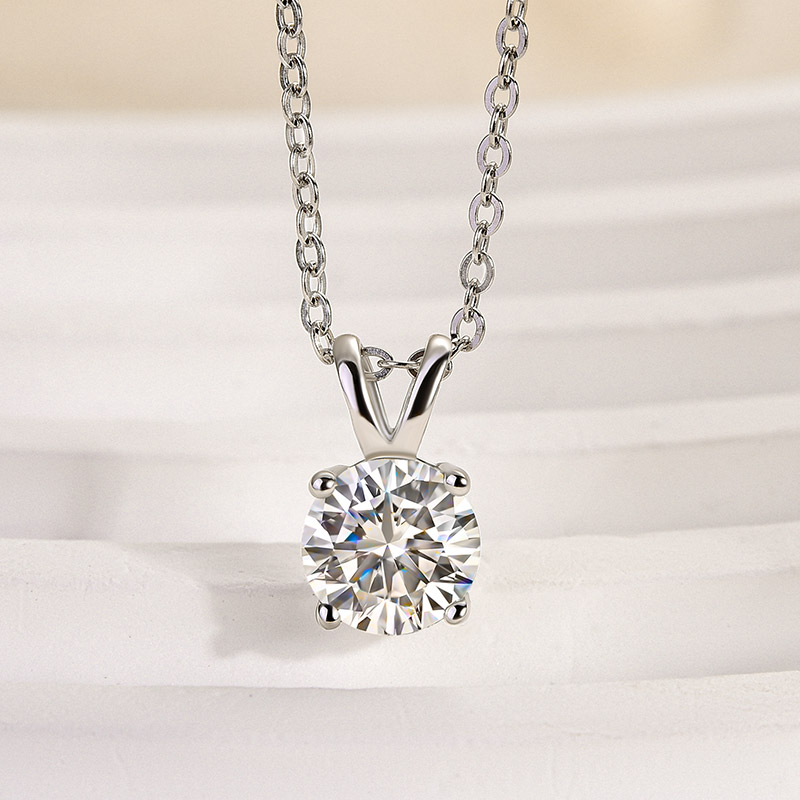
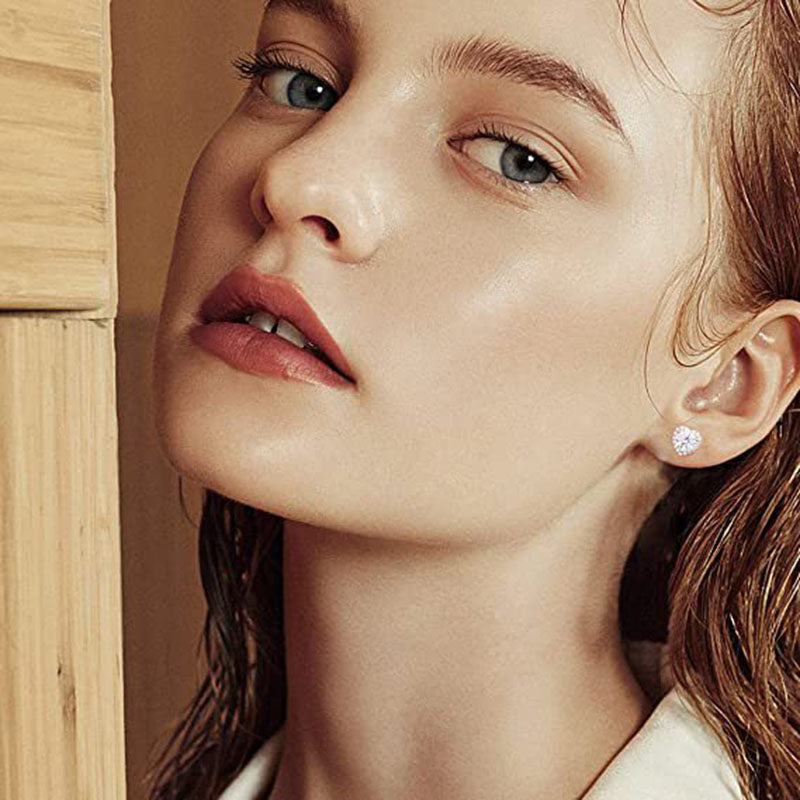
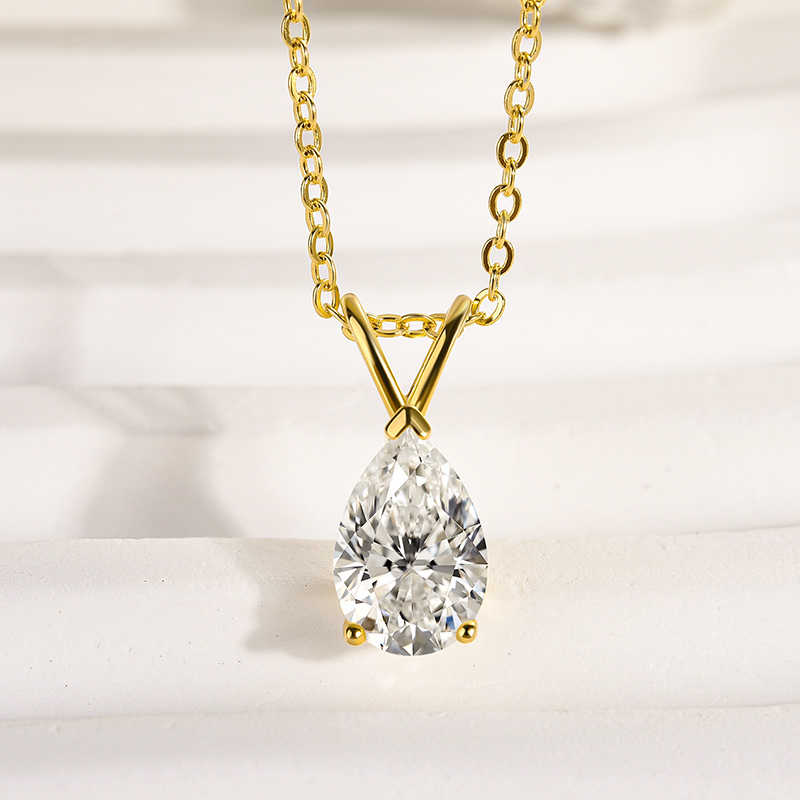
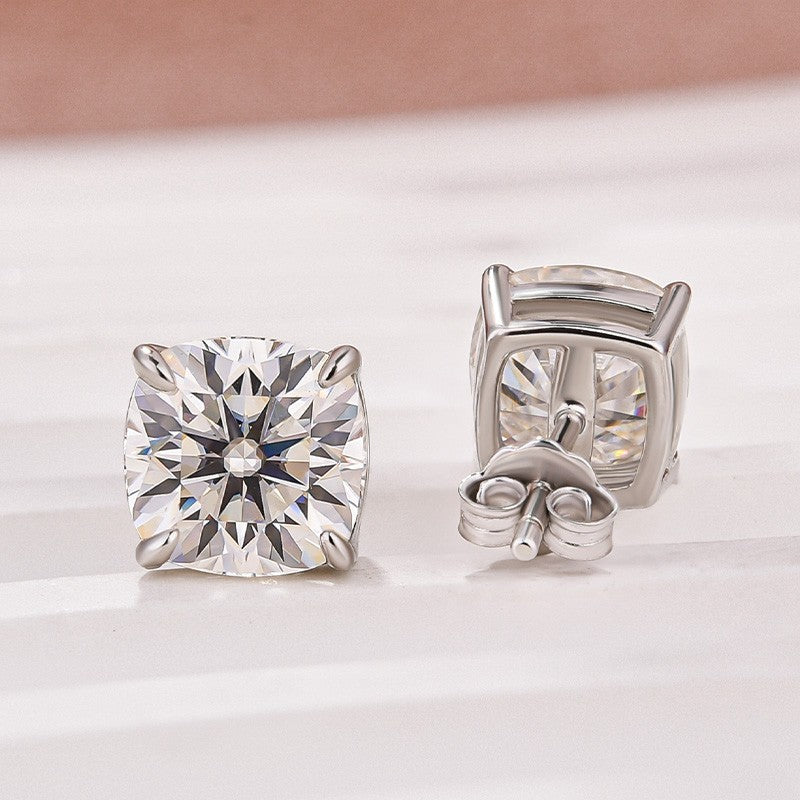
Not every sparkling stone is called a diamond, but every unforgettable love story deserves to be witnessed by moissanite’s fire. This review, written from a jeweler’s perspective, breaks down moissanite’s physical appeal with hard data and infuses it with emotional warmth through celebrity stories and tales of romance.
I. What Is Moissanite? A Legend from Meteorite to Laboratory
Moissanite, with the chemical composition silicon carbide (SiC), was first discovered in 1893 by French scientist Henri Moissan in a meteor crater in Arizona. These extraterrestrial crystals are so rare that natural moissanite exists almost exclusively in research institutions. Today, all moissanite on the market is laboratory-grown, synthesized through high-temperature, high-pressure technology to achieve quality comparable to natural gemstones.
What does this mean? It requires no large-scale mining, involves no conflict minerals, and every moissanite is born from a handshake between technology and nature.
II. Hard Data: A Complete Breakdown of Moissanite’s Physical Properties
To determine whether a gemstone is worth owning, you must first examine its “hard metrics.” Below is a summary of moissanite’s core physical properties, compiled from publicly available data from GIA (Gemological Institute of America) and IGI (International Gemological Institute):
Metric
Moissanite
Natural Diamond
Notes
Chemical Composition
Silicon Carbide (SiC)
Carbon (C)
Fundamentally different
Mohs Hardness
9.25
10
Second only to diamond, far above cubic zirconia (8.5)
Refractive Index
2.65–2.69
2.42
Moissanite bends light more strongly
Dispersion (Fire)
0.104
0.044
Moissanite has 2.36× the fire of diamond
Density
3.22 ± 0.02 g/cm³
3.52 g/cm³
About 8% lighter than diamond
Birefringence
0.043
None (single refractive)
Visible doubling of facet edges under magnification
What the Data Means:
Hardness (9.25 vs. 10): On paper, the difference is only 0.75, but in mineralogy, hardness is exponential. Diamond is the hardest natural substance on earth, and although moissanite is harder than ruby (hardness 9), prolonged high-friction wear (such as daily ring use) may still cause microscopic wear along facet edges. That said, 9.25 is more than sufficient for everyday wear — it’s far harder than steel and glass and won’t scratch easily.
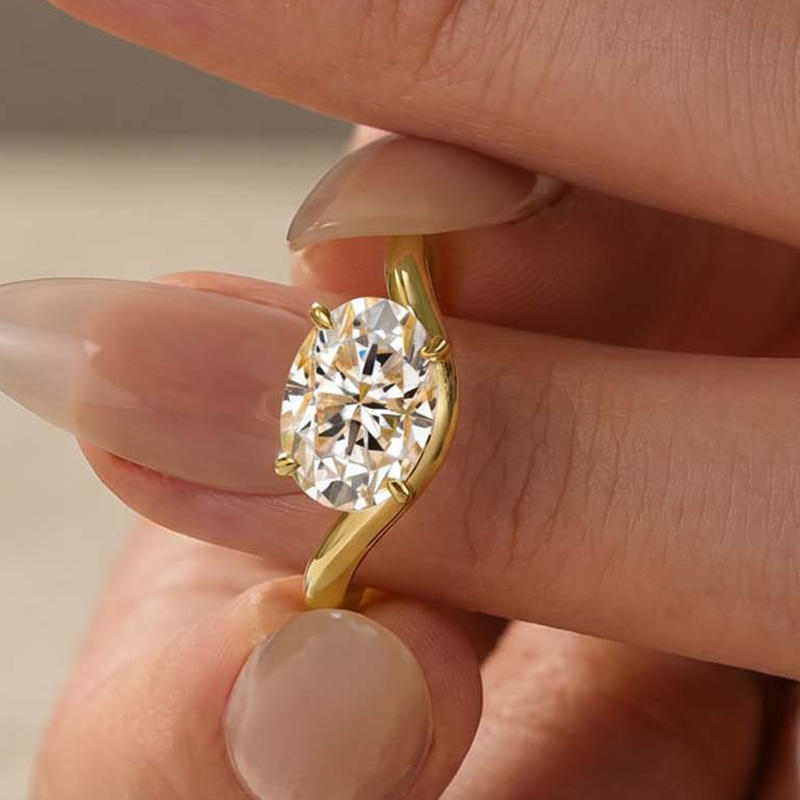
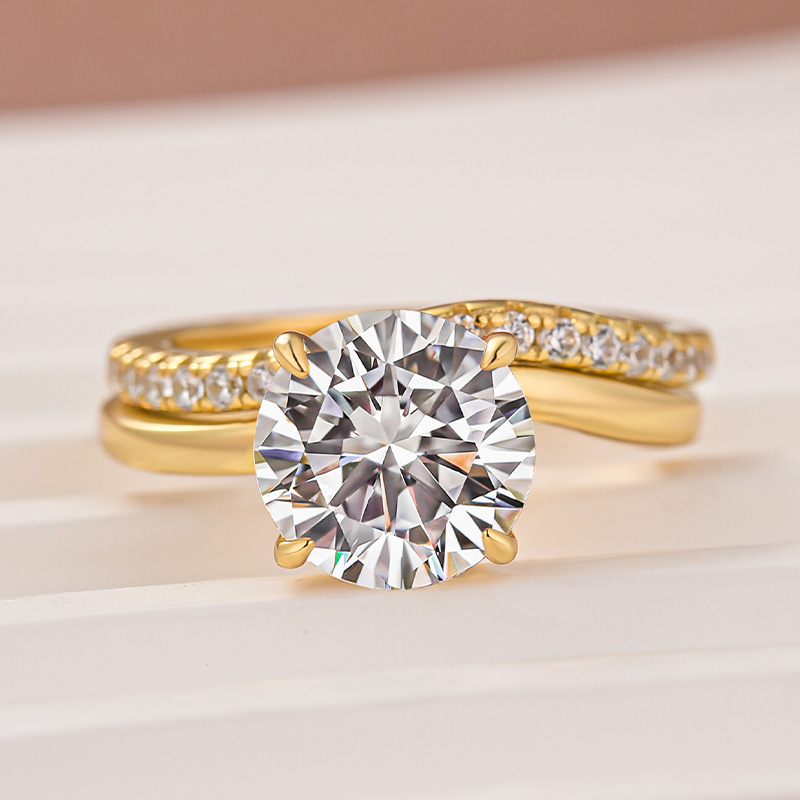
Fire (0.104 vs. 0.044): This is moissanite’s most distinctive feature. The higher the dispersion value, the greater the gem’s ability to split white light into a full spectrum of colors. Moissanite’s fire is roughly 2.5× that of diamond, unleashing a brilliant rainbow of light in sunlight.
Refractive Index (2.65–2.69 vs. 2.42): A higher refractive index means light reflects more fully once inside the stone, making moissanite appear “brighter” than diamond.
III. Celebrities and Moissanite: Those Glittering Moments
Although moissanite is laboratory-grown, it has quietly made appearances on red carpets, on screen, and on celebrities’ fingertips. Let’s explore a few real stories that capture moissanite’s allure.
👑 Elizabeth Taylor’s Philosophy of Jewelry
“Jewelry is not meant to be worn — it is meant to be loved and collected.” That was Taylor’s famous creed. She owned countless diamonds and precious gems throughout her life, but her most treasured pieces were never the most expensive — they were the ones carrying the deepest emotion.
In 2020, an anonymous collector commissioned a replica of the legendary “Taylor-Burton Diamond” necklace, set with moissanite as the center stone, and gifted it to his daughter as a wedding present. In his letter, he wrote: “True love is not measured by price, but by every sparkle that records the journey you’ve taken together.” This moissanite necklace has since become a family heirloom — it doesn’t need to compete with diamonds, because what it carries is a profound emotional bond across generations.
Jeweler’s Perspective: Taylor witnessed countless gemstones in her lifetime, but what she cared about most was always whether the emotion behind the piece was real. Moissanite offers exactly that possibility — making “a piece worth cherishing” accessible to everyone.
✨ Angelina Jolie’s “Choice”
In 2016, during her marriage to Brad Pitt, Angelina Jolie was spotted wearing a pair of moissanite earrings at a charity event. In an interview with Vogue, she explained her choice:
“I respect every gemstone that is mined, but I respect even more those that don’t require destroying the earth to possess. Moissanite isn’t just an ‘alternative’ — it’s the answer for our time.”
This statement sparked widespread public interest in laboratory-grown gemstones. While her earrings were later identified as lab-grown diamonds, moissanite’s name entered the public consciousness — it came to represent an attitude toward sustainable fashion.
Jeweler’s Perspective: Jolie’s choices are never accidental. On her, moissanite wasn’t “can’t afford diamond” — it was “I can choose to be more sustainable.” This is moissanite’s new positioning among high-end consumers: a choice to be proud of.
💍 “More Fire Than Diamond” — A Love Declaration
In 2023, though Hollywood couple Tom Holland and Zendaya haven’t publicly worn moissanite, a growing trend on social media shows young couples choosing moissanite rings as “promise rings” rather than “engagement rings” — symbolizing “I’m choosing you right now,” not “wait until I’ve saved enough to marry you.”
One Instagram blogger wrote upon posting her moissanite engagement ring:
“He asked me: diamond or moissanite? I said, our love doesn’t need to be defined by the 4C’s. Moissanite’s fire is more brilliant than a diamond’s — just like the way you brighten my every day. This is exactly the ‘different’ I want.”
The post received over 120,000 likes, with comments flooded with “congratulations” and “where can I get one?” It reveals a trend: a new generation of consumers is redefining what constitutes a “good enough” token of love. Moissanite, with its unique fire, offers a new possibility for expressing love — one that doesn’t fall short of diamonds, but actually outshines them.
IV. Who Should Buy Moissanite? Who Should Think Twice?
✅ Who Should Buy Moissanite
Budget-conscious couples: A 1-carat high-quality moissanite loose stone typically costs anywhere from a few hundred to around one to two thousand yuan, while a lab-grown diamond of equivalent quality would run several thousand yuan, and a natural diamond would start at tens of thousands.
Daily wearers: With a hardness of 9.25, it’s more than durable enough for everyday use — no need to worry about scratching.
Those who love visual impact: If you want a “blindingly brilliant” effect, moissanite’s rainbow fire will absolutely deliver.
Eco-conscious consumers: Lab-grown means no mining — aligns with sustainable values.
Story seekers: Moissanite itself carries a narrative — born from a meteorite, reborn in a lab, and ending up on your finger.
❌ Who Should Think Twice
Those seeking perfect mimicry: If you want a stone that looks exactly like a diamond, moissanite’s intense fire can actually be a “tell.” Lab-grown diamond (CVD) is physically identical to natural diamond and is a more faithful alternative.
Those valuing investment/resale value: Moissanite has virtually no secondary market value — it’s a consumer product, not an investment.
Professional identification scenarios: Standard diamond testers can’t distinguish moissanite from diamond because both are excellent thermal conductors. Professional labs like IGI and GIA have specialized testing protocols for moissanite.
V. Buying Guide: How to Avoid Pitfalls
1. Understand Quality Grades
Moissanite quality can be evaluated using the same 4C standards (Color, Clarity, Cut, Carat). Color grades range from D (colorless) to N. The closer to D, the more transparent and color-free the stone, and the more spectacular its fire.
2. Beware of Counterfeits
Some dishonest sellers use cubic zirconia coated with moissanite film to fake real moissanite. How to tell:
Fire: Real moissanite’s fire is vivid, shifting rainbow light; cubic zirconia’s fire tends to be cold-white and static.
Doubling: Under 10× magnification, look for doubled facet edges — a hallmark of moissanite’s birefringence.
Certificate: Demand a lab report stating “Synthetic Silicon Carbide (Moissanite).”
3. Match the Story to the Stone
When you’re drawn to a moissanite ring by its romantic backstory, be sure to examine its fire in both natural sunlight and indoor lighting. High-quality moissanite sparkles dynamically in all lighting conditions; low-quality moissanite may only “come alive” under intense spotlights, looking dull in everyday settings.
Conclusion: Is Moissanite Worth It?
Yes. But more accurately, it deserves to be “reconsidered.”
Moissanite is not a “fake diamond” — it is a laboratory-grown gemstone with its own independent character. Its fire is more flamboyant than diamond’s, its price far more accessible, and its hardness robust enough for daily wear. If you’re after brilliance, value, and durability, moissanite is an outstanding choice.
But more importantly, moissanite offers us a new way of thinking: Why should a token of love always be measured by the 4C’s? When Taylor used jewelry to preserve emotion, when Jolie used her choices to express values, and when countless young couples use moissanite to declare “I choose you right now” — the true sparkle was never the stone itself, but the intention of the person behind it.
If you seek the exact look and feel of a diamond, or if you care about future resale value, lab-grown diamond (CVD) is likely a more suitable direction. But if what you want is a fire that catches every eye and a story worth telling — moissanite is your answer.