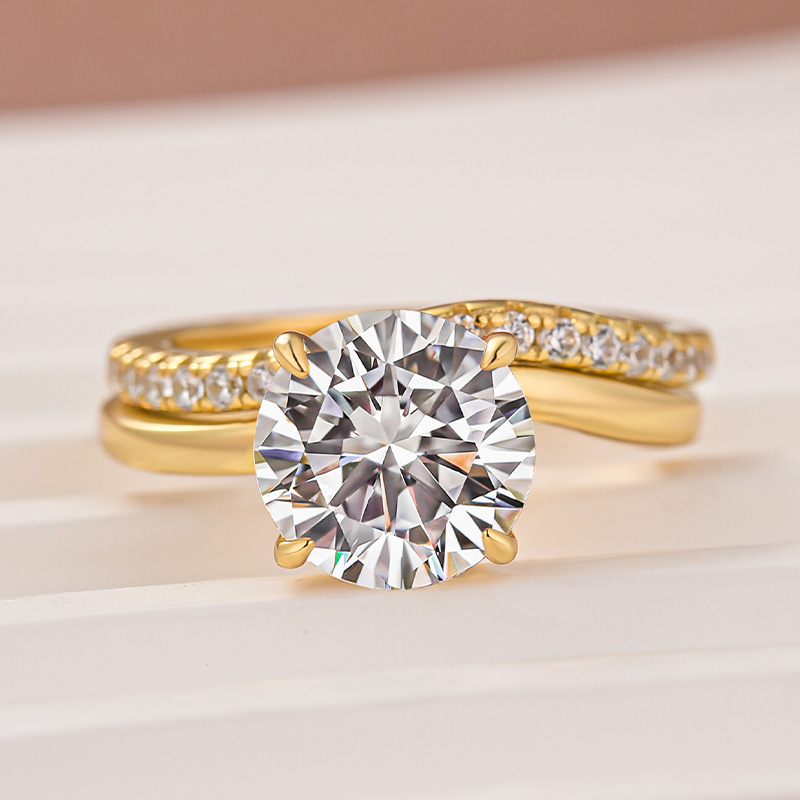
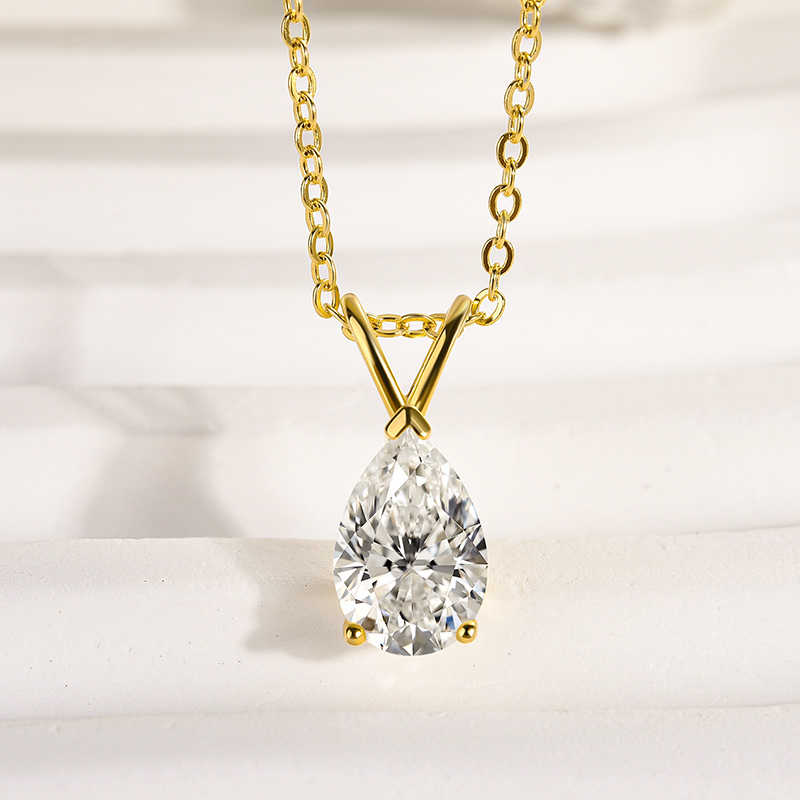
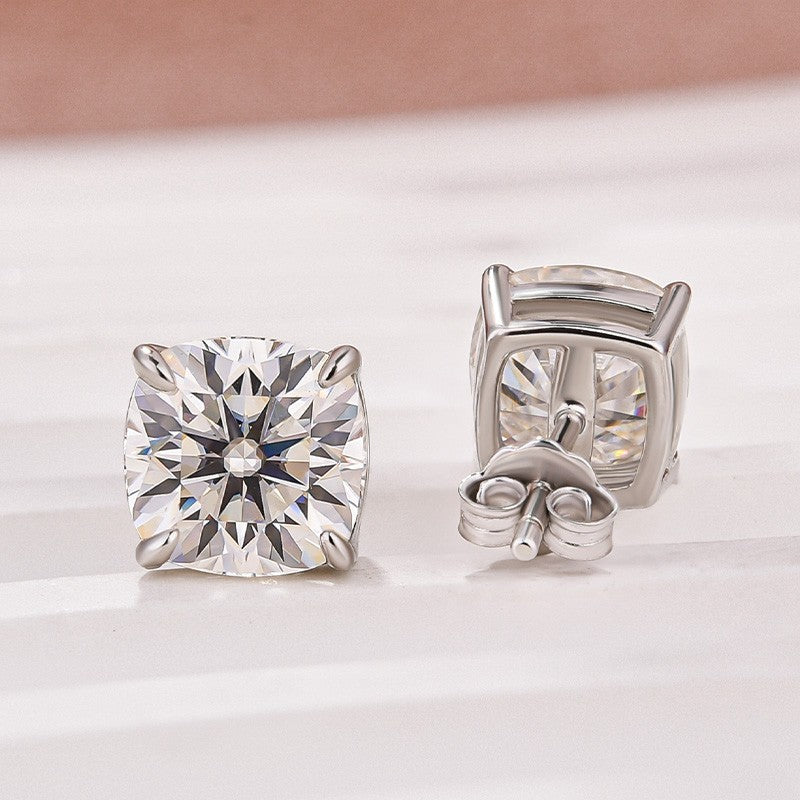
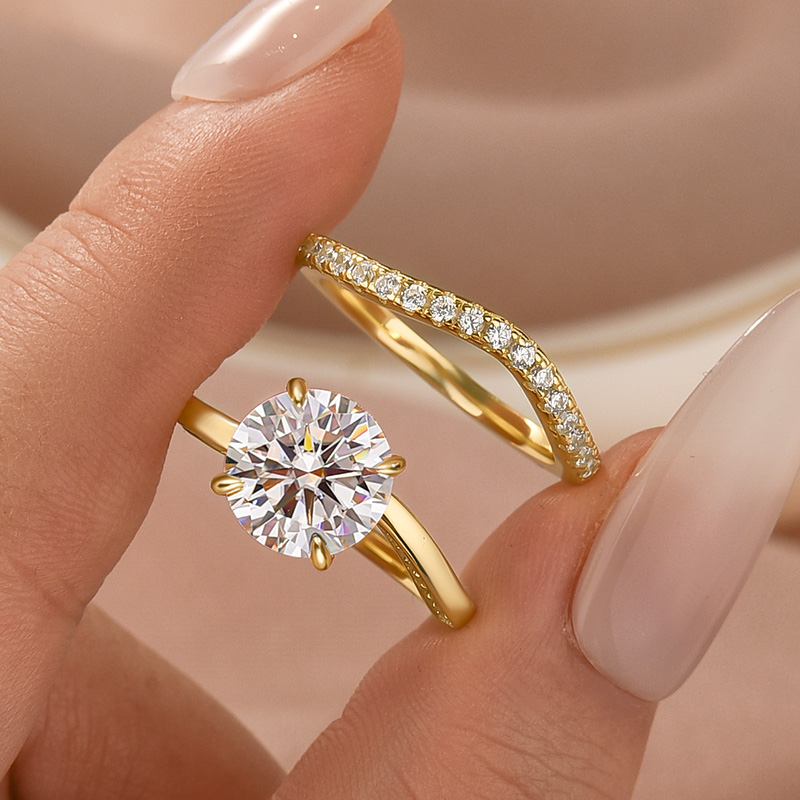
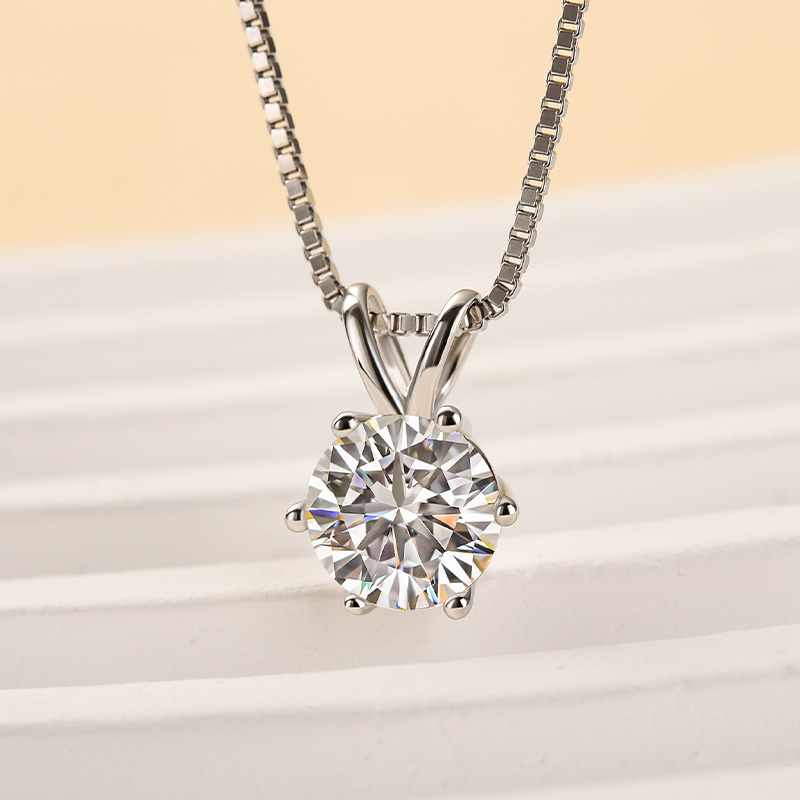
Los Angeles, Spring 2026. An editor from Bespoke-Bride magazine sat at a wedding shoot in Brooklyn. Across from her, a bride extended her hand. A forest-green cushion-cut ring scattered rainbows across the table. The editor assumed it was emerald — until the bride told her: it’s green moissanite, priced at less than one-third of what an emerald would cost.
“That moment completely changed my view on colored moissanite engagement rings,” the editor later wrote. “And it should change yours.”
From a Brooklyn photoshoot to a rapper’s neck, moissanite is undergoing a quiet revolution. It’s no longer “the poor man’s diamond.” It’s a stone from the stars — discovered in a meteor crater in Arizona in 1893 — and it’s redefining luxury, choice, and what love itself can look like.
Ten Years. She Never Called Him Out.
“It’s been ten years since my husband bought this ring,” Zhou Ran said, sitting at a dumpling restaurant in Beijing’s East Fourth Ring Road. The ring on her left ring finger caught the setting sun — not the cold white light of a diamond, but a jumping, blue-purple-tinted fire, like a small cluster of colored flame trapped in stone.
“The year we got married, he told me it was a diamond.”
She laughed. Not a sarcastic laugh. The kind that comes years later, when something bittersweet and warm and private has aged into fondness.
“He knew that I knew. I never called him out on it.”
The day before they registered their marriage, Zhou Ran’s boyfriend — now her husband — rushed out the door. She knew where he was going. She didn’t say a word.
That afternoon, a recent graduate stood at a jewelry counter in some Beijing shopping mall and asked the saleswoman: “For a wedding — what kind of ring should I buy for the bride?”
The saleswoman pointed without hesitation: “A diamond. Of course it has to be a diamond.”
He walked the full circle of the oval display case. The smallest one — he couldn’t afford it.
So he bought a moissanite ring. The saleswoman’s words stuck in him like a splinter: “You can’t tell the difference with the naked eye. Moissanite is the poor man’s diamond.”
He didn’t get home until dark. When the small, brilliant ring slid onto Zhou Ran’s finger, she looked him in the eye and said: “You’re home. That’s all that matters. The thing itself doesn’t matter.”
“I knew it wasn’t a diamond from day one,” Zhou Ran told me. “I studied materials science. The refractive index of moissanite and diamond are different. The fire is different. One is doubly refractive, the other is singly refractive — I held it up to the light and I knew right away.”
Moissanite’s dispersion value is more than double that of diamond. In sunlight, it explodes into blue, purple, and gold fragments of light, like tiny fireworks crackling and popping. Some people find this more beautiful than a diamond. Some find it “not understated enough.” But either way — anyone who’s seen a real diamond up close wouldn’t be completely fooled.
“But he thought I didn’t know,” Zhou Ran said. “So I let him keep thinking that.”
She turned the ring on her finger. Ten years had passed. The band showed some wear, but the moissanite itself was still clear and bright — 9.25 on the Mohs scale, second only to diamond’s 10. Tough enough for daily wear.
Some things lose their meaning if you say them out loud. He had put in the thought, the effort, the intention to give her a surprise. If she had called him out — then what? Make him feel guilty for the rest of their lives?
The Diamond Ring Went Into the Safe
A decade later, her husband’s career had taken off. There were business dinners. Hangovers. And young women making their interest known.
Once, a girl texted him: “Today’s my birthday. They say a one-carat diamond ring means forever. Do you want to be my forever?”
He thought back to that afternoon ten years ago — when he couldn’t afford the smallest diamond. He went to the mall, swiped his card, and bought a flashy diamond ring.
At a candlelit dinner, the girl finished her dessert and pouted: “I thought you’d hide the ring in my ice cream. You’re really not romantic at all.”
Suddenly, he remembered the woman at home. In the summer, when he saw her sweating in the kitchen, he installed a wall fan. She loved sour plums, so her snack box was never empty. She often had stomach pain, so he peeled peanuts one by one and boiled the red skins into tea for her.
“The romantic man in her eyes,” Zhou Ran said, looking out the window, “how did he become ‘not romantic at all’ in this girl’s eyes?”
That night he came home and handed her the diamond ring box. She exclaimed: “What are you doing! Return it right now! Don’t waste money — save it for the kid’s education.”
He hung his head and mumbled: “I’m sorry. The ring I gave you back then — it was actually moissanite — “
She covered his mouth and laughed.
“Idiot. I knew that years ago. But I loved it anyway.”
The diamond ring went into the safe. The moissanite ring stayed on her finger.
From Brooklyn to Atlanta: Moissanite’s Other Revolution
Zhou Ran’s story isn’t an outlier. In 2026, moissanite’s cultural volume is undergoing a structural shift.
In Brooklyn, New York, the Bespoke-Bride editor looked at that green moissanite ring and made a comparison table:
Green Moissanite
Natural Emerald
Hardness
9.25
7.5-8
Refractive Index
2.65 (higher than diamond)
1.57-1.58
Price per carat
$200-600
$1,500-8,000+
The bride’s reasoning was simple: “My grandmother’s favorite color was green. She always wore an emerald ring. But when the jeweler showed me how easily emeralds chip — I panicked. Green moissanite gave me what I wanted without the constant worry.”
In the hip-hop scenes of Atlanta and Los Angeles, Cardi B, Quavo, Lil Yachty, and A$AP Rocky are frequently mentioned in connection with moissanite. Moissanite chains and diamond-set watches are becoming the new favorites in “iced-out” style — not because it looks like diamond, but because it’s actually flashier.
According to industry data, the global moissanite jewelry market reached approximately $2.8 billion in 2026, with a compound annual growth rate of 9.1%. Colored moissanite is seeing the fastest growth among Millennials and Gen Z. Online retail accounts for more than 58% of all moissanite jewelry sales.
“Walk into any independent jewelry store, or scroll through the engagement ring hashtag on Instagram,” Fashionisers wrote in May 2026, “and you’ll notice something different. The stone getting the most attention isn’t always a diamond. It catches light in a way that makes you stop scrolling — with colors a diamond doesn’t usually show — and when someone asks ‘what is that,’ the answer is increasingly consistent: moissanite. This isn’t a ‘settling’ trend. People choosing moissanite aren’t ‘making do.’ They’re making a deliberate decision.”
New York-based brand Eclara Jewelry launched a “nature-inspired” engagement ring collection in May 2026, featuring moissanite, green sapphire, and alexandrite. Founder Kate Williams said: “We’re seeing more couples looking for rings that truly feel personal — not picking from the same traditional styles everyone else has.” Vogue covered Dorsey’s enamel capsule collection in its Summer 2026 issue, positioning moissanite and lab diamonds as “the ultimate summer layering pieces.”
Between Zhou Ran’s moissanite ring in Beijing and Cardi B’s moissanite chain in Atlanta, a curious thread runs through: this stone is stepping out of diamond’s shadow and becoming its own protagonist.
A Stone From a Meteor
Moissanite was discovered in a meteor crater — in Arizona, of all places. In 1893, French chemist Henri Moissan found traces of this shimmering silicon carbide crystal in the debris of a meteor that had fallen 50,000 years earlier.
From space. Rarer than Earth’s diamonds — in its natural form, at least.
Today’s moissanite is lab-created. But it’s not an “imitation.” It’s the same material as the natural moissanite found in that crater — just a different origin. Diamonds have lab-grown versions. Moissanite has “natural” versions too — except they’re so rare they barely exist.
“A stone from the stars,” Zhou Ran said. “Bought by a broke recent graduate. Put on my finger. That story is way more interesting than ‘a diamond is forever.'”
In the United States, moissanite’s rise in hip-hop and its growth in the bridal market point to the same underlying consumer shift: younger generations are refusing to pay for “industry-defined value.”
“I’ve seen so many Gen Z and Millennial shoppers,” Hema Khatwani, founder of IcedJewelz, told the media. “They’re no longer moved just by expensive advertising. They look at craftsmanship, transparency, authenticity. Moissanite has more fire than diamond, 9.25 on the Mohs scale — we design for people who want luxury aesthetics without worrying about losing stones. It’s street style meets real craftsmanship.”
A $2.8 billion global market, growing at 9.1% annually — these aren’t “alternative” numbers. They’re the numbers of a category defining itself on its own terms.
Zhou Ran’s Ending — and a Diamond Locked in a Safe
We finished the dumplings. Zhou Ran paid the bill. The Beijing evening wind was cool. She put her hands in her pockets, and the moissanite caught the streetlight one last time.
“You know, I actually really love this ring,” she said. “Not because it looks like a diamond. Because of where it came from. From the sky. However that impact happened tens of thousands of years ago, that stone landed here. A Frenchman found it. A broke kid bought it. And he put it on my finger.”
She smiled.
“That’s a better story than ‘a diamond is forever.'”
We reached the subway entrance. She stopped, tucked her hair behind her ear, and the ring flashed one final time.
“He still doesn’t know that I’ve known all along,” she said. “That’s the romance I get to keep for myself.”
Afterword: Zhou Ran told me the diamond ring went into her safe. The moissanite ring stayed on her finger. She said it’s lighter, more comfortable, and she doesn’t worry about losing it. What she didn’t say out loud — ten years on, it’s grown into her hand.