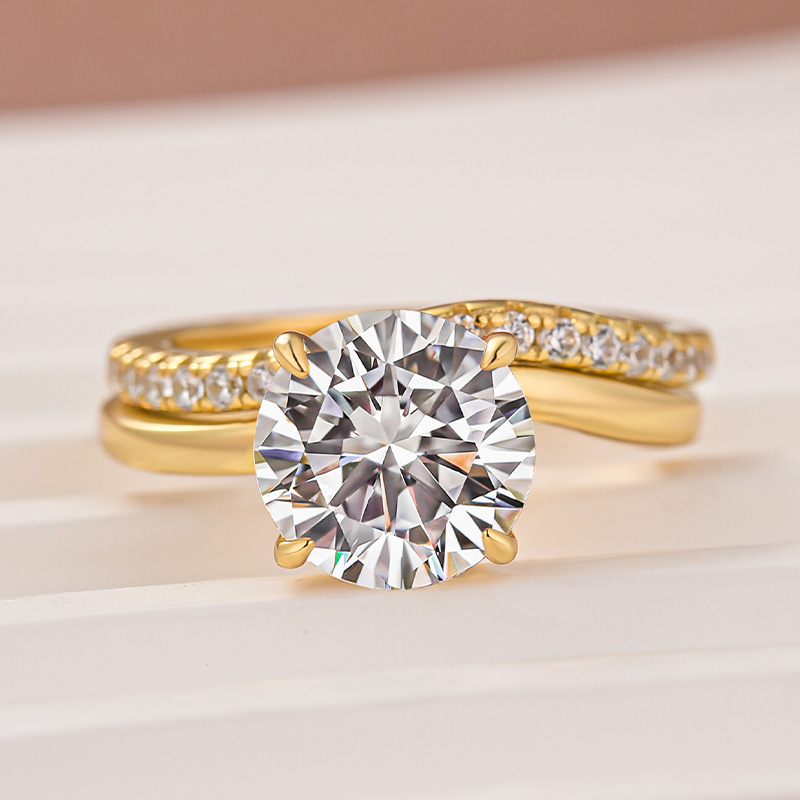
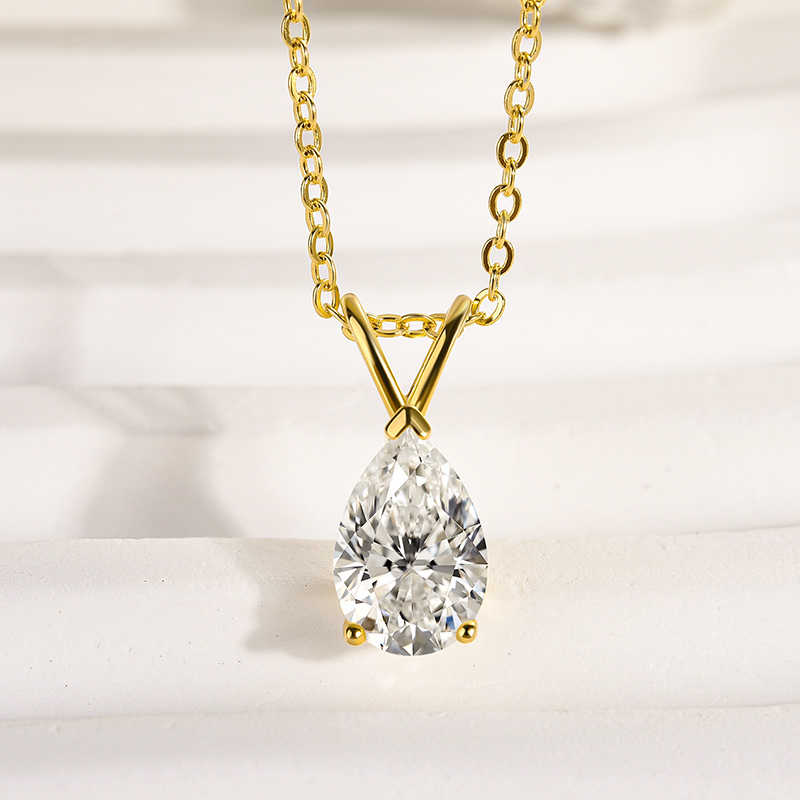
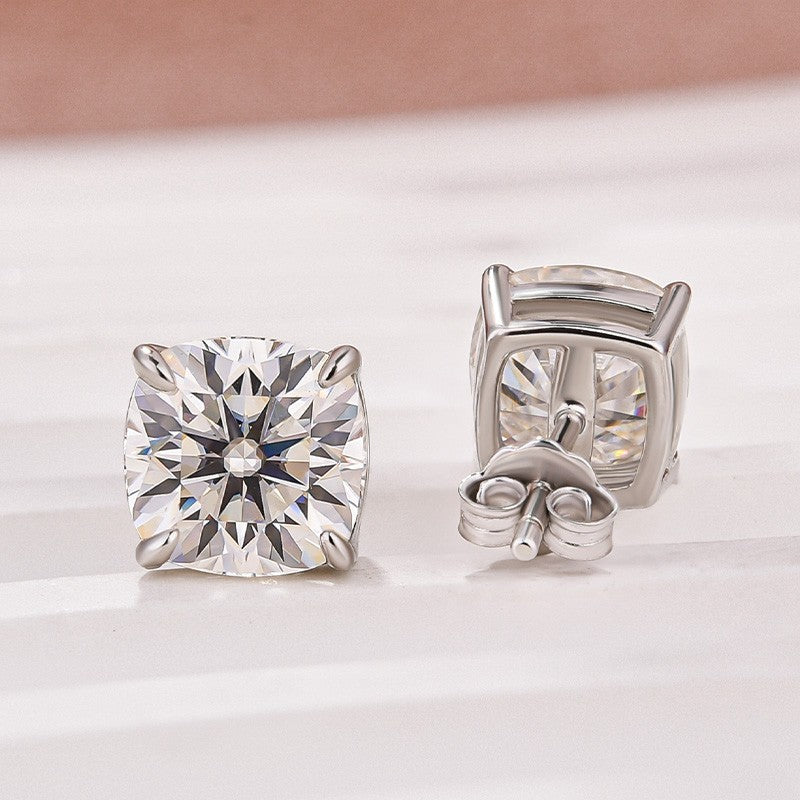
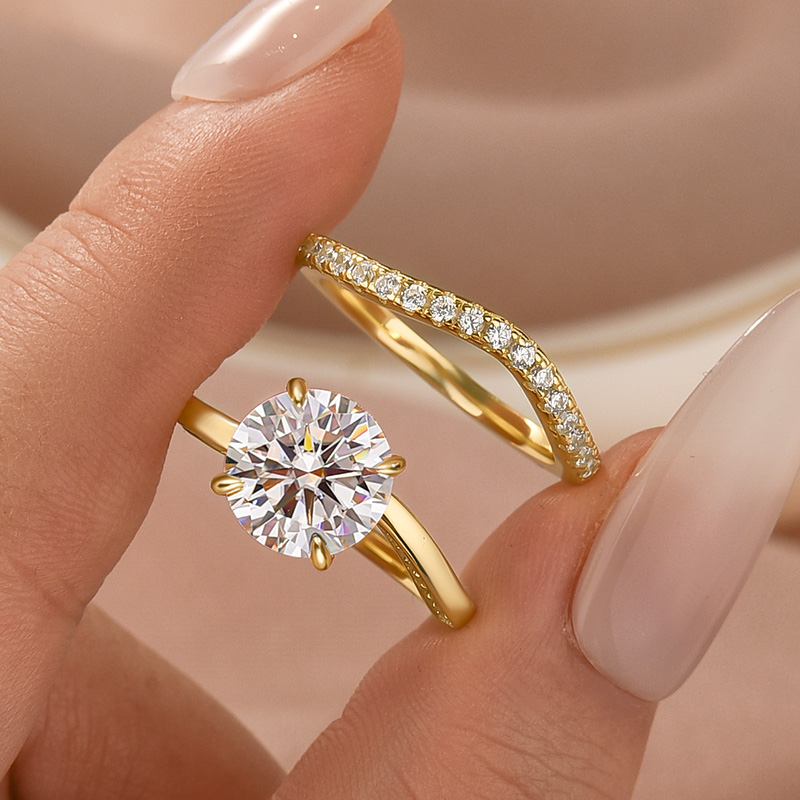
The first time I saw a moissanite ring, I was in a mall in Shanghai, killing time before a dinner reservation. I walked into a jewelry store — one of those bright, soulless chains with saleswomen who smile too hard — and asked to see something that wasn’t a diamond.
The saleswoman looked at me like I’d asked to see a ring made of cheese.
“What do you mean, not a diamond?” she said, her smile flickering.
“I mean a moissanite,” I said. “I’ve read about them online. I want to see one in person.”
She paused. Looked at me. Then at my left hand — bare — and made a calculation I could practically hear in her head: not engaged, not a serious buyer, probably wasting my time.
“We don’t carry those,” she said. “We only sell quality jewelry here.”
I left the store. I wasn’t offended. I was curious. Because if a saleswoman in a mall jewelry store had that reaction — if the industry itself was pretending moissanite didn’t exist — then maybe there was something worth paying attention to.
That was six months ago. Yesterday, I gave my fiancé a moissanite ring.
Let Me Rewind
My name is not important. I’m in my late twenties, live in Shanghai, work in a field that has nothing to do with jewelry, and I’ve been with my partner — let’s call him Jun — for four and a half years.
We got engaged three months ago. The proposal was not romantic. It was a Tuesday night, we were ordering takeout on our phones, and Jun looked at me from across the couch and said, “I think we should get married.”
Not down on one knee. No ring. No dramatic speech. Just a man on a couch holding a phone with a noodle order on the screen.
I said yes. Then I said, “Did you just propose while ordering dumplings?”
He looked at his phone. “These are actually xiaolongbao.”
I married him anyway.
The next week, we started talking about rings. And that’s when I realized the conversation was going to be a problem.
The Diamond Conversation That Made Me Uncomfortable
Jun, like most men, had grown up with the implicit understanding that engagement rings are diamonds. That’s just what they are. You don’t argue with gravity, you don’t argue with the sun rising in the east, and you don’t argue with a diamond engagement ring.
So when I said, “I don’t think I want a diamond,” he looked at me like I’d just suggested we get married in a parking lot.
“Why not?” he asked.
I didn’t have a good answer at first. It’s not like I was some hardcore activist who’d spent years protesting the diamond industry. I’d never chained myself to a De Beers storefront. I’d never boycotted a Tiffany commercial.
But I did have this nagging feeling — a quiet itch in the back of my brain — that I was being sold something I didn’t ask for.
“Because I don’t want to spend three months of your salary on a rock,” I said. “And because I don’t want to wear something that everyone expects me to wear. It feels like… a uniform.”
Jun was quiet for a moment. Then he said, “But wouldn’t people talk?”
That was the first time the word “people” entered our engagement conversation. And it wouldn’t be the last.
The Research Spiral
I’m a researcher by nature — the kind of person who reads twenty reviews before buying a toaster. So when I started looking into engagement rings, I went down a spiral that made my toaster research look like child’s play.
I learned that natural diamonds are not rare. They’re hoarded. De Beers spent decades stockpiling diamonds to create artificial scarcity, and the “three months’ salary” rule was invented by an advertising agency in the 1930s. I learned that lab-grown diamonds are chemically identical to mined ones and cost a fraction of the price. I learned that moissanite is a completely different stone — silicon carbide, discovered in a meteor crater in Arizona — with more fire, more sparkle, and a hardness of 9.25, which is basically indestructible.
And I learned that nobody in the jewelry industry talks about any of this openly.
Every jewelry store I visited, the same thing happened. I’d ask about moissanite. The salesperson would change the subject. I’d push. They’d tell me it’s “not investment-grade” or “not traditional” or “not something we recommend for an engagement ring.”
One saleswoman in a high-end boutique actually leaned in and whispered, “If you really want moissanite, you should go online. We don’t carry it here.”
She said it the way you’d say, “If you really want to buy knockoff handbags, there’s a market in Guangzhou.”
I was offended. Not because I wanted the ring to be expensive — but because I didn’t want the ring to be a secret.
The Night I Brought It Up With My Mom
My mother is a practical woman. She grew up in the countryside, worked her way to the city, and built a life without ever getting help from anyone. She doesn’t care about status symbols. She cares about function and durability.
So when I called her to tell her about the engagement, I mentioned the ring decision.
“I don’t want a diamond,” I said.
“Why?” she asked.
“Because it’s expensive and I don’t see the point.”
She paused. Then she said something I didn’t expect.
“Your father bought me a gold ring,” she said. “No stone at all. Just a plain gold band. And you know what? I loved it. Because he couldn’t afford a diamond. And I knew that. And I loved that he didn’t pretend.”
I was quiet on the phone.
“Do whatever you want,” she said. “Stop asking everyone for permission.”
I hung up and stared at the wall for a long time.
The Decision
A week later, I told Jun: “I’m getting a moissanite ring. You’re not buying it. I’m buying it.”
He looked confused. “But I’m supposed to buy the ring.”
“Why?”
“Because that’s how it’s done.”
“Who said that?”
He didn’t have an answer.
This is the thing about traditions: nobody remembers who started them. They just keep happening because they kept happening. And if you stop and ask “why,” the whole thing starts to wobble.
“I want to buy my own ring,” I told Jun. “Not because I don’t trust you to choose it. But because I want to choose it myself. And I want you to know that I’m marrying you for you, not because you bought me expensive things.”
Jun is a practical person. Once he got over the initial confusion, he shrugged and said, “Okay. As long as I’m not picking it out. I have terrible taste.”
He’s right. He bought me a coat once that looked like something from a Star Trek costume. I love him, but I don’t want him picking my jewelry.
The Search
Finding a moissanite ring in Shanghai turned out to be harder than I expected.
I went to five jewelry stores across the city. Four of them didn’t stock moissanite. The fifth had a single piece — a cheap-looking pendant in a dusty display case — that the saleswoman called “not really something we show customers.”
I wasn’t sure if I was being discriminated against for not wanting a diamond, or if moissanite was just that invisible in the Chinese market.
So I went online.
There are dozens of moissanite sellers on Taobao and Tmall. The prices range from absurdly cheap to genuinely good. I read reviews, compared photos, and eventually found a seller who specialized in custom moissanite designs. He had good ratings, responsive customer service, and a portfolio of work that looked like actual jewelry, not costume pieces.
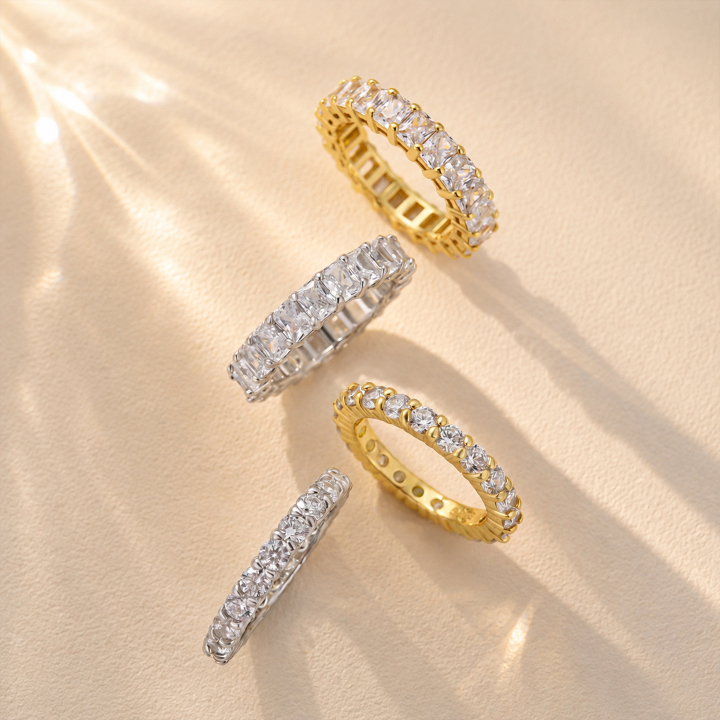
I spent three weeks going back and forth with the seller. I sent photos of rings I liked. He sent back CAD designs. I asked for adjustments to the setting, the prongs, the band width. He accommodated everything. We settled on a 1.2-carat oval cut, D-color, VVS clarity, set in 14K white gold. Total price: 2,200 yuan — about $305.
A comparable diamond would have been 25,000 yuan. At least.
The Delivery
The ring arrived in a plain white box with no branding. I opened it in my apartment, alone, on a Wednesday afternoon.
It was stunning.
I mean that not in the casual “oh, that’s nice” way. I mean that I stared at it for a solid minute without blinking, watching the light bounce off the facets. The oval cut caught the afternoon sun coming through my window and threw a small rainbow onto my ceiling.
I put it on my finger. It fit perfectly.
And I felt… nothing. No rush of emotion. No tears. No “this is the moment” feeling. Just a quiet sense of satisfaction that I’d picked something I genuinely liked.
That bothered me at first. I thought engagement rings were supposed to make you feel something. But then I realized: I’d already felt everything I needed to feel. I’d felt it on that Tuesday night on the couch, ordering xiaolongbao, when Jun looked at me and said “I think we should get married.” The ring wasn’t the start of the story. It was the punctuation mark at the end of a sentence I’d already written.
The Engagement Photo That Went Sideways
We took engagement photos last weekend. A friend of a friend offered to do them for free — she’s building her photography portfolio, and we were free models.
She asked us to bring the ring. Of course we did.
The shoot went fine. We were awkward, we laughed too much, we couldn’t keep our eyes open in the sunlight. Standard stuff.
Afterwards, the photographer uploaded a few preview shots to her Instagram story. One of them featured my hand in a forced, unnatural pose — holding a flower, with the ring prominent.
Within an hour, a mutual friend commented: “Is that moissanite?”
Not “congratulations.” Not “beautiful ring.” The first thing she noticed, the first thing she typed, was “is that moissanite.”
The photographer messaged me privately. “Hey, someone’s asking if your ring is moissanite. What should I say?”
I stared at the message. The question was innocent enough. But the context was exhausting.
I felt the familiar heat rising in my chest — the defensive impulse I’d been fighting ever since I started telling people about the ring. The urge to explain, to justify, to say “yes it’s moissanite and here’s why that’s actually a smart and ethical choice and no I’m not settling and no I’m not ashamed and no my fiancé is not cheap and no—”
I stopped myself.
“Just say it’s moissanite,” I replied. “And if she has a problem with that, that’s her problem.”
The photographer posted the reply. The mutual friend wrote “oh” and never said anything else.
I spent three years in therapy learning not to care what people think. And I’ll be damned if I let a ring undo all that work.
What I’m Actually Wearing
Here’s the thing about moissanite that I wish more people understood: it’s not a “diamond substitute.” It’s its own stone. It has its own properties, its own history, its own aesthetic. It was discovered in a meteor crater. It’s literally from space. The one on my finger is made of silicon carbide, a material used in industrial applications for its hardness and durability. It didn’t fall out of the sky, but its origin story is something that can’t be manufactured or marketed — it’s just true.
When I look at my ring, I don’t think “this is almost a diamond.” I think “this is an oval-cut moissanite that I selected, designed, and bought myself.” It’s not pretending to be anything else. And neither am I.
The Conversation I Keep Having
What surprises me isn’t the judgment. I expected judgment. What surprises me is how often the judgment comes from people who’ve never seen a moissanite in person.
“Oh, I’ve heard those look fake,” one friend said.
“Have you ever seen one?” I asked.
“No, but I heard—”
“You heard from who?”
She couldn’t answer.
Another friend said, “But doesn’t it lose its sparkle over time?”
“No,” I said. “It’s a 9.25 on the Mohs scale. It’s basically indestructible.”
“Oh. I thought it was like cubic zirconia.”
I didn’t snap. I wanted to. But I didn’t.
Because what I realized is that most people are not judging moissanite. They’re judging the idea of moissanite — the idea that someone would dare to reject the diamond narrative. That’s the real transgression. Not wearing a cheap ring. Wearing a thoughtful ring that doesn’t follow the rules.
The Recurring Dream
I had a dream last week. In the dream, someone asked me if my ring was “real.” I woke up with my heart pounding.
And then I thought: what does “real” even mean in this context?
Is a lab-grown diamond “real”? It’s chemically identical to a mined one. But some people say it’s not.
Is a moissanite “real”? It’s a naturally occurring mineral that we’ve learned to synthesize. But some people say it’s not.
Is a diamond “real” if it’s mined in a conflict zone? Is it “real” if it funded violence?
The word “real” in the jewelry world is a marketing term. It doesn’t mean anything scientifically. It means “we’ve decided this counts and that doesn’t.” And I’m done letting other people decide what counts for me.
The View from Six Months Out
Six months ago, I walked out of that Shanghai jewelry store feeling dismissed. Six months later, I’m wearing the ring I chose, with the person I chose, and I’ve stopped apologizing for both.
The ring is on my finger right now as I type this. It’s catching the light from my laptop screen, throwing little rainbows across my keyboard. It’s not a diamond. It’s a moissanite. And it’s exactly what I wanted.
Jun asked me last week if I’d ever regret not having a diamond.
“Nope,” I said. “What would I regret? That I didn’t spend money? That I didn’t follow an advertising campaign from 1930? That I didn’t make the same choice as everyone else?”
He was quiet for a moment. Then he said, “Well, when you put it like that…”
I’m not going to argue that moissanite is “better” than diamond. That’s a pointless debate. Better for whom? Better for what?
What I will argue is that choice matters. That we should buy things because we actually want them, not because we’re told to. And that if you want a diamond — if you genuinely love the look and the symbolism and don’t care about the price — then you should buy a diamond. But if you want something else, you should be able to buy something else without being made to feel cheap, fraudulent, or less-than.
What I’d Say to Someone on the Fence
If you’re reading this and you’re wondering whether to buy a moissanite ring — or whether to accept one — here’s what I’d say:
Stop asking other people. Go see one in person if you can. Look at it under different lights. Touch it. Try it on. If you love it, buy it. If you don’t, don’t.
Don’t let a salesperson make you feel bad. Don’t let your mother’s friend make you feel bad. Don’t let the ghost of De Beers make you feel bad.
It’s your finger. It’s your relationship. It’s your money. And it’s your story.
The Real Ending
Jun and I are getting married next month. Small ceremony. No bridesmaids. No groomsmen. Just us, a handful of family, and a lot of good food.
I’ll be wearing my moissanite ring.
My mother will be there. She’s already told me she’s bringing her plain gold band from 1985 — the one my father couldn’t afford to put a stone in. She wants to take a photo of our hands together.
She didn’t say it in so many words. But I know what she means. I wore what I could wear. You’re wearing what you chose. And both of us are just fine.
I’ll be fine too. I know that now. I’ll be fine if someone judges the ring. I’ll be fine if someone asks “is that real” and I have to say “yes, it’s real moissanite.” I’ll be fine because the ring is a ring, not a shield. The marriage is the thing that matters.
And that marriage started on a Tuesday night, with two phones and a takeout order and xiaolongbao.
That’s real. The rest is just jewelry.
I don’t know what will happen with the ring. Maybe I’ll wear it for fifty years. Maybe I’ll upgrade it. Maybe I’ll lose it. But whatever happens, I’ll remember that I bought it. I’ll remember that I chose it. And I’ll remember that I never apologized for either.
That’s the part that matters to me. Not the stone. The choice.