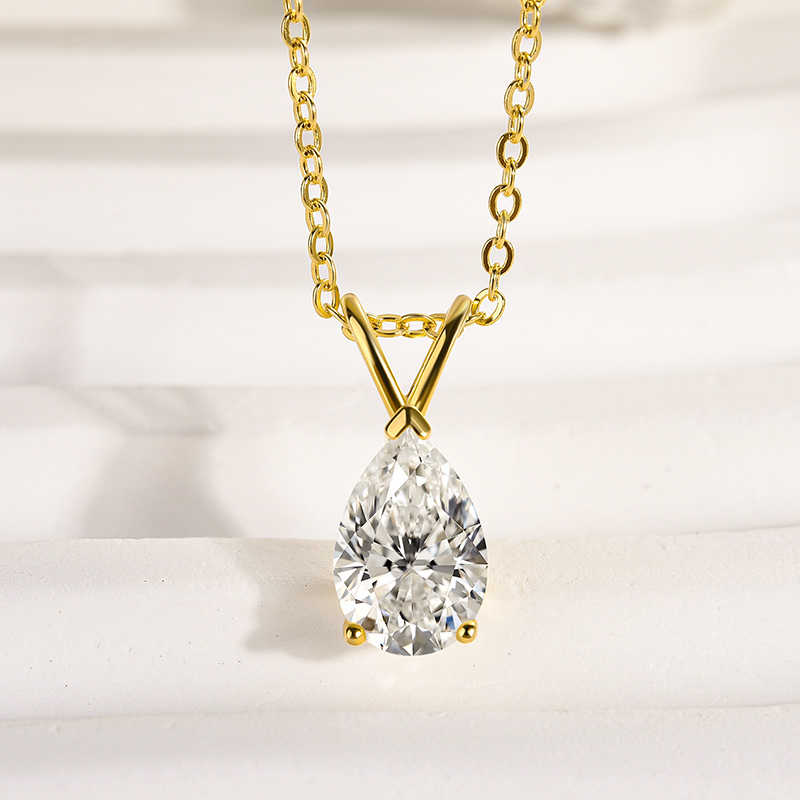
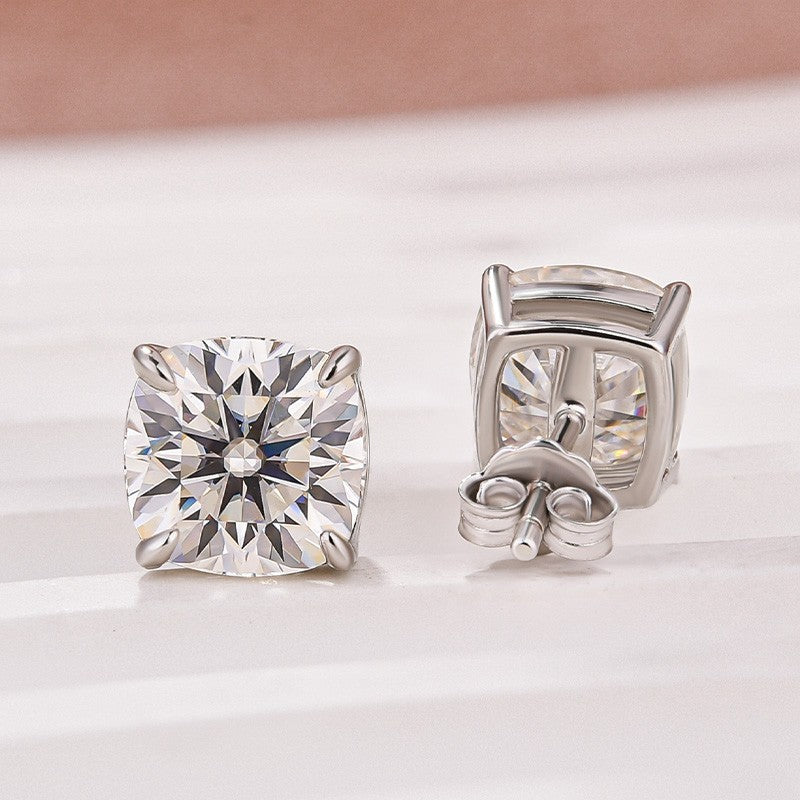
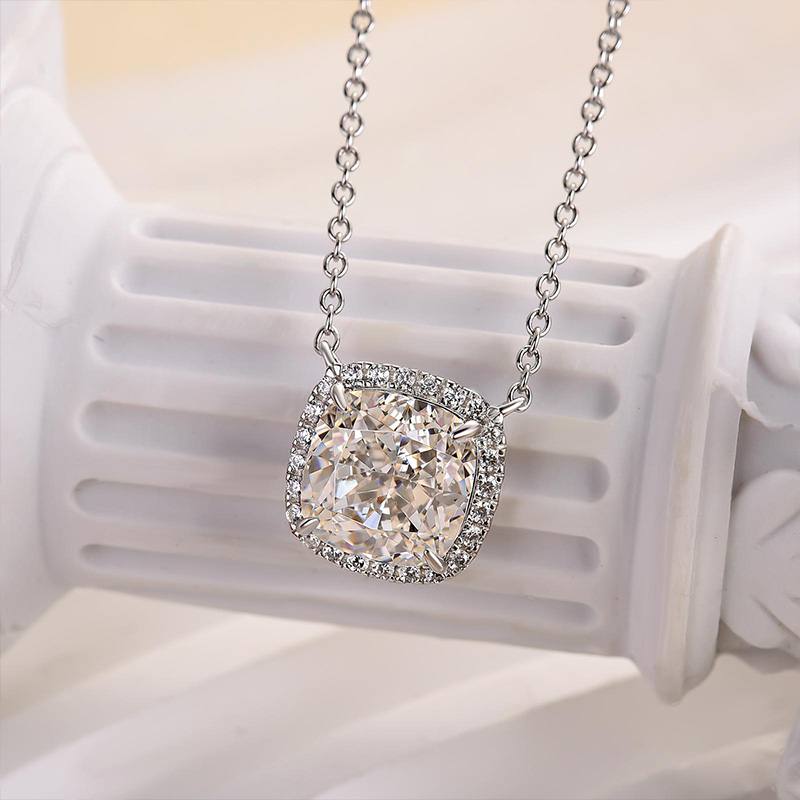
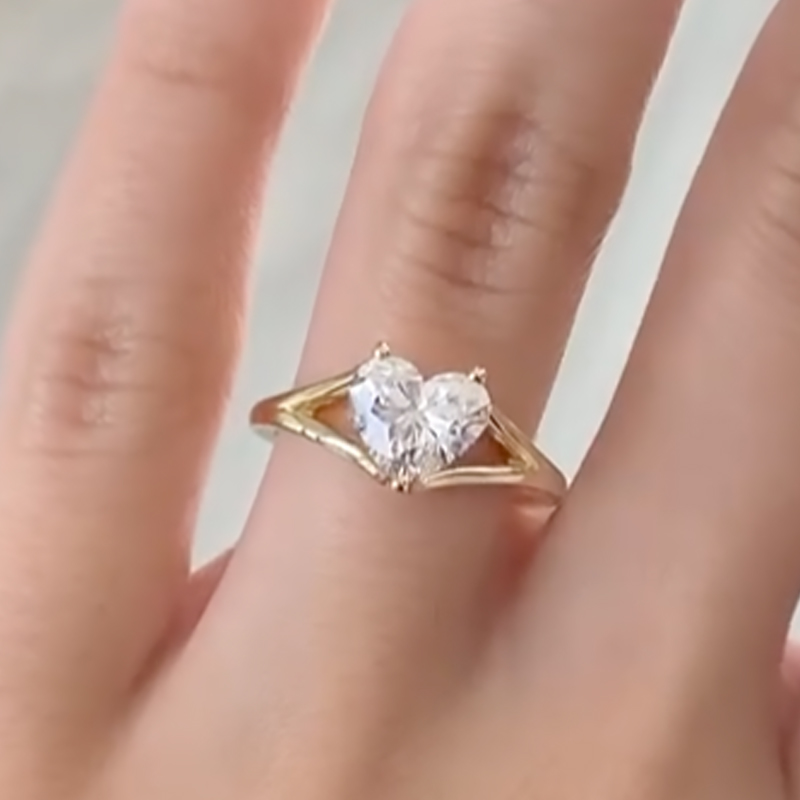
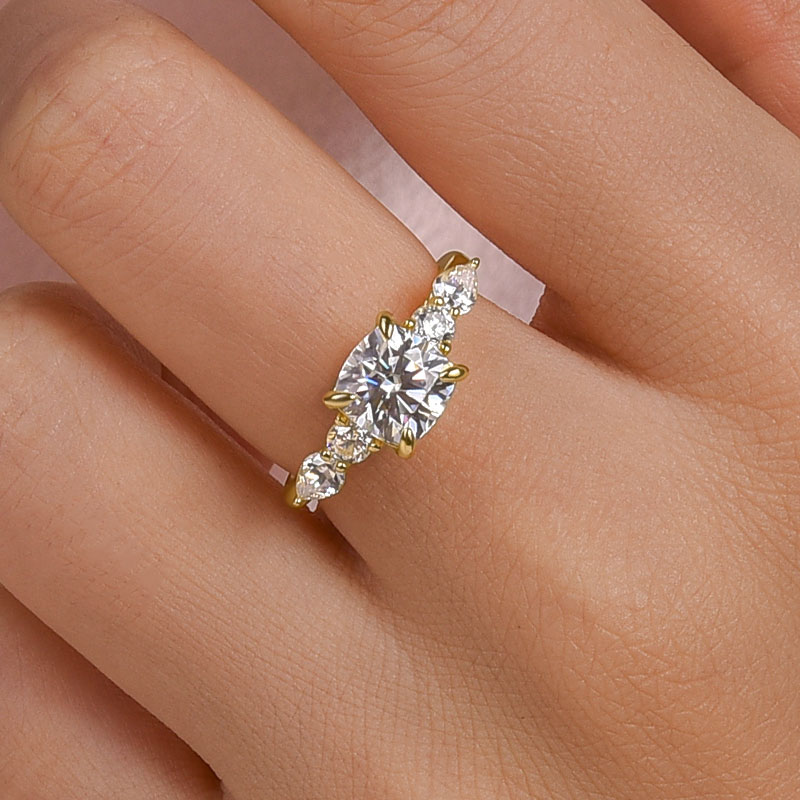
Chicago, early spring. The kind of evening where the lake wind still bites, but the sun stays out long enough to remind you that winter is finally loosening its grip. I was sitting across from Anna in a small wine bar in Lincoln Park, watching her twist a ring on her finger — a vintage-inspired setting with a stone that caught every flicker of candlelight and threw it back in tiny rainbows.
“He proposed two weeks ago,” she said, holding out her hand. “At the planetarium. Under the stars.”
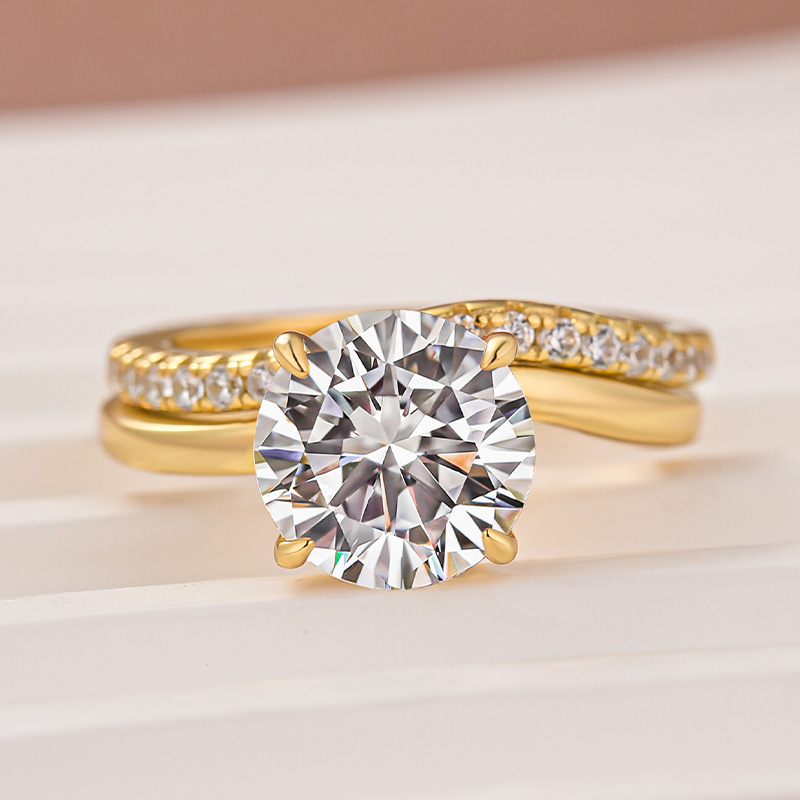
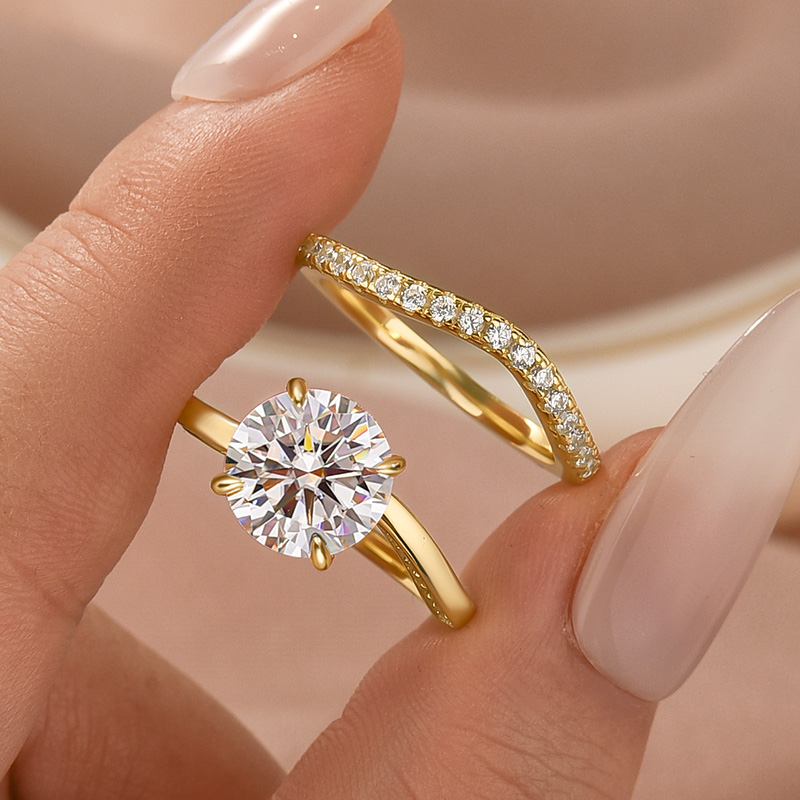
I leaned in. The ring was stunning — not because it was trying to be something it wasn’t, but because it was unapologetically itself. A moissanite center stone, flanked by delicate side stones, all set in warm gold that seemed to glow against her skin.
“You know what the funny thing is?” she said, rotating her wrist so the light hit the stone from a different angle. “I spent months worrying about what people would think. My mom, my grandma, my friends — everyone has an opinion about engagement rings. And then I realized: this ring came from a meteor. It’s literally a star. And I’m worried about what my aunt from Ohio thinks?”
She laughed, and the sound was the kind of unburdened that only comes after you’ve stopped apologizing for your choices.
Before the Ring: 1,000 Miles and a Leap of Faith
Anna’s story with her fiancé, David, didn’t start with a ring. It started with a long-distance gamble.
David lived in Pennsylvania, Anna in Minnesota — a thousand miles of interstate between them. They met on a dating app in early spring, the kind of connection that feels too good to be real, the kind you assume will fizzle out after a week of awkward video calls. But it didn’t.
“I remember thinking, ‘This is ridiculous,'” Anna told me. “Like, who falls for someone they’ve never met in person? That’s not how love works. Love is supposed to be convenient. It’s supposed to happen at a coffee shop or a party, not across three state lines.”
But the video calls kept happening. The conversations stretched past midnight. And a month later, David booked a flight.
Their first date was at the Minneapolis Institute of Art. They walked through galleries of ancient artifacts and modern paintings, and somewhere between the Renaissance wing and the contemporary gallery, Anna felt something she hadn’t expected. Not just attraction — but recognition. The feeling that she’d known this person before, in some way that didn’t make logical sense.
After the museum, they sat in a park outside, the late spring sun warming the grass beneath them. And David, with the kind of directness that would later make him a good proposer, said, “I think I’m falling for you. And I know that’s crazy. But I don’t care.”
Anna laughed, nervous. “You barely know me.”
“I know enough,” he said.
She told me later that was the moment she knew. Not because of the words — but because of the weight behind them. David wasn’t the kind of guy who said things he didn’t mean. And when he said he knew enough, she believed him.
The Ring Conversation: “I’ve Only Ever Loved One”
On that first visit, before either of them had said the word “forever” out loud, David asked Anna a question that would change everything.
“Have you ever looked at rings?”
Most people would have deflected, or said something vague like “I like simple ones” or “whatever you think is best.” But Anna had spent years quietly collecting images of rings she loved, for no reason other than that they made her happy. She had a specific favorite.
“There’s this ring I’ve loved forever,” she told him. “It’s called The Beth. By Zen Moissanite.”
David took notes. Literally. He pulled out his phone and typed it in, right there in the park.
“I thought he was just being polite,” Anna said. “Like, he’s asking because he’s supposed to ask, not because he actually cares about the specifics.”
But David was paying attention in a way she didn’t fully grasp until a year later.
The Proposal: “Wait, We’re Doing This Right Now?”
A year passed. They made the long-distance thing work — flights, video calls, weekends spent driving across the Midwest to meet in the middle. David moved to Minnesota. They built a life.
Then came the western road trip. Five national parks, red rocks and desert skies, the kind of adventure that feels like the opening scene of a movie.
The first stop was the Shrine of St. Joseph in Yarnell, Arizona — a quiet, sacred place at the start of their journey. David got down on one knee.
Anna’s first words weren’t “yes.”
She looked at him, then at the ring, then back at him, and said: “Wait, we’re doing this right now?”
It wasn’t doubt. It was joy. The kind that spills out sideways because it’s too big to fit into a scripted response.
“Yes,” David said. “We’re doing this right now.”
“Yes,” Anna said. “Yes, yes, yes.”
The ring slid onto her finger. A 9x7mm emerald-cut moissanite in 18k yellow gold. And under the Arizona sun, surrounded by desert and sky and the person she’d crossed a thousand miles for, Anna looked down at her hand and saw something that felt like magic.
What She Learned About the Ring on Her Finger
After the proposal, Anna did what everyone does: she Googled moissanite.
She learned it had been discovered in 1893 by a French chemist named Henri Moissan — in a meteor crater in Arizona, of all places. For decades, it was one of the rarest minerals on Earth, rarer even than diamonds. And what she was wearing on her finger wasn’t just a “diamond alternative” — it was a stone that had traveled through the cosmos, and now sat on her hand as a symbol of something David had chosen.
She learned it ranks 9.25 on the Mohs hardness scale, second only to diamond. Durable enough to survive daily wear, strong enough to be passed down. She learned it has more fire than a diamond — a higher refractive index that creates that rainbow brilliance she’d fallen in love with.
“The first time I saw the ring in sunlight, I gasped,” she told me. “Like, an actual gasp. It was so much sparkle. And I thought — I’m wearing a piece of a star. How is that anything other than incredible?”
The Family Reaction: The Sigh That Never Came
Anna was nervous about telling her mom. Her grandmother had worn a diamond for fifty-two years. Her mother’s ring had been passed down from her mother. Diamonds were the family currency of love.
“I practiced the speech in my head for a week,” Anna said. “‘So, David and I are engaged, and we chose something that’s not exactly a diamond, but it’s beautiful and ethical and it came from a meteor — ‘”
She paused and laughed.
“I never got to finish the speech. Because my mom looked at the ring and just said, ‘That’s stunning.’ Like, that was it. No questions. No judgment. Just ‘That’s stunning.'”
Anna’s mother held her hand, turned the ring under the light, and watched the rainbows dance across her palm.
“You know,” her mother said, “your grandmother’s ring was from a department store. Your grandfather never apologized for it. And nobody ever asked her if she was disappointed.”
Anna was quiet for a moment.
“I thought I’d have to defend this ring for the rest of my life,” Anna told me. “I thought people would whisper about it, judge it, ask me why I didn’t ‘just get a real diamond.’ And instead, my mom looked at it and saw something beautiful. Because that’s all it is. It’s just beautiful.”
The Moment She Knew It Was the Right Choice
Anna and David spent the rest of their road trip visiting five national parks across the Southwest. She took photos everywhere — the ring against canyon walls, against desert sunsets, against the endless Arizona sky.
“I kept thinking about the fact that this stone was discovered in a crater in Arizona,” she said. “And here I was, in Arizona, wearing one, about to marry the person I fell in love with from a thousand miles away.”
She sent me a photo later that week: her hand on the railing of a Grand Canyon overlook, the moissanite catching the setting sun. The rainbow sparks spilled across the rock face behind her, like the stone was painting the landscape.
“This ring doesn’t have a resale value,” she wrote in the caption. “But I don’t need it to. Because this love isn’t an asset. It’s a story. And I’m keeping it.”
The Wedding Date
Anna and David are getting married this May. The date, she told me, is 5.2.25 — an “angel number,” she called it. A sequence that feels like it was always meant to be.
They’re designing their wedding bands together. Matching moissanite, to complete the set. Anna is keeping her engagement ring exactly as it is, no upgrades, no replacements.
“Some people get upgrade rings,” she said. “And I’m not judging that. But for me — this ring was his first choice. It was my first choice. And I don’t want to change that. I want to look at this ring in fifty years and remember the desert, the proposal, the text message he sent me after our first date that said ‘I’ve never felt like this before.'”
She smiled, looking down at her hand.
“Fifty years from now, this ring will still have the same fire it has now. And I’ll still have the same story. That’s more than enough.”
What Moissanite Actually Means
The word “moissanite” comes from Henri Moissan, the French scientist who discovered it. But for Anna, the name has come to mean something else.
“It’s not ‘almost diamond.’ It’s not ‘diamond substitute.’ It’s moissanite. It’s its own thing. And that’s what I love about it. David didn’t try to buy me something that pretends to be something else. He bought me something that’s honest about what it is.”
She rotated the ring one more time, watching the light scatter across the table.
“Love shouldn’t have to pretend to be something it’s not, either. And for a long time, I thought love had to look a certain way — traditional, predictable, approved by everyone. But this relationship was the opposite of that. It was long-distance. It was risky. It was a thousand miles and a leap of faith. And this ring is the same. It’s not what everyone else has. But it’s what’s actually true.”
The Tipping Point
As I was about to leave the wine bar, Anna told me one last thing.
“There was a moment, right after David proposed, when I looked at the ring and felt this wave of happiness. And then immediately after, this tiny voice in my head that said, ‘But is it a real ring?'”
She shook her head.
“And I thought — who put that voice there? Not me. I never cared about diamonds. I cared about meaning. But somehow, without even noticing, I’d absorbed the idea that the only ‘real’ ring is a diamond. That’s not my truth. That’s the diamond industry’s truth. And I don’t owe them anything.”
She paid for her wine and stood up, the moissanite catching the last of the bar lights.
“The ring came from a star,” she said. “The love came from a thousand miles away. And both of them traveled further than anyone expected to end up exactly where they belong.”
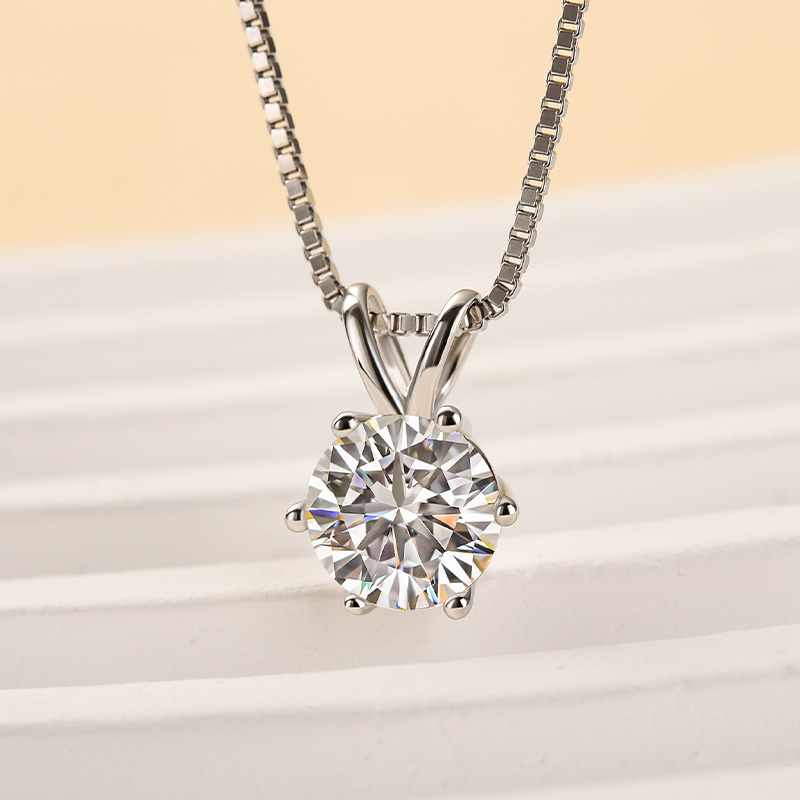
Afterword: Anna’s grandmother, the one who wore the department store ring for 52 years, is coming to the wedding. She saw the moissanite ring on FaceTime last week and said, “That’s much prettier than mine was.” Anna cried. David said he’d buy grandma a matching pendant for Mother’s Day. The ring, Anna told me, will never be upgraded or replaced. It’s already exactly what it needs to be — a piece of the stars, on the hand of someone who chose love over expectation.