Blog
Moissanite Jewelry: A $169 Ring That Shook the Diamond Industry — and What It Means for Your Finger

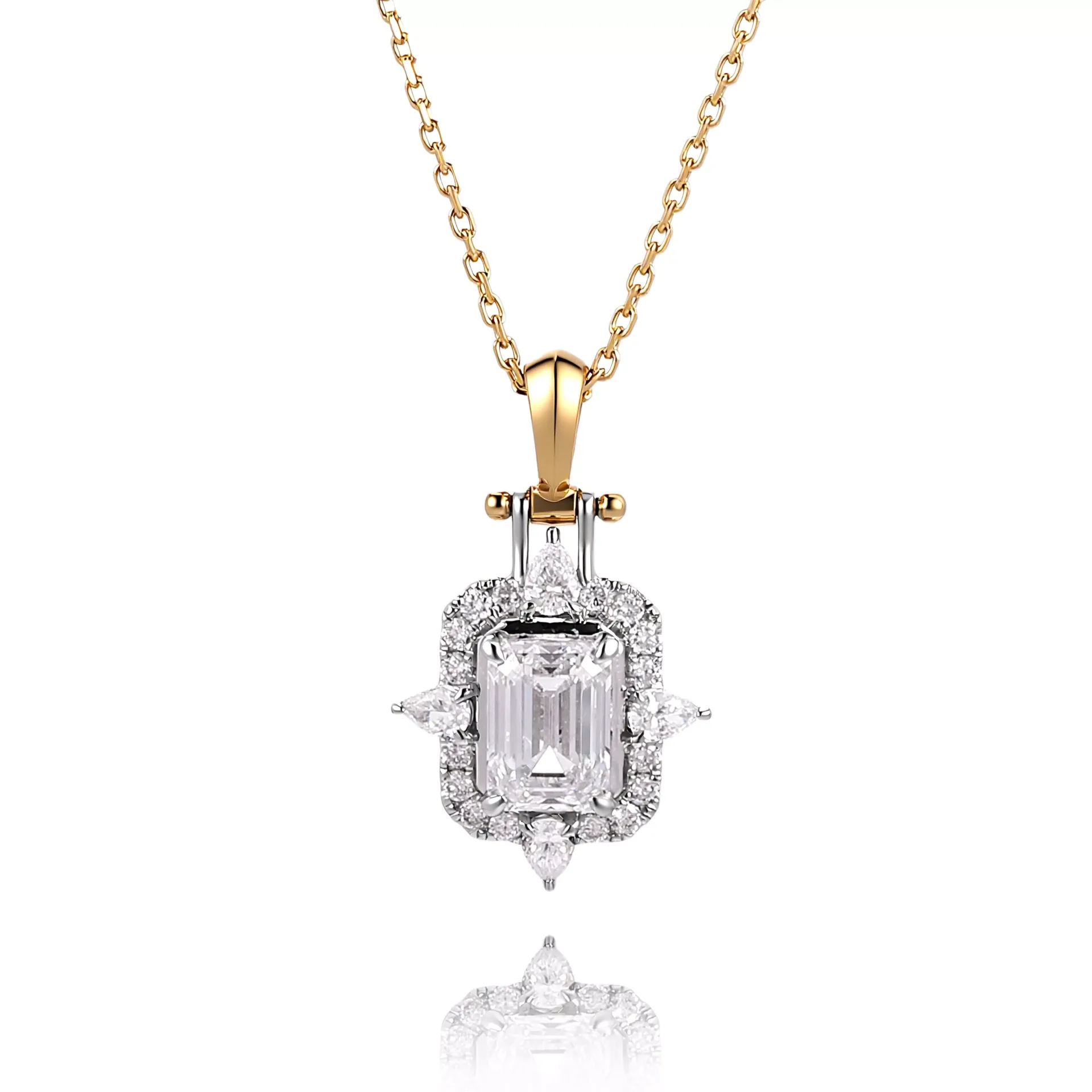
A small county in central China. A supermarket shelf. Five thousand rings, gone in five minutes.
The ring cost 169 yuan — roughly $23. The stone wasn’t a diamond. It wasn’t even a lab-grown diamond. It was moissanite. And the moment it sold out at a Chinese grocery chain called Pang Dong Lai in early 2026, something shifted in the jewelry world that nobody could ignore .
I called my friend Sarah in Shanghai the next day. She’d been one of the ones who tried to buy one.
“I saw the video online — people running to the jewelry counter like it was Black Friday,” she said over WeChat voice, still a little breathless from the memory. “By the time I got there, the display case was empty. The clerk just shrugged and said ‘tomorrow maybe.'”
She laughed. “I wanted it because it was funny. A $23 ring that looks like a $2,000 diamond? That’s not a purchase. That’s a statement.”
The County That Broke a Hundred-Year-Old Monopoly
Here’s the backstory, and it’s wilder than the ring itself.
For over a century, the diamond industry ran on a simple formula: control supply, inflate price, sell the narrative. “A diamond is forever.” “Three months’ salary.” De Beers wrote the playbook, and the world bought it — literally.
But in 2026, that narrative hit a wall. And the wall was made in Zhecheng County, Henan Province, China .
Zhecheng isn’t a metropolis. It’s an agricultural county that most Chinese people couldn’t point to on a map. But by 2026, it had quietly become the world’s largest producer of lab-grown diamonds. Two hundred and twenty-three diamond-related companies. Sixty-two large-scale enterprises. Two publicly traded companies. An annual production capacity of 12 million carats — more than 60% of China’s total output, and nearly half the global market .
What happened next was predictable in hindsight, but breathtaking in execution: prices collapsed.
In 2019, an 88-carat natural white diamond sold at Sotheby’s Hong Kong for 97 million yuan — about 1.1 million yuan per carat . By 2026, the same grade of lab-grown diamond from Zhecheng wholesaled for about 1,000 yuan per carat.
That’s a 99.9% price drop in seven years .
The $169 Moment That Changed Everything
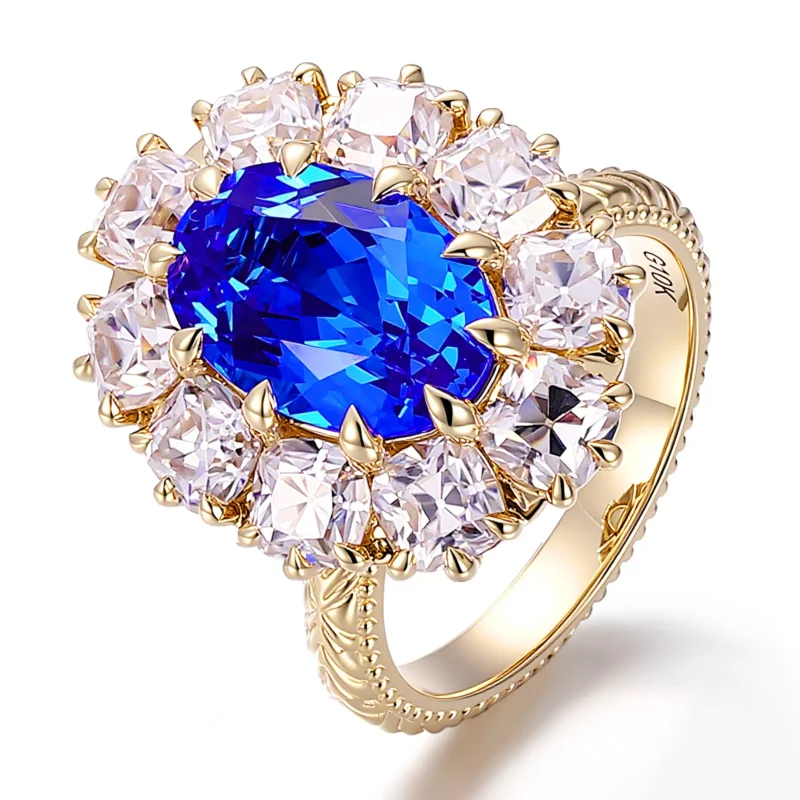
Pang Dong Lai, a regional supermarket chain known for its cult-like customer loyalty, decided to test the waters. They put a simple moissanite ring on the shelf: 1 carat, D-color, VVS clarity, in a basic silver setting. Price tag: 169 yuan .
Five thousand rings. Sold out in five minutes.
“We knew it would move, but not like that,” a store manager was quoted saying in a local news clip Sarah sent me. “People were buying three or four at a time. One woman said she was buying them as ’emergency gifts’ — you know, for when you forget a friend’s birthday and need something that looks thoughtful.”
The Internet lost its collective mind. Social media flooded with posts: “I just bought a ‘diamond’ for the price of a dinner out.” “This is the best joke the jewelry industry has ever played on itself.” “My grandmother’s ring cost my grandfather three months’ salary. My ring cost three hours of a part-time job.”
Sarah, who works in marketing, had a different take.
“Think about what this does to the meaning of a ring,” she said. “For a hundred years, we’ve been told that the value of the ring is the value of the love. If that love can be expressed for 169 yuan, what does that say about everything we believed?”
The Girl Who Couldn’t Wait
I met Emma, a 28-year-old product designer, at a café in Beijing’s 798 art district. She was wearing a moissanite ring on her right hand — not the 169-yuan one, she clarified quickly. A nicer one. Custom-made.
“I ordered it the day after the Pang Dong Lai story broke,” she said, rotating the ring under the café lights. The stone caught the sun and threw a small rainbow across the table. “Not because I wanted to save money. Because I wanted to be part of whatever was happening.”
Emma had been ring shopping for six months. She and her fiancé, a software engineer, had looked at natural diamonds (“too expensive, and the origins made me uncomfortable”), lab diamonds (“better, but still felt like I was paying for the idea of a diamond”), and moissanite (“honestly? I’d never heard of it until this year”).
“Then I saw that video of the crowds at Pang Dong Lai,” she said. “And I thought — there’s something here. If 5,000 people bought a $23 ring in five minutes, it’s not because they all fell for a scam. It’s because they all realized the scam was the price, not the stone.”
She found a jeweler online who specialized in moissanite. Picked a 1.5-carat stone, D-color, excellent cut. Had it set in 18K gold. Total: about 2,800 yuan — roughly $385. A comparable natural diamond would have been 50,000 yuan or more .
“I told my fiancé: I don’t want you to spend three months’ salary on a rock. I want you to spend three months’ salary on a honeymoon. Or a down payment. Or anything that actually matters.”
He proposed two weeks later. She said yes. The ring is on her finger, catching light, throwing rainbows.
“Does anyone ever ask if it’s real?” I asked.
“All the time,” she said. “I tell them it’s moissanite. Some of them get this weird look — like I just admitted to wearing a knockoff. But then I ask them: ‘Do you know where the name comes from?’ And they never do.”
A Stone from a Meteor
The name comes from Henri Moissan, a French scientist who discovered the mineral in 1893 — in a meteor crater in Arizona . Natural moissanite is incredibly rare; it’s literally from outer space. The lab-grown version we see today isn’t a “copy” of that. It’s the same material, synthesized.
“When I tell people it’s a ‘space stone,’ their whole face changes,” Emma said. “Suddenly it’s not ‘fake diamond.’ It’s something that fell from the sky. That’s a better story than ‘mined from a pit in Africa’ if you ask me.”
She’s not alone in thinking that.
What the Numbers Say
The moissanite market is real, and it’s growing. Global market value was US$43.3 million in 2024, projected to hit US$57.3 million by 2030 — a 4.8% annual growth rate . North America accounted for $11.8 million in 2024, with millennials and Gen Z driving demand .
China’s moissanite market alone is growing at 8.8% CAGR, projected to reach $12 million by 2030 .
But here’s where it gets interesting: moissanite prices have fallen 98% in the last decade — from thousands of yuan per carat to hundreds. The core reason isn’t just competition. It’s the collapse of the scarcity narrative . When a stone can be mass-produced in a lab, its price reflects production cost, not marketing mythology.
“Natural diamonds are priced on scarcity that doesn’t exist anymore,” said a jewelry industry analyst I spoke with. “Lab diamonds disrupted that. Moissanite just finished the job.”
The Grandma Who Got It Right
Emma told me a story toward the end of our conversation.
“My grandmother’s engagement ring came from a department store. She never knew what it was — some kind of white stone, in a gold-plated setting. She wore it for 47 years. When she died, my mom asked if I wanted it.”
She reached into her bag and pulled out a small velvet pouch. Inside was a thin, worn gold band with a tiny stone that had long since lost whatever sparkle it once had.
“I said yes. Because this ring outlasted my grandfather. It outlasted the store that sold it. It outlasted whatever marketing campaign was running that year. The stone doesn’t matter. The wearing it — that’s what matters.”
She held the two rings side by side: her grandmother’s, worn smooth by half a century of dishwashing and hand-holding and grandchildren’s fingers; her own, crisp and brilliant and throwing rainbows across the café table.
“People ask me if I’m worried my moissanite won’t hold value,” she said. “I tell them: if I ever need to sell my engagement ring to pay bills, the relationship has bigger problems than the stone’s market value.”
The Real Shift
The 169-yuan ring at Pang Dong Lai wasn’t just a product. It was a symbol.
For generations, jewelry brands told us that love could be measured in carats and clarity grades and price tags. The more you spent, the more you loved. But that was always a sleight of hand — a magic trick that worked because we agreed to believe it.
When the “scarcity” behind diamonds could be reproduced in a lab in a Chinese county, and when the “alternative” stone from a meteor crater cost less than dinner for two, the magic didn’t disappear. It just transferred. Now the magic is in the choice — not in what you bought, but in why you bought it.
Emma summarized it as she packed up her grandmother’s ring:
“Every generation gets to decide what matters. My grandparents decided that having a ring mattered, even if it was from a department store. My parents decided that buying the right ring mattered, even if it cost too much. My generation — we decided that choosing the ring matters. And we’re choosing differently.”
She smiled, closed her velvet pouch, and walked out into the Beijing sun. The moissanite on her finger caught the light one last time, scattering tiny rainbows across the café floor.
Afterword: Emma and her fiancé are planning a honeymoon in New Zealand instead of spending a quarter of their savings on a diamond. The moissanite ring sits on her finger, catching light. Her grandmother’s ring sits in a drawer, waiting for the next generation to decide what it means.