Blog
Between a $3,000 Ring and a $300 Ring Stands a Trial of Love

Between a $3,000 Ring and a $300 Ring Stands a Trial of Love
New York, Queens — 9:00 PM. Lin Wei and I were sitting in a hotpot restaurant in Flushing. The red oil was boiling, the spiciness stinging our eyes. She shoved her phone screen in front of my face. It was a WeChat screenshot.
The message was from her cousin, who had married into New Jersey — a stay-at-home mom whose WeChat name trailed a string of sunflower emojis. The original text read: “He makes $4,200 after taxes a month and he buys you a MOISSANITE? Girl, wake up. What’s the difference between this and a plastic ring from a street stall? A man who gives you this won’t take you seriously after marriage either.”
Below it was a 59-second voice message.
Lin Wei hadn’t played it, but she knew exactly what was inside. She’d received a dozen similar voice messages over the past week — from her cousin, college roommates, a well-meaning elder at church, and even her mother, who had called all the way from Shanghai and cried for forty-seven minutes straight on an international call that cost 29 cents a minute.
Humiliation. That was the word that stung.
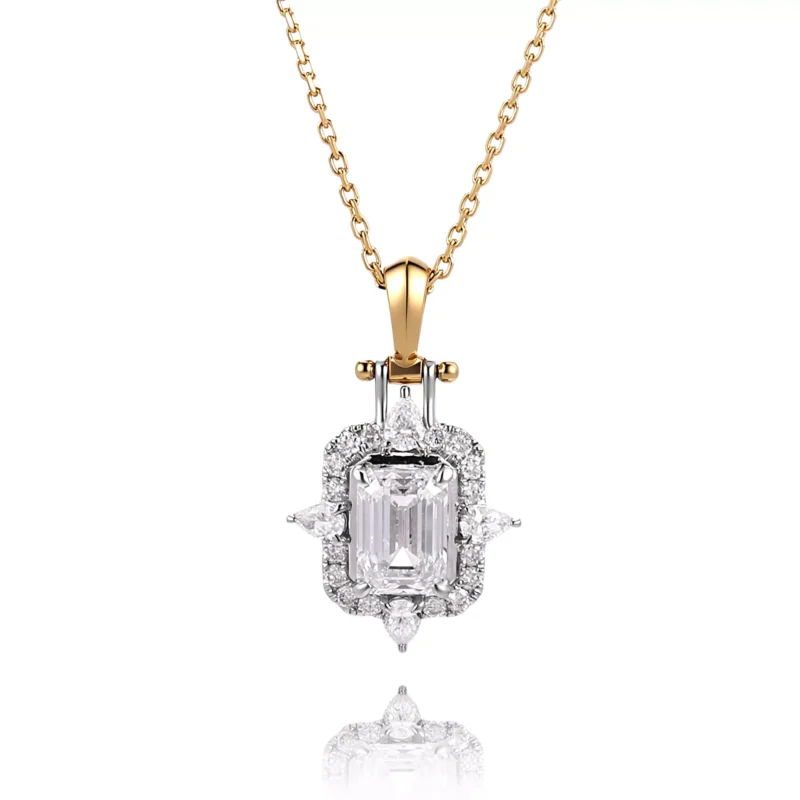
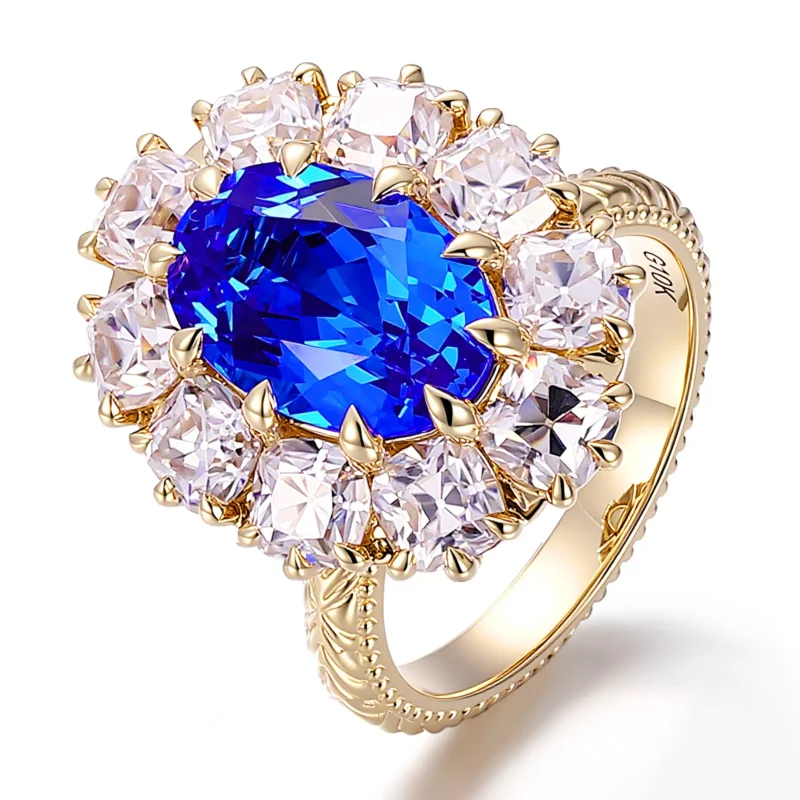
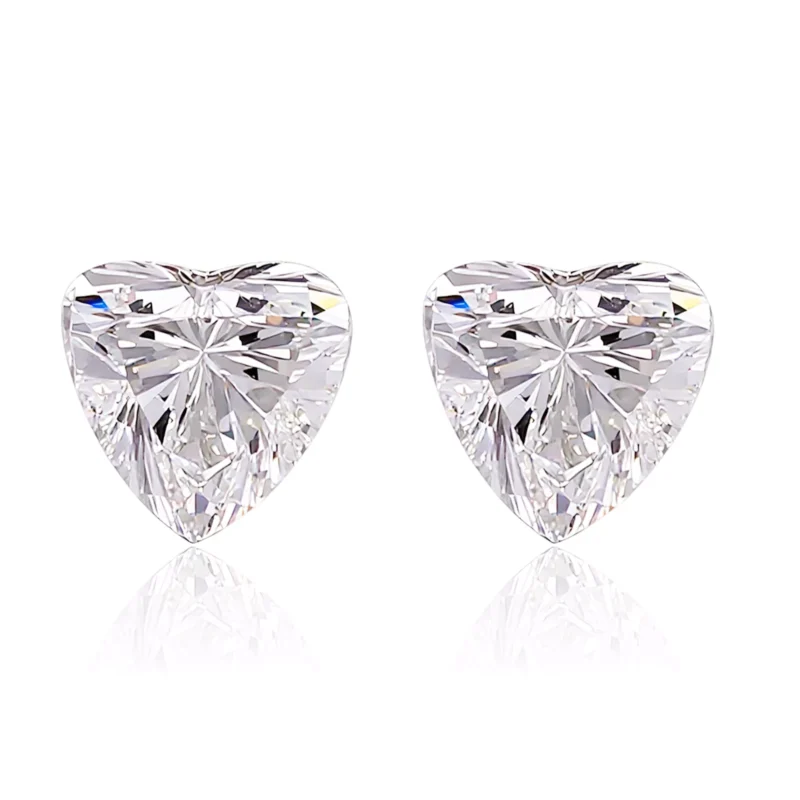
On the table in front of her sat a ring — silver setting, modest stone, casting a thin layer of iridescent color under the restaurant’s fluorescent lights, like the oil slick on puddles before summer rain. Her boyfriend Chen Lang had left it on her vanity three days ago, with a folded piece of white printer paper beside it, on which he’d handwritten: “Spent three months researching. This is the one that fits you best. If the size is wrong, I’ll take it back to get it adjusted.” Chen Lang’s handwriting was clumsy, like a grade-schooler’s tracing practice, but every stroke was pressed hard into the paper.
The size was perfect. He’d measured her ring finger circumference while she was asleep, using a piece of sewing thread, looping it three times because he was afraid of waking her, then marking the measurement with a ballpoint pen on the inside of his wrist. She only learned this later.
“Tell me,” Lin Wei said, poking at the tripe in her bowl without lifting a single piece, “if he’d just bought a lab diamond — even a smaller one, half a carat — would I have to put up with all this?”
I didn’t answer. I fished a piece of tripe out of the boiling broth after letting it cook for the perfect seven dunks, and ate it. The spice hit the back of my skull.
Halfway through the meal, she started telling me about those three months.
February. New York was hit by two blizzards. Chen Lang worked as a tax associate at a midtown Manhattan accounting firm, getting home after dark every day. He’d registered accounts on Reddit, Pricescope, and WeddingBee, his search history running from “engagement ring buying guide” all the way to “moissanite vs diamond肉眼区别” — “moissanite vs diamond visual difference” — and “moissanite longevity” and “best setting for moissanite不脱落” — “best setting for moissanite that won’t lose the stone”. One search entry read: “how to tell if girlfriend likes sparkly things but hates matching everyone else”, time-stamped at 2:17 AM on some night. He’d done it on the apartment’s shared desktop because his own ThinkPad had two broken keys.
March. He spent weekends running to five jewelry districts across New York — the Diamond District on 47th Street, independent jewelry studios in Brooklyn, two Chinese-run shops on Main Street in Flushing, and even took the PATH train to a wholesale warehouse in Newark, New Jersey. At one shop on 47th Street, an elderly Jewish man with gold-rimmed glasses examined the moissanite sample Chen Lang brought in with a loupe, then said: “Young man, this stone has more fire than a diamond. But your girl’s mother won’t care about fire. She cares about the name.” Chen Lang stood there, hands shoved in his down jacket pockets. In one pocket was a folded piece of paper covered in moissanite specs he’d copied from Reddit. He stood for perhaps twenty seconds, then asked: “Do you have a better cut? I don’t mind paying more.” The old man pulled out a D-color VVS1 moissanite from under the counter, held it with tweezers over black velvet cloth. “This one. Best cut from Charles & Colvard. You tell your girl what it is. Don’t lie.” Chen Lang put down a deposit — $120. As he slid the receipt across, the old man added: “The setting will cost you more than the stone. That’s the part she keeps forever.”
April. He spent three full weeks trawling Facebook Marketplace, digging through every used engagement ring listing in the greater New York area. He’d considered a used natural diamond — 1 carat, I-color SI-clarity, Tiffany six-prong setting, listed at $3,200. He exchanged seventeen messages with the seller, and on the final exchange the seller asked: “Is this for a proposal?” Chen Lang said yes. The seller went silent for a few hours, then replied: “Man, this ring was on my ex-wife’s finger for eight years. You sure you want that energy?” Chen Lang stared at the screen for a long time, typed a response and deleted it, then finally replied: “No, thank you.” He screenshotted the listing and saved it to a folder on his phone named “research.”
Early May. He gave up on used diamonds. He also gave up on lab diamonds. The reason was straightforward: a 1-carat E-color VS lab diamond, with a 14K gold setting, from Jewelry Point or Ritani, would run at least $800. He’d just covered Lin Wei’s portion of the rent — she’d been laid off from a startup late last year and was still sending out resumes, and he’d been covering her share for three months now. His 2012 Honda Civic had blown a radiator in April, costing $460 to fix. The balance in his Chase checking account showed a number he preferred not to look at too closely. It wasn’t that he couldn’t come up with $800 — it was that he’d done the math. The $500 he’d save would cover gas and an Airbnb for the extra three days they could spend driving up to Acadia National Park in Maine this July.
He didn’t tell Lin Wei any of this. He just left the ring on her vanity in a ring box he’d bought on Amazon — six bucks for a three-pack, the remaining two shoved in his dresser drawer — with that folded A4 paper beside it.
“You know what,” Lin Wei said, taking the ring out of its box and pinching it between her thumb and forefinger, rotating it under the restaurant’s fluorescent ceiling light, “what I’m struggling with isn’t even the money. It’s what people will think of me.“
She paused, startled by her own admission.
This was the first time all week she’d acknowledged it. She wasn’t afraid that the moissanite wasn’t sparkly enough, wasn’t bright enough, didn’t look like a diamond. She was afraid of posting the engagement photo on Instagram stories and someone leaving a question-mark reaction underneath. She was afraid of the church fellowship dinner where the Taiwanese nurse across the table would glance at her left hand, the corner of her mouth twitching, then lean over to whisper to the person next to her. She was afraid of her mother in the family group chat, every time she mentioned her son-in-law from then on, carrying that one sigh in her voice forever.
Chen Lang had written on the note: “This is the one that fits you best.” What he meant by fits was value for money, visual effect, and the extra three days on the Maine coast this July. But what Lin Wei heard when she read fits was “doesn’t embarrass me.”
“He spent three months researching and found something that looks identical to a diamond from six feet away,” Lin Wei’s voice dropped, the hotpot steam blurring her face. “But what about beyond six feet? I know what it is. That knowledge alone is enough to eat at me.”
The noise of the restaurant suddenly felt very far away. At the next table, a Chinese guy in a gray hoodie was feeding wide rice noodles to his girlfriend, who was sucking in air from the heat. That kind of easy, unthinking intimacy — the kind where you don’t have to worry about tomorrow — looked sharp and painful right now. I noticed Lin Wei had quietly moved her left hand below the table.
That night, back at their Elmhurst apartment, Lin Wei went through Chen Lang’s phone.
They didn’t have that habit between them, but tonight she needed to. Chen Lang was in the shower; the water noise filtered through the door, a steady rush. She picked up his old iPhone, tried the passcode twice — first her birthday, wrong; then the date they got together, and it opened.
She opened Messages and searched “ring” — over thirty conversations popped up. Most were with the Jewish old man from 47th Street, Facebook sellers, strangers she didn’t recognize from Reddit DMs. She scrolled up, one by one. Chen Lang’s English was choppy, some sentences obviously run through a translator — grammatically correct but stiff, the words not quite his own.
Around mid-April, she found a thread with a Reddit ID called “diamond_dealer_since_2003”. Chen Lang had sent a barrage of questions — does moissanite yellow over time, how noticeable are scratches from daily wear, platinum versus 14K gold for the setting — the replies came slowly, hours apart, but each one was long and detailed. The final message from the dealer read:
“Listen. I’ve been setting stones for twenty-two years. I’ve put diamonds on a thousand fingers and moissanite on maybe two hundred. Here’s what I know: on the day she gets it, she won’t read the GIA report. She’ll look at it and she’ll look at your face. The stone doesn’t tell her if you love her. The fact that you went and got a stone — that tells her. And if she asks why moissanite, you say: because I chose this. Not because I settled. Because I chose it.”
Twelve minutes later, another message: “It has no resale value. But your marriage isn’t an asset.”
Chen Lang had replied with one word: “Understood.” Timestamp: 1:52 AM. Above that message, he’d texted a contact named “Paul”: “can’t make it Friday, have to go to 47th street to pick something up”, sent Friday at 4:03 PM. That Friday, Lin Wei remembered clearly — she’d eaten dinner alone, sent him a WeChat asking if she should bring food home, and he’d replied “working late”. She’d been annoyed at the time.
Lin Wei put the phone back on the nightstand, screen-down. Chen Lang was still in the shower; the water had stopped, and now the hair dryer hummed through the door, a low steady drone. She pulled the blanket to her chest and stared at the ceiling. The Elmhurst apartment had thin walls — someone was pacing upstairs, back and forth. She closed her eyes and that 1:52 AM “Understood” kept replaying in her head.
When she woke up the next morning, Chen Lang had already left. A Post-it note was stuck to the fridge, in that same clumsy handwriting: “Waffle in toaster, don’t burn it.” Below it, a crooked smiley face. Lin Wei stood in front of the fridge in her pajamas, bare feet on the floor, the New York April floor still cold. She looked at her left hand — the ring was still on her ring finger; she’d forgotten to take it off last night.
She raised her hand to the morning light coming through the kitchen window. The moissanite exploded in the April sun, sending shards of colored light spilling between her fingers and across the white refrigerator door, like a tiny rainbow made of broken glass. She stood there for a moment, then walked over and pulled the waffle out of the toaster. She bit into it. It was cold.
Friday afternoon. Lin Wei wore the ring to midtown Manhattan to meet two friends at a coffee shop in Ktown. One was Grace, an auditor at EY, wearing a 1-carat natural diamond on her left hand — engagement ring, married last year. The other was Tiffany — her surname was Chen, but every time she introduced herself she added “not the store” — a PhD student at NYU, single, fingers bare.
Grace spotted it immediately. Her eyes stopped on Lin Wei’s left hand for exactly one second, then curved into a professional smile — the kind EY trained into you — but the way it curved was one that Lin Wei recognized. Beneath that smile was a full assessment report, already written. Grace said: “Oh, you decided?” That “decided” hung in the air for an extra quarter-beat. Lin Wei nodded and extended her hand.
Grace pinched her fingers, rotated the ring under the coffee shop’s track lighting for two seconds. That assessment report was all over her face. She let go and said: “It’s very sparkly.” Then picked up her cinnamon latte. But Lin Wei noticed that after Grace released her hand, her fingertips tapped the table twice — a small nervous tic Grace had had since college.
Tiffany leaned in, looked longer, and then did something nobody expected — she pulled out her phone, turned on the flashlight, and aimed it directly at Lin Wei’s ring finger. The moissanite under the LED flash detonated — the table was covered in colored light fragments, spilling even onto the side of Grace’s latte cup.
“Damn,” Tiffany said. “That’s insane.” She said it in Chinese, drawing out the word “shuǎng” — “awesome” — with an excited crack in her voice. She turned to Grace: “Yours is never that bright in normal light. This thing actually BLINKS.”
Grace’s mouth tightened at the corners. Lin Wei noticed Grace’s left hand twitch slightly, rotating her own diamond so the face pointed toward her palm.
Then Grace said: “But if we’re being real — why wouldn’t he just go lab diamond? Brilliant Earth isn’t that expensive now, is it?” The words were a question, but the tone was a statement. Lin Wei caught it cleanly: “Eight hundred. I checked.”
Grace’s eyebrow went up. She knew that Lin Wei knew exactly what she was asking.
The coffee shop was crowded. Two Korean girls at the next table were taking photos, posing with their cups, phone shutters clicking. Lin Wei rested her left hand on the table, the moissanite catching the chaotic café lighting and flashing nonstop, like a child who wouldn’t sit still.
“Do you know he looked at used rings before this?” Lin Wei said. Grace and Tiffany both looked at her. “He found a used Tiffany on Facebook Marketplace for $3,200. Messaged the seller seventeen times. The seller asked if it was for a proposal. He said yes. The seller told him — ‘This was on my ex-wife’s finger for eight years.'”
Tiffany inhaled sharply. Grace didn’t say anything. She picked up her latte, took a sip, set it back down in the saucer without a sound.
Lin Wei looked down at her ring. “He ended up choosing this one. He knew it wouldn’t be accepted by everyone. He knew my mom might be upset. He knew what people at church would whisper behind his back. But he chose it anyway. Because he’d run the numbers — he’d calculated what the $500 difference between an $800 lab diamond and this one would buy us: three extra days in Maine in July. He’d calculated that if I reached for an escalator handrail, this stone wouldn’t fall out — so he chose a six-prong setting, stronger than four. He calculated all of it. And that $3,200 Tiffany belonged to eight years of someone else’s life.”
She looked up at Grace. “I’ve been with him four years. I’ve never seen him spend this much time on anything.”
Grace was quiet for a long moment. Then she reached her left hand across the table and placed it next to Lin Wei’s. Two stones, a palm’s width apart — one cool white light, one fractured rainbow. Grace said: “Mine, he swiped his card. Walked into the store, looked at three options, picked the middle one. Whole thing took forty minutes.”
She paused, pulling her hand back. “Right now, forty minutes feels a little short.”
That evening, Lin Wei got home before Chen Lang. She cooked — scrambled eggs with tomatoes, garlic broccoli, and a pot of plain white congee. When Chen Lang walked in and saw the dishes on the table, he stopped in the entryway for two full seconds. His work ID badge was still around his neck, the dark blue lanyard hanging crooked, his shirt cuff smudged with some unidentified ink stain.
“What’s the occasion?” he asked.
“No occasion,” Lin Wei called from the kitchen, carrying out two bowls. “Hungry? Eat.”
They sat across from each other, eating congee in silence. Lin Wei’s left hand rested on the table’s edge, the ring glowing under the apartment’s warm yellow light. Chen Lang looked at it three times but didn’t speak. While he was bent over his bowl, Lin Wei noticed a single white hair at his crown, right next to the swirl. A thought hit her — he was only twenty-nine.
“Chen Lang,” she said.
He looked up. His mouth was still full of congee, his cheek puffed out on one side.
“Why did you pick this?” Lin Wei raised her left hand, the ring facing him directly. “I want the truth. Not ‘this fits you best.’ I want the real answer.”
Chen Lang swallowed, put down his chopsticks, and wiped his mouth with a napkin. He wiped twice — the first time didn’t get it all, so he went again. Then he looked at the stone for about five seconds. The wall clock ticked, second hand advancing one click at a time.
“The first time I went to 47th Street,” he said, “an old man told me something. He said — the stone isn’t the problem. The problem is that every time your mother mentions me from now on, she’ll let out that sigh.”
Lin Wei said nothing.
“I thought about it for three months,” Chen Lang’s voice was flat — the kind of flat that comes when you’re too tired to polish your words. “I thought — can I make it so you never have to hear that sigh? And I realized I can’t. No matter what I buy — three thousand or three hundred — your mother will still sigh. Because she’s sighing about ‘my daughter married a tax guy.’ It was never about the stone.”
He reached his hand across the table, palm up, resting on the wood.
“So I stopped putting my energy into the stone. I put it elsewhere. I put it into picking a setting that won’t drop the stone no matter how you wear it. I put it into figuring out the exact route for our Maine trip in July. I put it into making coffee before you wake up every morning and leaving before you’re even out of bed.”
Lin Wei looked at his hand. There was a thin scar on his left middle finger — from a paring knife slip in college.
“You know what Grace said today?” Lin Wei said. “She said her husband’s diamond purchase took forty minutes total.”
Chen Lang didn’t respond.
“I asked her — if he’d known that those forty minutes would one day be compared to your three months, would he have taken a little longer?”
The corner of Chen Lang’s mouth twitched. Not a smile — something more complicated pressed across his face.
“And then I realized something,” Lin Wei said. She placed her left hand down on top of his, palm to palm. The metal band on her ring finger touched the scar on his middle finger. “If this were a diamond today, sitting here eating congee across from you — I’d have less anxiety. But I’d have one more question: ‘Does he think throwing money at it is enough?'”
She squeezed his hand.
“Now I don’t have that question.”
Chen Lang looked down at her hand covering his. His thumb moved, then he turned his hand over and interlaced his fingers with hers. The moissanite was buried in his palm, only the edge of the setting visible, glowing warm gold under the light.
“Your mom,” he started.
“I’ll handle it,” Lin Wei said.
Later that night, they were washing dishes, the faucet running, the water heater humming through the wall. Chen Lang stood on the left drying plates, Lin Wei on the right rinsing. She said: “That old man told you something, right?”
“Which old man?”
“The one on 47th. He said ‘the setting will cost you more than the stone — that’s the part she keeps forever.'”
Chen Lang’s hand stopped mid-wipe.
“Setting cost more than the stone,” Lin Wei passed him a rinsed bowl. “Setting was $180. Stone was $120. You spent more on what stays against my skin than on what looks like a diamond.”
Chen Lang took the bowl and dried it without answering.
“What I’m saying,” Lin Wei turned off the faucet and turned to face him, “is that I know you did the math. You figured out what should be expensive and what should be saved. You put your money into what touches me every day, not what’s for strangers to look at.”
Chen Lang placed the bowl back on the rack, turned around. They stood in the kitchen, a little less than an arm’s length apart, the sink between them. The tie on his apron had come loose on one side, hanging at his waist.
“You done?” he asked.
“I’m done.”
He pulled her in for a hug. Short — two seconds, shoulder to shoulder, close enough to smell the dinner still on each other’s clothes. When he let go, he reached down and retied the loose apron string she’d been ignoring.
Late that night, Lin Wei sent me a WeChat message. She didn’t normally message at that hour; I saw it when I woke up.
“I figured something out today. Everyone’s been asking me ‘does he really care about you.’ But nobody’s asked ‘do I deserve his effort?’ If he spent three months, ran to five neighborhoods, did three sets of calculations, and ended up picking a stone that’s not accepted by the mainstream, has zero resale value, but is like me — too bright and a little bit defiant — and I take it off because I’m scared of what people might say, then the person who doesn’t measure up is me.”
Another message came through: “And also — that moissanite was first discovered in a meteor crater. It came from the sky. He went back and forth with that Jewish old man about all the specs, and at the end of it he brought home a piece of a star.”
I replied with a single question mark. She didn’t respond.
When I asked her about it a few days later, she said that night, while scrolling through Chen Lang’s browser history, she’d seen one search entry: “how to propose with moissanite without her thinking I’m cheap”. She’d clicked through to the page. At the bottom of the thread, someone had commented: “Tell her the stone came from a meteor. If that doesn’t work, she’s not the one.”
She’d screenshotted that page and saved it to a folder on her phone named “him.” That folder also contained a video of Chen Lang fixing her hair dryer, a blurry photo from three years ago under the Ferris wheel at Coney Island, and a note that read: “His shirt collar size — 15.5.”
The ring stayed on her finger. Every day. One time I was on a video call with her, and she reached for a book on a high shelf — the moissanite caught the laptop camera’s lens for a split second, leaving a smudged rainbow blur across the frame. She didn’t notice. She just went back to flipping through her book.
Afterword: Lin Wei told me later that her mother did let out that sigh — the moment she heard the word “moissanite” on the video call, her mouth pressed into a thin line for a six-second silence. But during those six seconds, Chen Lang reached over and took Lin Wei’s hand, the one resting on the table. Her mother saw it. She didn’t say anything, just pivoted to “how’s the weather in New York these days.” Lin Wei said that was when she knew — that stone was never coming off.