Blog
The $65 Ring That Changed Everything: Why TikTok’s Biggest Scandal Made Moissanite the Star of 2026

The Morning My Sister Called Me in a Panic
It was 8:30 on a Tuesday. I was halfway through my coffee when my sister’s name lit up my phone. She’d been engaged for two months and was supposed to be in full bliss mode. Instead, her voice was shaking.
“Did you see the TikTok?”
I hadn’t. She sent me a link. I clicked it—and spent the next hour going down a rabbit hole that would fundamentally change how I think about jewelry, truth, and the strange moment we’re living through right now.
The video was from a woman named Erica. She’s sitting in her car, makeup done, talking to her phone camera. She’s about to get her engagement ring appraised—the ring her ex-fiancé claimed cost $8,000, an “lab-grown diamond” he’d hyped up with all the confidence of a man selling a used car .
But here’s the thing: he never gave her the certificate. Her finger had been turning green where the ring sat . And in one of their last conversations, he’d screamed at her that it wasn’t a diamond at all.
“So are you lying now, or were you lying then?” she asks the camera .
The appraisal came back. The result? Moissanite. Value: $65 .
My sister’s voice on the phone: “Her ex told her it was an $8,000 lab diamond. It was a sixty-five dollar ring. From TikTok Shop. Someone in the comments literally recognized it—said they almost bought it as a ‘pregnancy ring’ because their hands were swollen” .
I sat there, coffee growing cold, and thought: this is the moment everything changes.
The Cloudy Stone That Broke the Internet
What hit me hardest wasn’t the dollar amount. It was what one commenter said. Someone looked at Erica’s ring—that cloudy, dull stone—and wrote: “Knew immediately by how cloudy it was that it was moissanite” .
That single sentence exposed the fault line running through the entire moissanite conversation. Because here’s the thing moissanite sellers won’t tell you: there’s cheap moissanite, and there’s good moissanite. And the difference is visible to anyone with eyes.
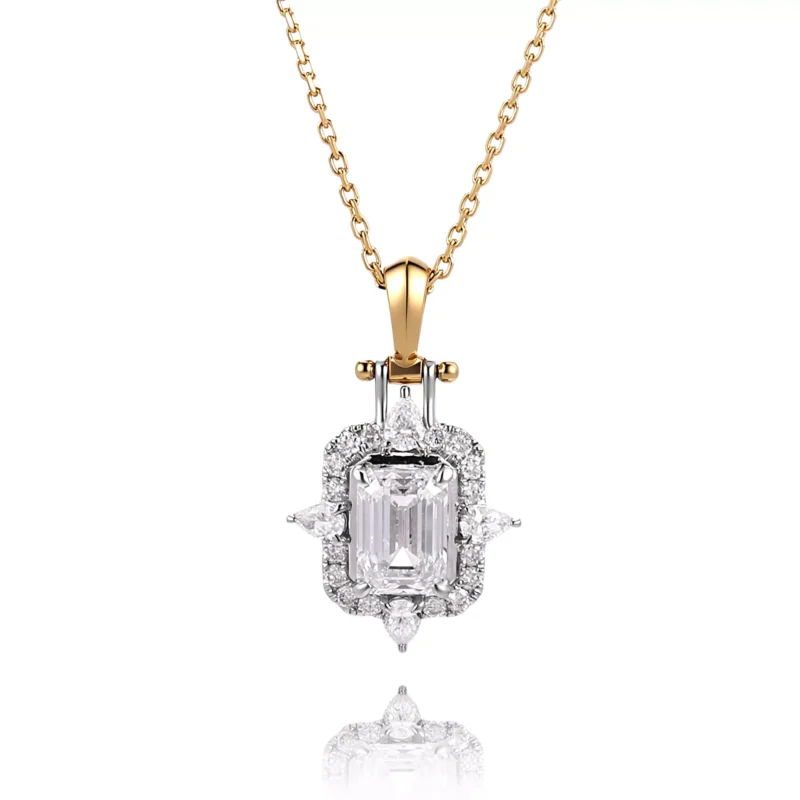
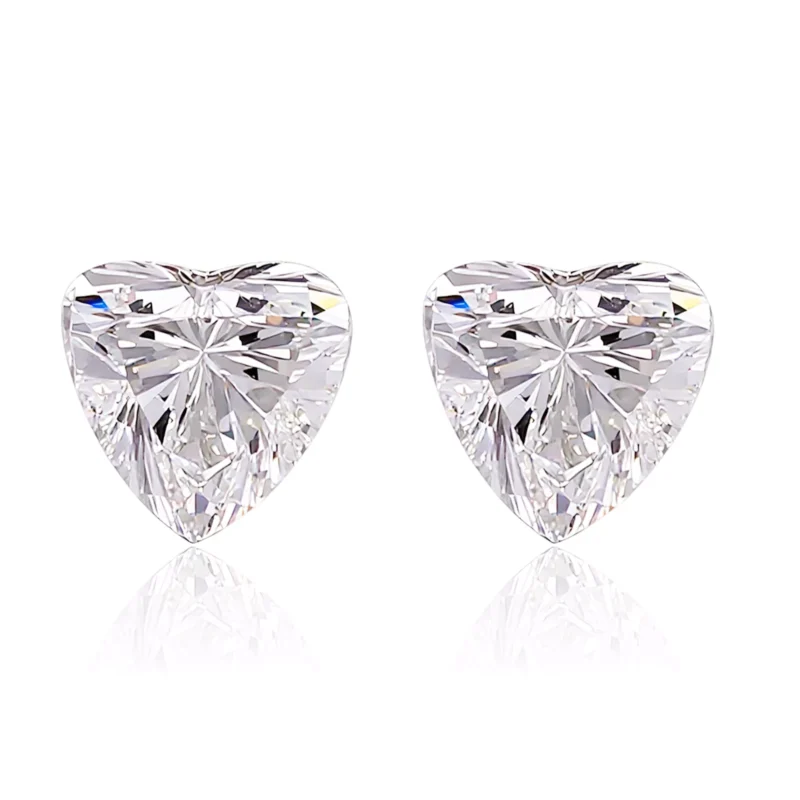
The cheap stuff is made with lower-quality silicon carbide. It looks cloudy. Dull. Like a diamond that’s given up on life . The good stuff? It has a refractive index of 2.65—higher than a diamond’s 2.42, which means it actually throws more fire, more of those rainbow flashes . Hardness of 9.25 on the Mohs scale, just below a diamond’s 10, so it can handle daily wear . And proper moissanite engagement rings range from $200 to $3,000 or more, depending on size and quality .
Erica’s ex didn’t buy good moissanite. He bought the cheapest thing he could find, passed it off as something else entirely, and turned a beautiful gemstone into a symbol of deception.
And yet—this is the strange part—Erica said something in that video that stopped me cold. She said she wouldn’t have minded if it had been moissanite. “I just wanted a big ol’ rock on my hand,” she explained .
She wasn’t upset about the stone. She was upset about the lie.
Pink Moissanite and the Celebrity Switch Nobody’s Talking About
But the moissanite story in 2026 isn’t just a TikTok scandal. It’s something much bigger, and much more interesting.
Here’s what I found when I dug deeper. While Erica’s video was going viral, something else was happening in the world of luxury jewelry. Colored moissanite—pink, blue, champagne, green—has quietly become one of the fastest-growing trends in the celebrity space .
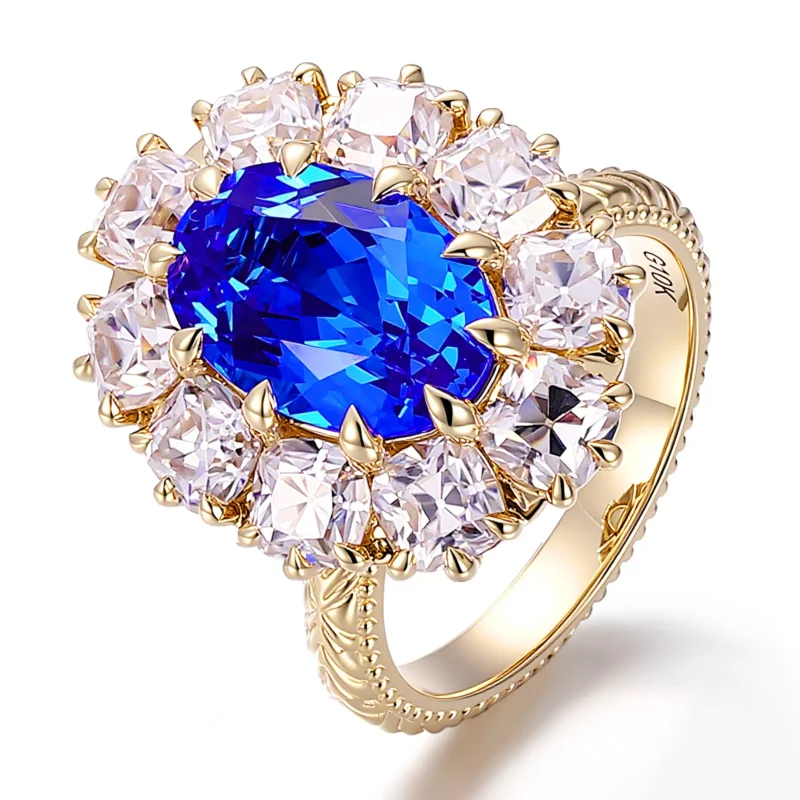
Think about it. A celebrity steps onto a red carpet wearing a massive pink stone. Everyone assumes it’s a pink diamond—which would cost millions. But more and more often, it’s moissanite . Pink moissanite, specifically, has become the go-to for “romantic celebrity glamour,” especially paired with rose gold settings that enhance its warm tones . Blue moissanite, meanwhile, has taken inspiration from royal sapphire engagement rings—think Princess Diana’s iconic blue stone, but accessible to regular people .
And then there’s the men’s side. The “iced-out” trend in hip-hop and streetwear has absolutely exploded, and it’s powered almost entirely by moissanite . “Fully iced” Cuban link chains. Bust-down watches. Massive pendants. The look that used to require a rap star’s budget is now achievable—and the stone of choice is VVS moissanite .
The irony is breathtaking. On one hand, you have a man lying to his fiancée about a $65 ring. On the other, you have the world’s most stylish people—celebrities, musicians, fashion insiders—choosing moissanite deliberately, proudly, and for reasons that have nothing to do with deception.
What The Knot Just Revealed About the New Normal
The numbers back this up. The Knot’s Real Weddings Study 2026 dropped a bombshell: lab-grown center stones now account for 61% of all engagement ring purchases—a 239% increase since 2020 . The average carat size? 1.9 carats . The average spend? $4,600 .
Compare that to natural diamonds, which showed “no growth in either total or center stone size” .
And here’s the stat that really matters: moissanite is the most popular non-diamond center stone, at 20% . Right behind sapphires at 23%. That’s not niche. That’s mainstream.
The survey’s key takeaway? The shift is being “driven by economic pragmatism and evolving values” . Gen Z, in particular, is redefining what “value” means. They’re not just price-conscious—they’re “value-conscious, with an emphasis on emotional and social value” . In other words, they want something that looks incredible, costs less, and doesn’t come with the ethical baggage of traditional mining .
And they don’t want to be lied to.
The Industry’s Dirty Little Secret
Here’s where I landed after months of thinking about this.
Moissanite is not a “fake diamond.” It’s a different material entirely. It was discovered in a meteor crater in 1893 by a scientist named Henri Moissan . It has its own optical properties, its own story, its own strengths and limitations. It’s harder than almost anything except diamond. It sparkles more. It’s grown in a lab, so its carbon footprint is dramatically lower .
But the industry has spent the last 30 years trying to sell it as “diamond’s cheaper cousin.” And that’s been a mistake.
Because when you sell something as a cheap imitation, you invite two things:
- Deception—like Erica’s ex, who bought a cloudy piece of junk and called it an $8,000 diamond
- Snobbery—like the people who sneer at moissanite for not being “real”
But what if we stopped thinking of it that way?
What if we looked at moissanite the way we look at sapphires or emeralds—as a beautiful, durable, unique gemstone with its own character and appeal? What if we chose it because we like how it looks, not because we’re trying to fool anyone?
The colored moissanite trend suggests we’re getting there. The men’s “iced-out” trend suggests we’re getting there. Even the market data—61% lab-grown engagement rings—says we’re getting there .
What I Wear Now
A few weeks after Erica’s video went viral, I bought my own moissanite ring.
It’s not a diamond substitute. It’s a 2-carat cushion cut, light pink, set in rose gold. I spent about $400 on it—not because I wanted to trick anyone, but because I genuinely love the color and the way it catches light. When I wear it, people ask about it. And I tell them the truth: it’s moissanite, it’s beautiful, and I could afford it without going into debt.
My sister, after her initial panic about the TikTok scandal, ended up doing the same thing. She showed her fiancé the video and said, “I don’t care what the stone is. I care that you’re honest with me.” They bought a champagne moissanite solitaire together—him, her, picking it out as a team. Warm undertones, rose gold setting, understated elegance .
She loves it more than she ever loved the idea of a “real” diamond.
The Real Lesson
Here’s my honest take, after all of this.
Erica’s story isn’t really about moissanite. It’s about honesty. Her ex lied to her, not because moissanite is bad, but because he was trying to seem like someone he wasn’t. He bought the cheapest thing he could find and wrapped it in a story about $8,000 luxury.
That’s not moissanite’s fault. That’s the fault of a culture that still judges people by the price tag on their finger.
The good news? That culture is changing. The 61% lab-grown engagement ring stat isn’t just a number—it’s a sign that people are finally separating “expensive” from “valuable,” “traditional” from “meaningful” .
And moissanite—the real stuff, the good stuff, the pink and blue and champagne stuff—is right at the center of that shift.
So here’s my advice: don’t buy moissanite to pass it off as something else. Buy it because you love it. Buy it because it’s durable and ethical and beautiful. Buy it because you can afford to live your life without worrying about losing a month’s rent on your finger.
And if anyone asks what it is? Tell them the truth.
That’s what makes it real.