The phone buzzed twice on the coffee table.
I reached for it and knocked over a half-empty glass of water. It dripped off the edge of the table, pat-pat-pat onto the floor. I didn’t wipe it up because the screen said “Home.” My mom. 1:27 AM. A call at this hour — nine times out of ten she’d seen something on a short-video app that got under her skin. The other time, her stomach hurt.
“Hello?”
“Did you see it?” Her voice came through the speaker with that particular clarity of someone who’d only slept half a night and had been yanked awake by a thought. “Pang Dong Lai — that 169-yuan ring — it sold out again.”
I leaned back into the couch, my feet still in the puddle of water on the floor. I didn’t move them. “I saw it.”
“Cartier sells a nail bracelet for 80,000 yuan. And this — a ring — for 169. Are the people who buy it stupid?”
The lamp beside the sofa cast a slant of yellow light across the coffee table, illuminating the puddle. I could see the reflection of my phone screen in it — a small white rectangle — and in that reflection, my own shape: legs pulled up, bare feet on the floor, one slipper kicked under the sofa.
“So tell me,” I said, shifting my feet out of the water, “the people who buy the 80,000-yuan Cartier — are they stupid?”
“That’s a brand,” she said. “You wear it out and people know.”
“And the people who buy the 169-yuan one — what are they looking for?”
She was quiet for a few seconds. I could hear a television in the background, very faint — some late-night rerun, a host’s voice rising and falling at a distance.
“Cheap, I guess.”
“Mom,” I switched the phone from my right ear to my left and sat up straighter, “when you got married, that gold ring Dad bought you — do you remember how much it cost?”
Silence on her end. I heard her inhale, then let it out slow.
“I don’t remember. It wasn’t expensive.” A pause. “Your father didn’t have much money then.”
“Were you happy with it?”
“That’s different.” Her voice dropped just a little.
“How is it different?”
She didn’t answer. Outside my window, the streetlight cut a long yellow band through the gap in the curtain, falling across the coffee table. I reached for the fallen glass and set it upright. The bottom hit the glass tabletop with a clear click.
That ring at Pang Dong Lai — I’d seen it in a video.
March 2026. Xuchang, Henan. The jewelry counter in the supermarket was tucked into a corner. No spotlight, no velvet trays, no white-gloved salespeople. Just a regular glass display case with a handwritten price tag stuck to it: “1 Carat Moissanite Ring — 169 Yuan.” No information card next to it.
The video footage was shaky — someone holding a phone up, pushing through a crowd, the frame full of shoulders and backs. A woman in a black puffer jacket squeezed out from the counter, holding three small boxes in her hand, breathing hard into the camera: “Got them. Three. One for me, one for my mom, one for my sister-in-law.”
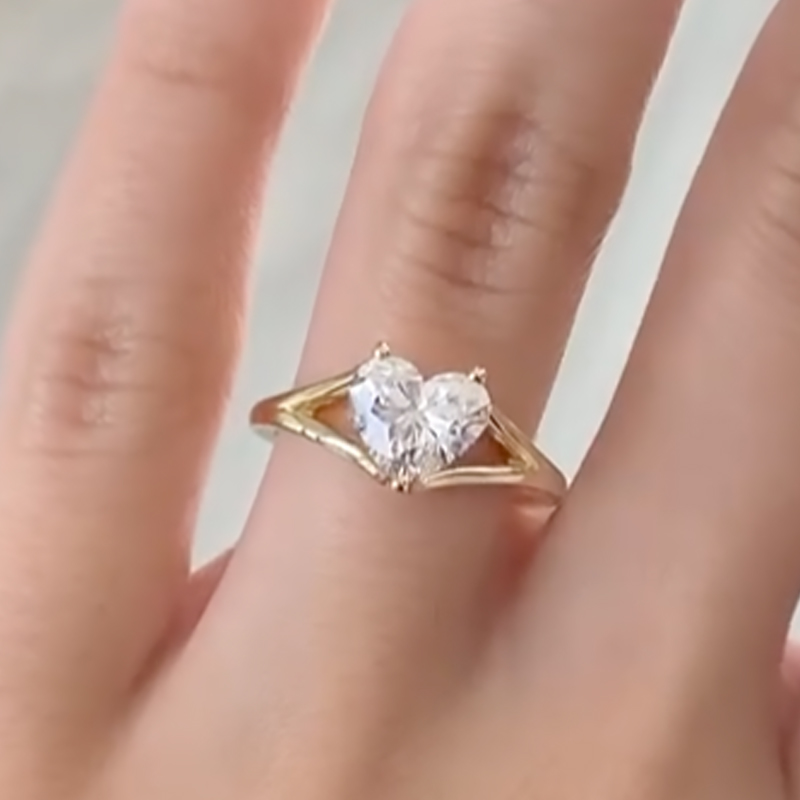
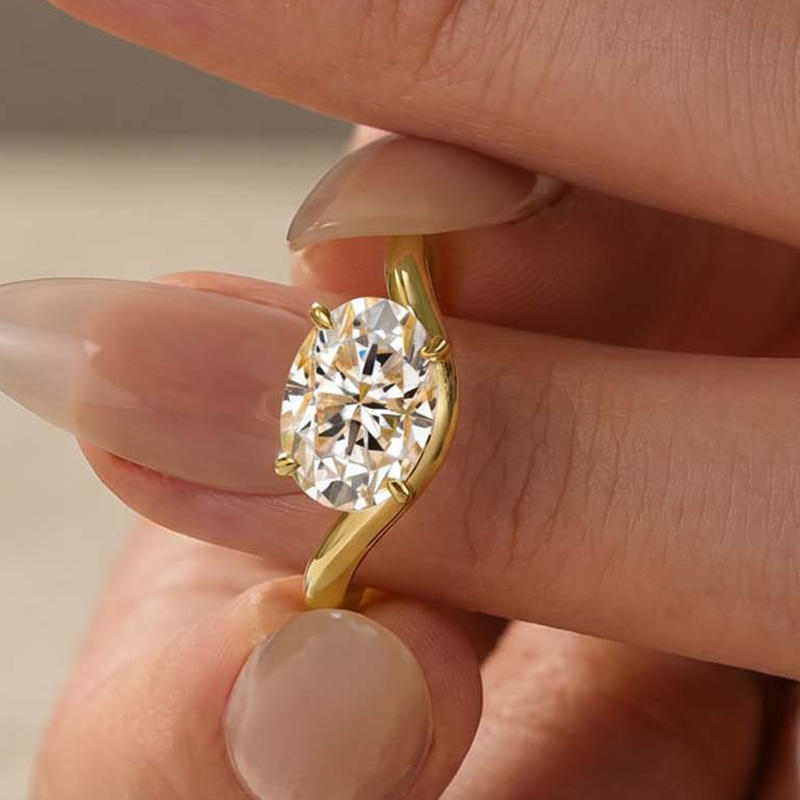
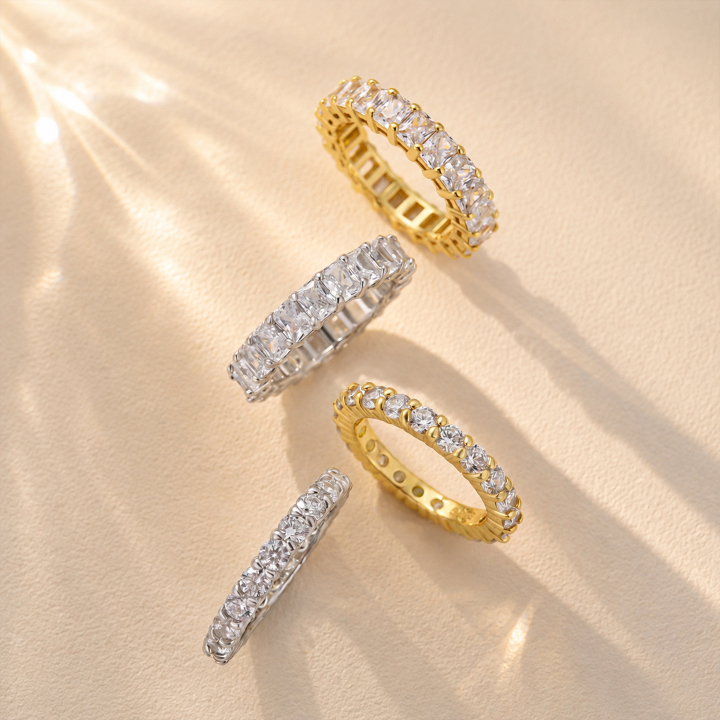
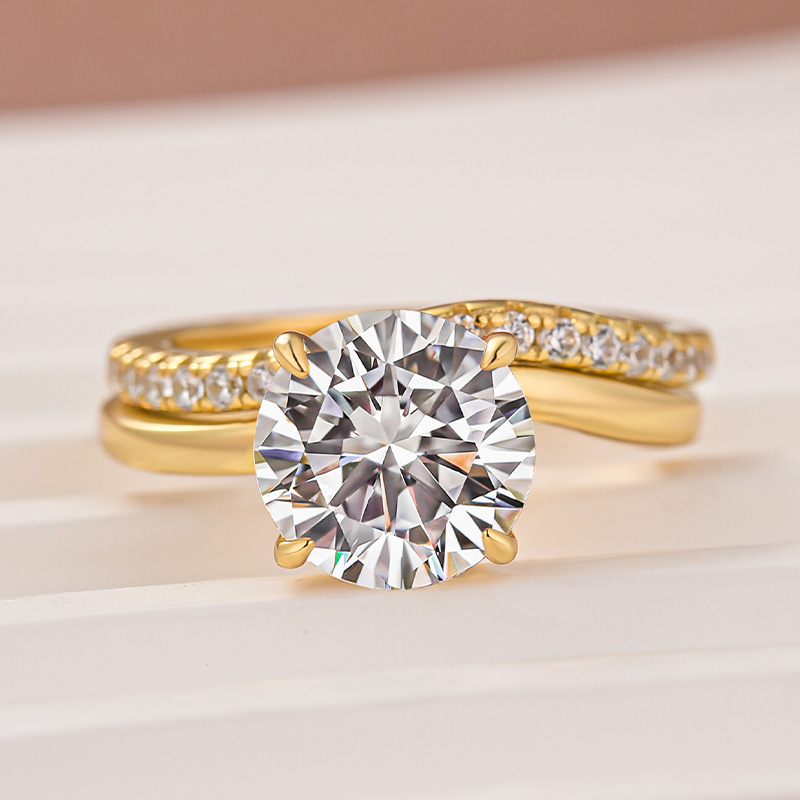
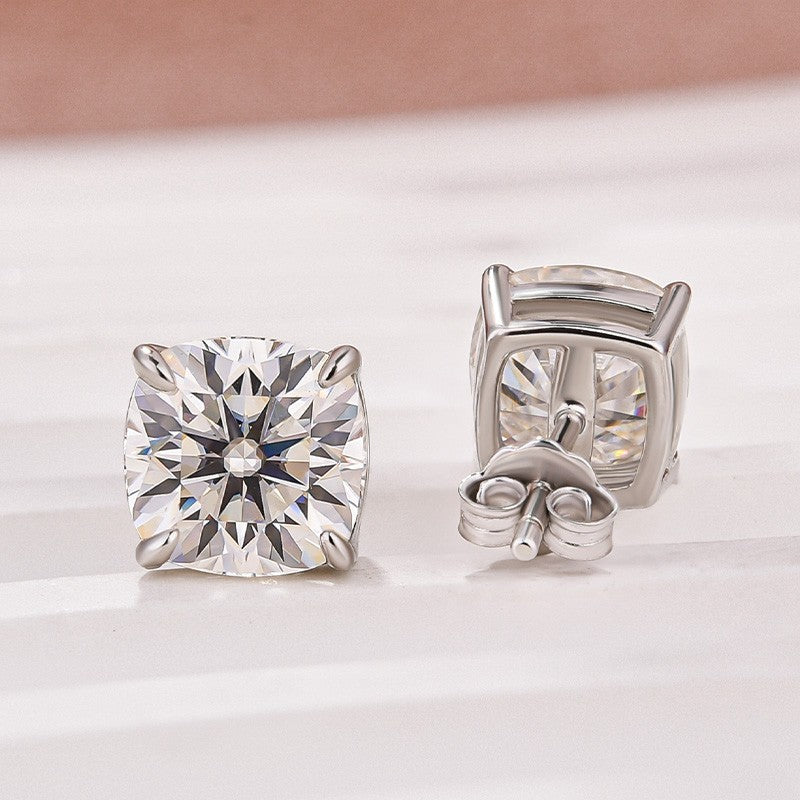
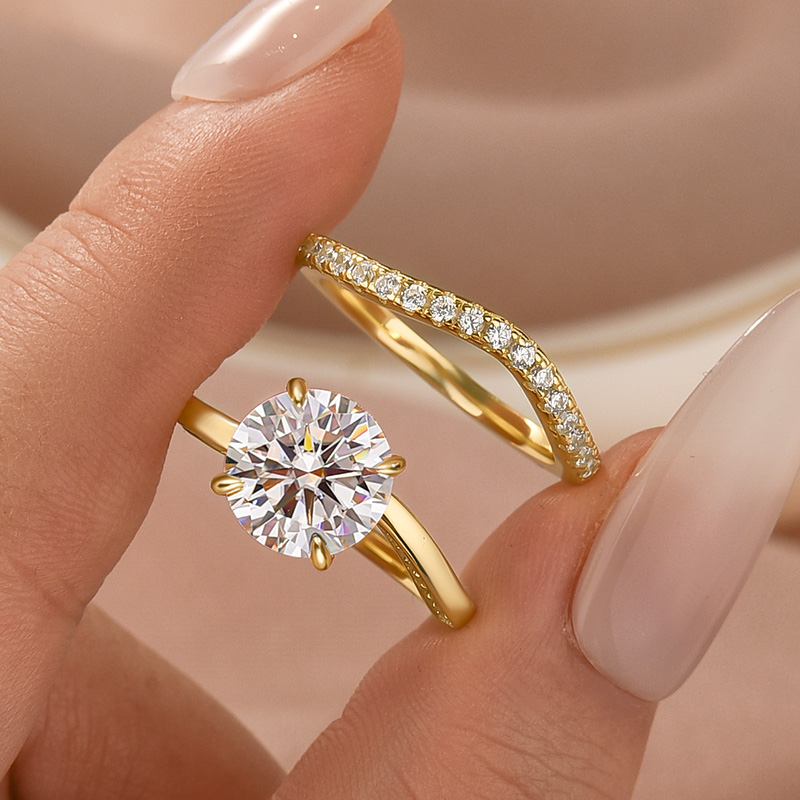
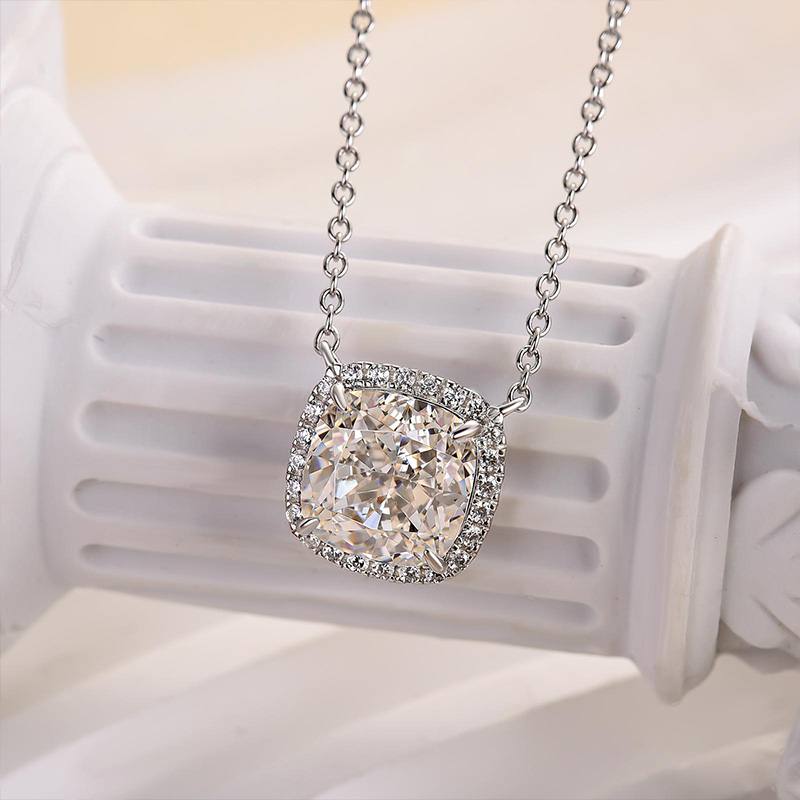
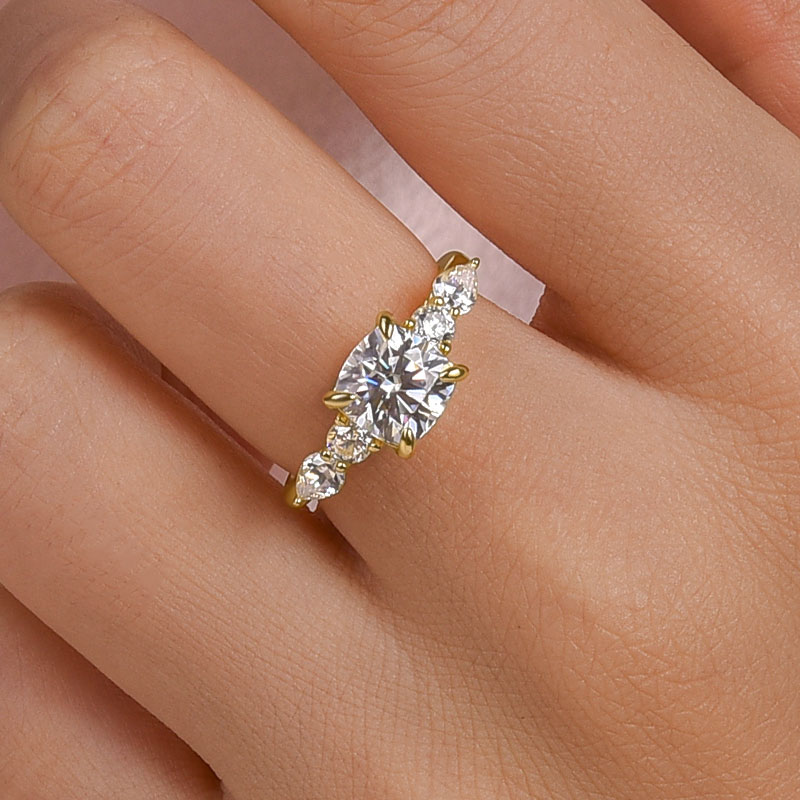
The shot cut to her hand. A silver ring. The stone caught the fluorescent light of the supermarket and flickered — not the cold white of diamond, but a flash edged with blue-violet, like a shard of aurora cut down to ring-size, held in her reddened fingers.
“Is it pretty?” she asked. The camera zoomed in. In the background, someone yelled “excuse me, excuse me,” and the wheels of a shopping cart scraped across the tiles, a loud rattling. “169 yuan. You can’t lose money and you can’t get scammed — but you can buy yourself something that makes you happy.”
That video had over 40,000 comments. One person wrote: “If this were Cartier, they’d add a few zeroes.” Another wrote: “Fake, right? Moissanite is just fake diamond.” And someone replied: “Moissanite isn’t fake diamond. It’s a different stone. Sparklier than diamond. You not knowing about it doesn’t make it fake.”
I didn’t finish watching the video. But I remembered the look on that woman’s face as she pushed out of the crowd with three little boxes in her fist — that smile. It wasn’t the smile of someone who’d found a “bargain.” It was the smile of someone who’d found something she actually wanted to wear, to show people, to hold her hand up and photograph.
“So what exactly is moissanite?” my mom asked.
“It’s a material called silicon carbide. Discovered in 1893 in a meteor crater in Arizona.”
“A meteor crater?”
“A rock that fell from the sky, crashed into Earth 50,000 years ago. That rock had these crystals embedded in it. Natural moissanite is rarer than diamond. Later, scientists recreated it in labs.”
I felt her silence on the other end. I could hear wind outside her window, scraping against the balcony — a loose shutter or something, knocking against the wall with each gust.
“Is it hard? Will it scratch up over time?”
“9.25 on the Mohs hardness scale. Second hardest thing on Earth. Diamond is 10. Chopping vegetables, washing your hands, riding the subway — it holds up.”
“Harder than diamond?”
“Just a little less. The only thing harder than moissanite is diamond. But moissanite is hard enough. You could wear it until you’re old and it won’t scratch.”
“Does it sparkle? Compared to diamond?”
“More than diamond,” I said. “Its dispersion is more than double diamond’s. In plain language — the colored flash it throws off under light is more than double what diamond does. Diamond is cold white. Moissanite is blue-violet with flecks of gold, like someone stirred a spoonful of rainbow into the light.”
Another silence. I heard her shift in bed, the rustle of sheets. “Then why don’t people buy it?”
“Because it’s not called diamond.”
“That’s it?”
“That’s it,” I said. “You put it next to that 80,000-yuan Cartier nail under the same light — it’s sparklier. Cartier charges 80,000 — not because that nail is worth that much. Because it says Cartier on it. Pang Dong Lai charges 169 — not because that moissanite is bad. Because it doesn’t say Cartier on it.”
“So is it fake?”
“It’s not a real diamond. But it’s not a counterfeit. Moissanite is moissanite. It’s not called diamond, but it has its own name. Nobody calls a gold necklace a fake platinum necklace — because they’re two different things. Moissanite and diamond are two different things. The difference is — moissanite sparkles more than diamond under light.”
She inhaled like she was about to say something, then didn’t.
In 2024, an Australian woman named Claudia Oprya posted a video on TikTok. In the frame, her ring was held up close to the lens, the white light from a kitchen counter falling on it from above. The moissanite facets exploded into colored spots that scattered across her apron.
“This is my engagement ring from my fiancé,” she said. “4,600 Australian dollars. About 2,600 pounds. The day I got it, someone asked me — is that a diamond? I said no, it’s moissanite. The look on that person’s face was like they’d seen something embarrassing.”
She looked down at her own hand. The stone was still flashing. “When they thought it was a diamond, they said — ‘wow, you married well.’ When they found out it wasn’t a diamond, they said — ‘oh, so it’s still around. It’s fine, I guess.'”
She looked back at the camera. “Why do people compare the price of rings? When did proof of marriage become the price tag of a stone?”
One comment under that video had been pushed to the top: “The meaning of the ring is the person who gave it to you. Not the price.”
Another read: “I swapped my ring out for moissanite. My husband said — you should have gotten a diamond. I said — you married me, not a diamond.”
“Mom, remember that thin gold necklace you used to wear?”
“Which one?”
“The thin one. You wore it to work. It broke and you never fixed it.”
“I remember. What about it?”
“Was it real?”
“Yes. But when your father bought it, it was just the gold price. No brand name.”
“Did anyone ever ask you about it when you wore it out?”
“No.”
“If Cartier made the exact same necklace — same gold, same weight, same thickness — stamped Cartier on it and sold it for 30,000 yuan, would you buy it?”
“No.”
Outside my window, it had started raining. The drops hit the air conditioner unit with an irregular tapping, tap-tap-tap. I switched the phone to my other ear.
“Mom, you said the people who buy the 169-yuan ring are stupid. The people who buy the 80,000-yuan Cartier — are they really happier?”
“They have money.”
“Money and happiness are two different things,” I said. “You can buy a stone that sparkles more than diamond for 169. You can also buy a diamond for 80,000. But if you’re not planning to sell it — if you’re just going to wear it every day, washing your hands, making coffee, going out, taking it off and putting it on the nightstand — that 80,000-yuan diamond and that 169-yuan moissanite are both cold in the dark. What warms them up is the person who reaches for them the next morning and thinks — this is the one I chose.”
She didn’t answer. The rain kept falling.
“If I buy one,” she said, “and someone asks me — how do I answer?”
“You say — it’s moissanite. Harder than diamond. Sparklier than diamond. You think it’s beautiful. You like it.”
“What if they say it’s fake?”
“You say — if you think it’s real, it’s real. If you think it’s fake, it’s fake. But this is the one you chose. You wear it because you like it.”
She laughed. Not loud. But I heard it through the phone.
“Alright.”
The rain was heavier now. I’d tracked the puddle of water all over the floor, and I still didn’t feel like standing up to wipe it. The cool wetness against my bare feet made this late hour feel especially real.
Pang Dong Lai’s little sugar cube is still selling out. Three days, gone. Cartier’s nail is still selling for 80,000. Two worlds, running side by side. One looks at the other and thinks “they’re stupid.” The other one isn’t looking at this world at all — they’re holding up their phones, photographing the stone on their hand, smiling at the lit-up screen.
That stone, under the supermarket fluorescent light, flickered once — blue-violet at the edges, like a tiny sliver of aurora. 169 yuan. No Cartier name on it. It doesn’t need one.