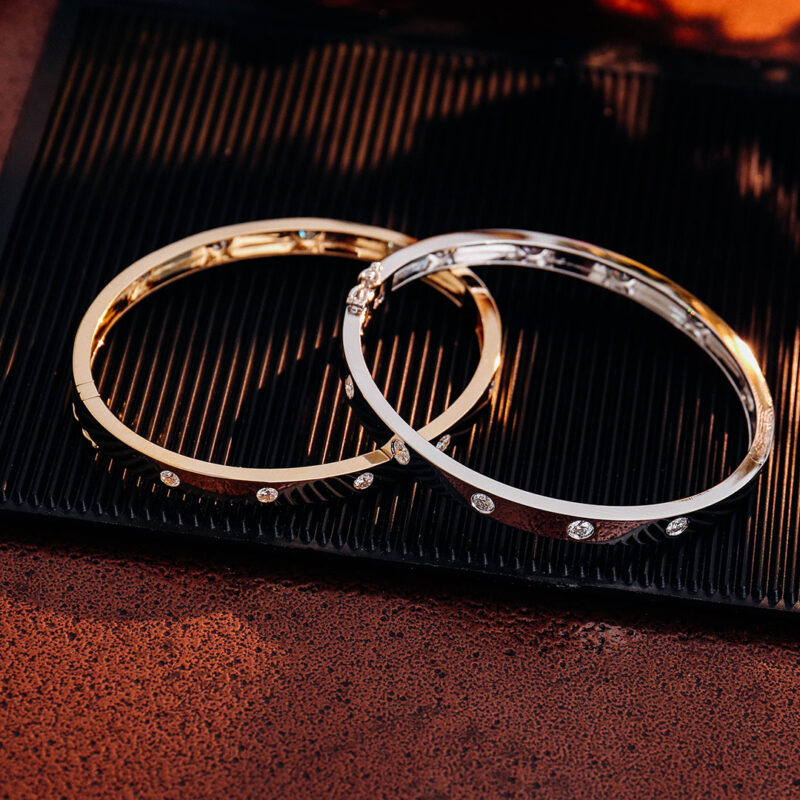
Taylor Swift Wore an $80 “Fake Diamond” Necklace and Nobody Blinked. So Why Does Wearing Moissanite Get You Called a Try-Hard?

0

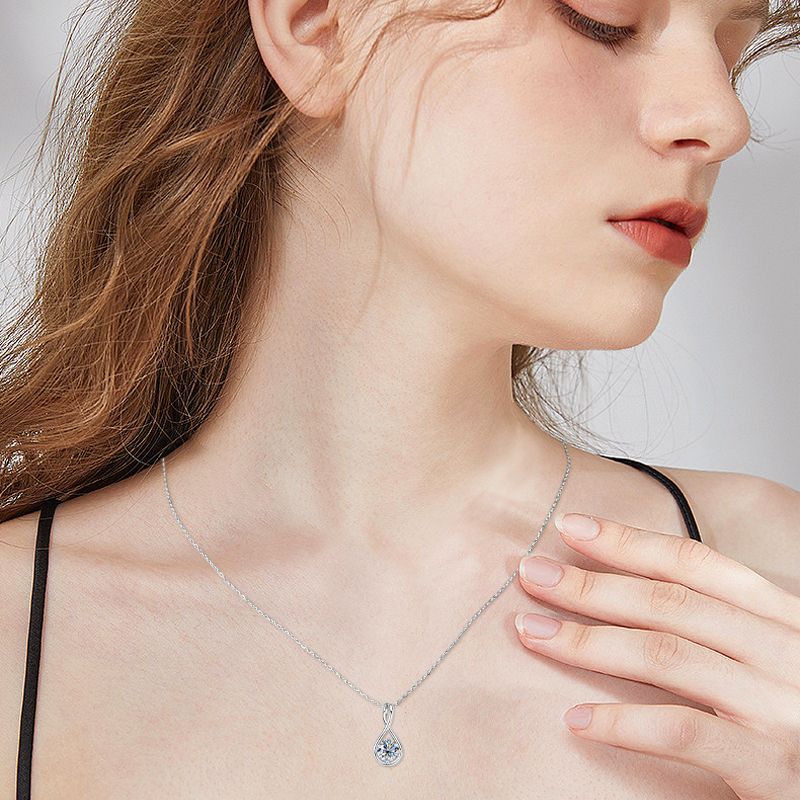
June 2026. Toy Story 5 premiere. Taylor Swift walked the red carpet in a silver gown with a massive yellow stone around her neck. Page Six Style’s editors took one look and declared it: “Either a yellow diamond or a yellow sapphire. Worth a fortune.”

Later, they found out. The necklace was from Nadri. The center stone was cubic zirconia. Price: $80.

Nobody accused her of faking it. Nobody said “how dare you wear a fake diamond to a red carpet.” The comments were all “she could wear anything and look amazing” and “if $80 gets that effect, I’m buying one.”

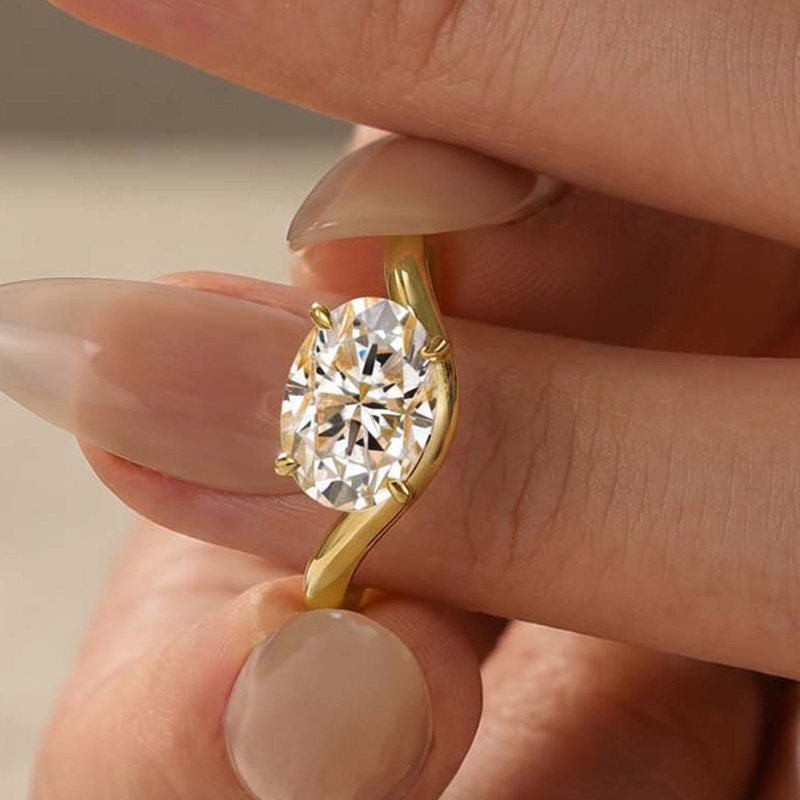
But if you’re an ordinary person wearing a moissanite ring to a party, and someone asks “is that a diamond,” and you say “no, it’s moissanite” — the reaction you get is probably that familiar “oh.”

Same logic. The stone is sparkling. People are watching. The difference isn’t the stone. It’s the label. And it’s whether you’re wearing CZ or moissanite.

That $80 CZ vs. a $300 Moissanite — What’s the Difference?

Taylor Swift’s necklace stone was CZ. Not moissanite.

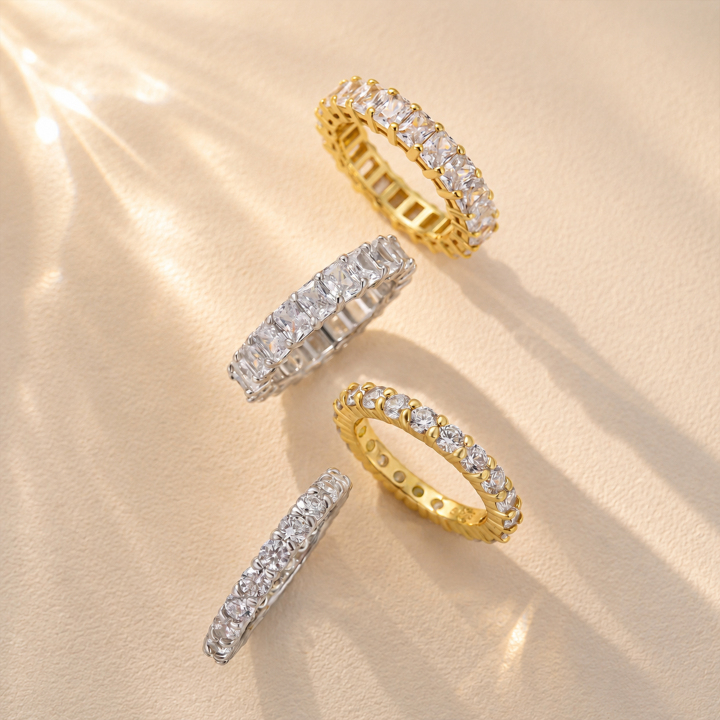
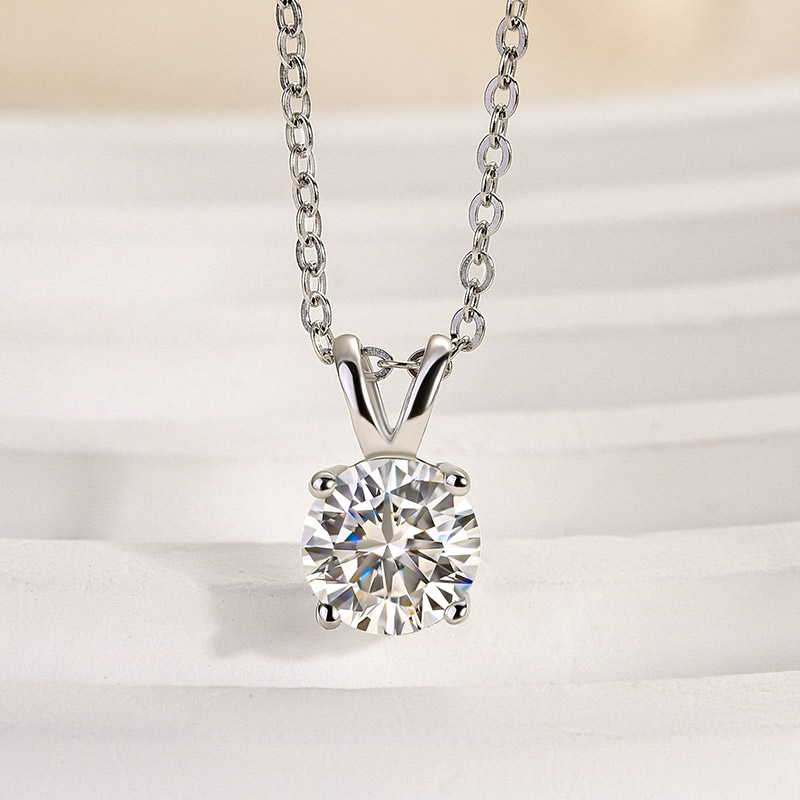
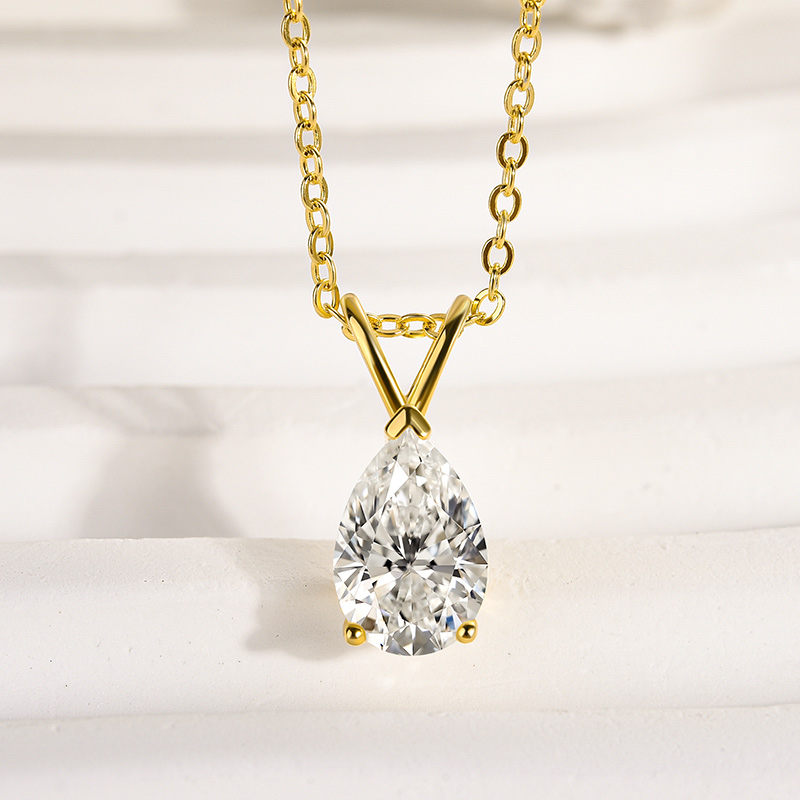
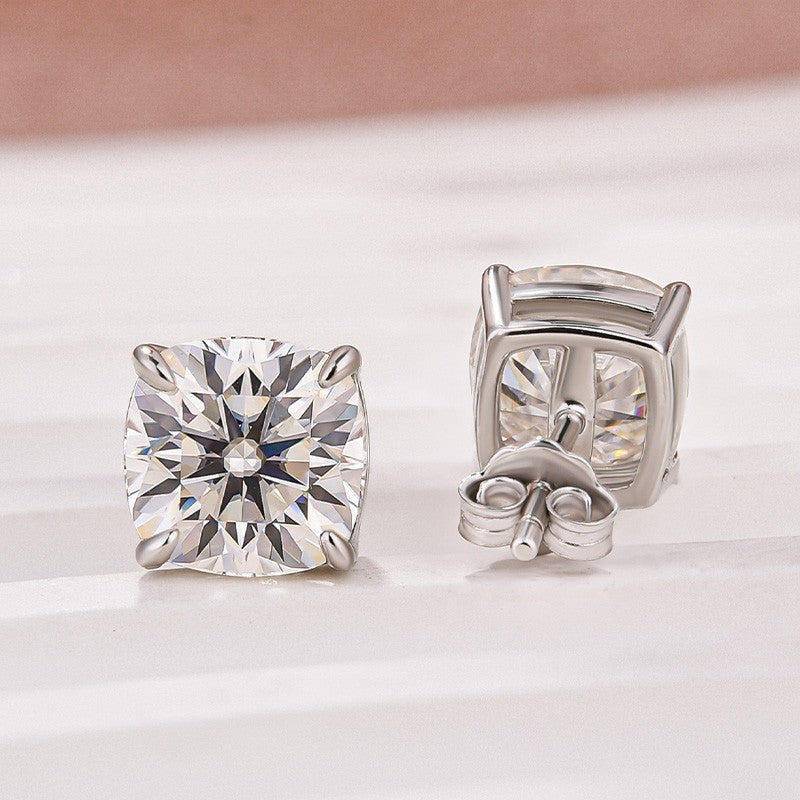
People mix the two up all the time, but physically they’re two different things. GIA’s data is clear: CZ’s Mohs hardness is 8.5. Moissanite is 9.25. CZ is grown in a lab from zirconium oxide powder. Moissanite is silicon carbide, first discovered in a meteor crater, later recreated in labs.

A 0.75 difference in hardness doesn’t sound like much. But worn on a hand, it’s the difference between “two years” and “a lifetime.”

A friend who works in jewelry manufacturing told me something blunt: a CZ ring after about a year and a half starts accumulating microscopic scratches on the surface. It’s not that the stone “goes cloudy.” It’s that those invisible scratches scatter the light. The stone still sparkles, but the sparkle goes “soft.” Not sharp anymore. Moissanite doesn’t do that. At 9.25 hardness, the friction of daily wear doesn’t touch it.

CZ’s refractive index is 2.15 to 2.18. Moissanite’s is 2.65 to 2.69. CZ’s dispersion is 0.058 to 0.066. Moissanite’s is 0.104. In plain English: moissanite is brighter than CZ, its fire is more “jumpy,” more colorful. CZ’s light leans “white.” Moissanite’s light leans “rainbow.”

So Taylor Swift wearing CZ on a red carpet? No problem. That’s a one-time scenario. She’s not wearing that $80 necklace to wash dishes, chop vegetables, or open doors. The red carpet ends, the necklace comes off, back in the box.

But if you’re buying a ring to wear every day, CZ is not the same thing.

That Influencer Who Got Dragged for “Flexing” — The Problem Was Never the Stone

June 2026. American influencer Ari Fletcher posted a ring on Instagram. Someone in the comments asked how much it cost. She said: “Around 750K.”

Later, people dug up that at least three rings she’d posted were moissanite. Her response: “I’m rich. Stay mad.”

The comments exploded. But the angle of the criticism was interesting. It wasn’t “you wear moissanite.” It was “you wear moissanite and let people think it’s a $750,000 diamond.”

One comment buried deep in a forum thread said it best: “Nobody cares if she wears moissanite. They care that she’s trying to pass it off as something else. If she just said ‘yeah, it’s moissanite, it’s beautiful, I love it’ — nobody would have a problem. But she can’t do that. Because in her world, wearing moissanite is an admission that you can’t afford the real thing. Even though she can afford it.”

Moissanite and CZ play the same role in this story: the stone itself isn’t the problem. The pretending is.

Taylor Swift wore $80 CZ and nobody thought she was “faking it.” Because she didn’t say it was a diamond. Page Six guessed wrong — that’s Page Six’s problem. She didn’t write “750K” on Instagram.

Whether Ari Fletcher’s ring was moissanite doesn’t really matter. What matters is that she chose to define that ring’s value with the number “750K” — not with “I like it.”

Moissanite or CZ — Which One to Buy

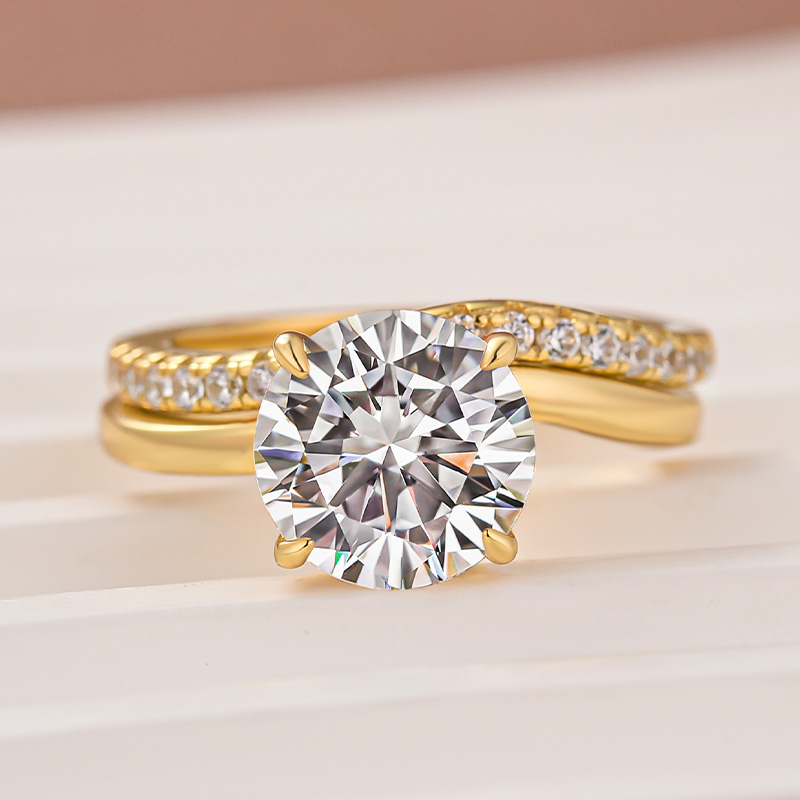
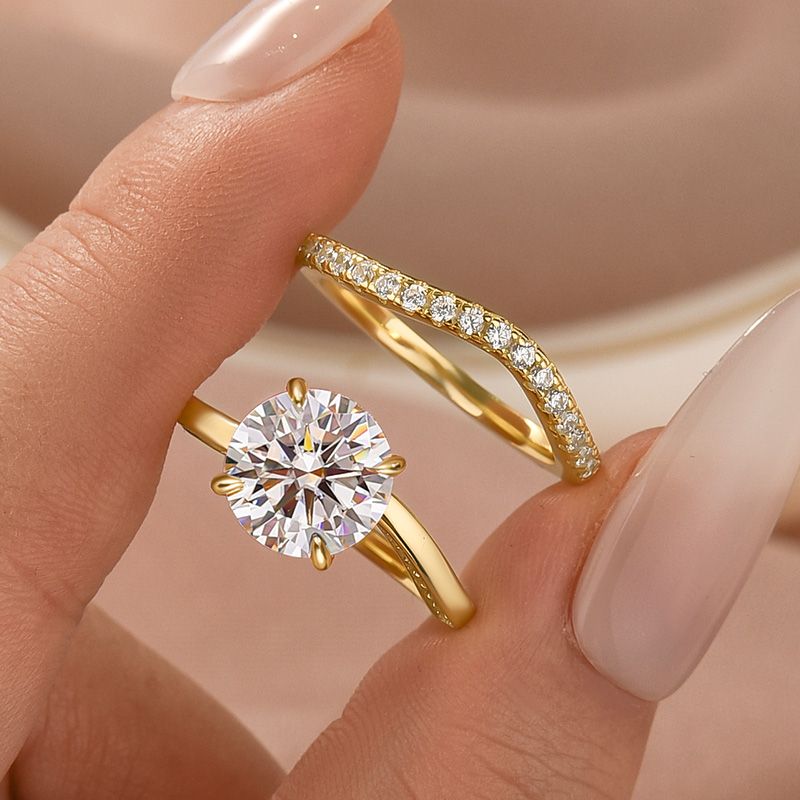
If you’re choosing a ring to wear every day, moissanite is the more reasonable choice. Hardness 9.25, second only to diamond. Holds up to daily wear. Its fire is stronger than CZ, stronger than diamond. The price is an order of magnitude below diamond, but higher than CZ — because the production cost and physical properties aren’t on the same level.

If you’re choosing a piece to wear occasionally, to match an outfit, or as a travel stand-in for a real ring, CZ has its place. Cheap, pretty, no heartbreak if you lose it. But you have to accept that after a year or two it’ll go dull — not because it’s “fake,” but because the surface has been worn down by life.

Taylor Swift’s $80 necklace will probably only appear at one premiere. That’s CZ’s correct use case.

Moissanite’s correct use case is the bridesmaid at a wedding who gets asked “is that a diamond,” says “no, it’s moissanite,” puts the ring back on her finger, and walks away. She didn’t explain. She didn’t defend. She didn’t say “it sparkles more than diamond.”

She just wore it.

The stone threw off a burst of tiny rainbows in the 4 PM natural light, scattered across the folds of the tablecloth. Nobody asked a second time.

Leave a Reply

Your email address will not be published. Required fields are marked *